How do you improve on a tailgate classic like the Buffalo chicken wing? Take out the bones, fill that little pocket with smoked pulled pork, and finish it with crispy skin and Buffalo sauce. These pulled pork stuffed chicken wings are an absolute game changer.
Are they more work than a regular wing? Absolutely. But you get a smoky pork filling tucked inside an actual chicken wing, with all that familiar Buffalo flavor on the outside. This is the kind of barbecue project that makes a Sunday afternoon with friends even better.
My original plan was to cook these from the back of my pickup at Highmark Stadium for the Kansas City Chiefs versus Buffalo Bills game. A knee injury moved the cook to the backyard, but the tailgate game plan stayed the same: keep the ingredients simple, pack smart, and let the smoker handle as much of the work as possible. Go Bills!
What You'll Learn
- Remove both bones from wing flats while preserving the skin and meat as a stuffing pouch.
- Use leftover pulled pork to simplify preparation and avoid smoking a fresh shoulder.
- Smoke stuffed wings at 325°F, flipping for crispness and adding Buffalo sauce near the finish.
- Check that the chicken and the center of the filling reach 165°F before serving.
Table of Contents
- What You Need for Pulled Pork Stuffed Wings
- Set Up the Weber Smokey Mountain at 325°F
- Prepare the Pulled Pork Filling
- How to Debone Chicken Wings Without Losing the Pouch
- Stuff the Wings With Pulled Pork
- Smoke, Flip, and Finish With Buffalo Sauce
- Are Stuffed Chicken Wings Worth the Work?
What You Need for Pulled Pork Stuffed Wings
This recipe is more about the technique than precise measurements. You only need enough pulled pork to fill the deboned wing flats, so it is a great opportunity to use leftovers rather than cook an entire shoulder specifically for stuffing.
Ingredients
- Whole chicken wings, or wing flats with the skin intact
- Cooked pulled pork, or a small pork shoulder to smoke fresh
- Your favorite pork dry rub
- Salt, pepper, and garlic seasoning for the wings
- An additional barbecue spice rub for the stuffed wings, if desired
- Store-bought Buffalo sauce
Tools and equipment
- Weber Smokey Mountain or a similar charcoal smoker
- Charcoal and smoking wood
- A sharp knife and kitchen shears
- A cutting board and trays
- A piping bag or sturdy zip-top bag
- A meat thermometer
- Foil and an insulated resting blanket if cooking the pork fresh
- A cooler for keeping the raw chicken cold
- Optional toothpicks for closing the stuffed wings
For a tailgate, I like premixed seasonings and a zip-top bag instead of bringing a whole collection of spices and specialty tools. I also picked up a Drip EZ Q Crib to organize my prep tubs and gear when working away from the conveniences of home. Think through your prep, storage, and resting space before you leave, not after you open the tailgate.
Set Up the Weber Smokey Mountain at 325°F
Start by adding charcoal and smoking wood to the smoker. I used Fogo charcoal and a GrillBlazer GrillGun to get a small bed of coals burning, then set the cooking temperature to 325°F, about 163°C.
The important part is getting a live coal bed established first. A temperature-control fan can feed the fire air, but it needs burning coals to work with.
For this cook, my 22-inch Weber Smokey Mountain was fitted with a ChefsTemp ProTemp S1 digital gauge, a Breezo fan, and a ProTemp 2 Plus wireless probe. The S1 is more than a replacement for the analog dial. Paired with the optional fan and compatible wireless probes, it can manage airflow to help maintain the target temperature while keeping track of the food.
The system supports information from up to four independent probes. That is especially useful when I would rather spend time with friends and family than keep making adjustments to the smoker. It is also a way to add smart temperature control to a compatible analog cooker without replacing the whole barbecue.
Prepare the Pulled Pork Filling
Leftover pulled pork is the shortcut here. If you already have some, you can skip smoking a fresh shoulder and concentrate on the wings. Keep it refrigerated until you are ready to work with it.
If you are starting fresh, season a small pork shoulder with your favorite dry rub, insert a temperature probe, and put it on the smoker. The pork can cook while you tackle the most hands-on part of this recipe: deboning the chicken wings.
- Build the bark. Let the shoulder smoke until the exterior seasoning has formed a set bark.
- Wrap the pork. I wrapped this shoulder in foil at about 170°F, or 77°C, once the bark was established.
- Finish cooking. My target for taking the shoulder off was approximately 203°F, or 95°C.
- Rest before shredding. I used an insulated resting blanket, allowing anywhere from 30 minutes to two hours while keeping the pork at a safe holding temperature.
- Save the juices. Open the foil over a tray so those juices stay with the filling, then shred the meat.
- Adjust the seasoning. Mix in a little more of the same dry rub used on the shoulder.
I gave the shredded pork roughly another 30 minutes to lose some of its intense heat before putting it into a bag. You want it manageable for stuffing, not piping hot against raw chicken.
Keep that cooling period controlled rather than leaving the pork out indefinitely. For practical tailgate guidance, the USDA food safety basics explain safe hot holding, refrigeration, and limits on time at room temperature.
How to Debone Chicken Wings Without Losing the Pouch
This is the tedious part, and there is no point pretending otherwise. My batch took about 25 to 30 minutes to debone. The first few wings are the slowest. Once you understand how the bones release, it gets much easier.
The goal is to remove the two bones from the flat while keeping the surrounding meat and skin together. That leaves a little pouch for the pulled pork.
1. Separate the flat from the drumette
Find the joint between the drumette and the flat, then cut through the joint with your knife. Save the drumettes to cook separately. The flat is the section we need for stuffing.
2. Release the tendons at the open end
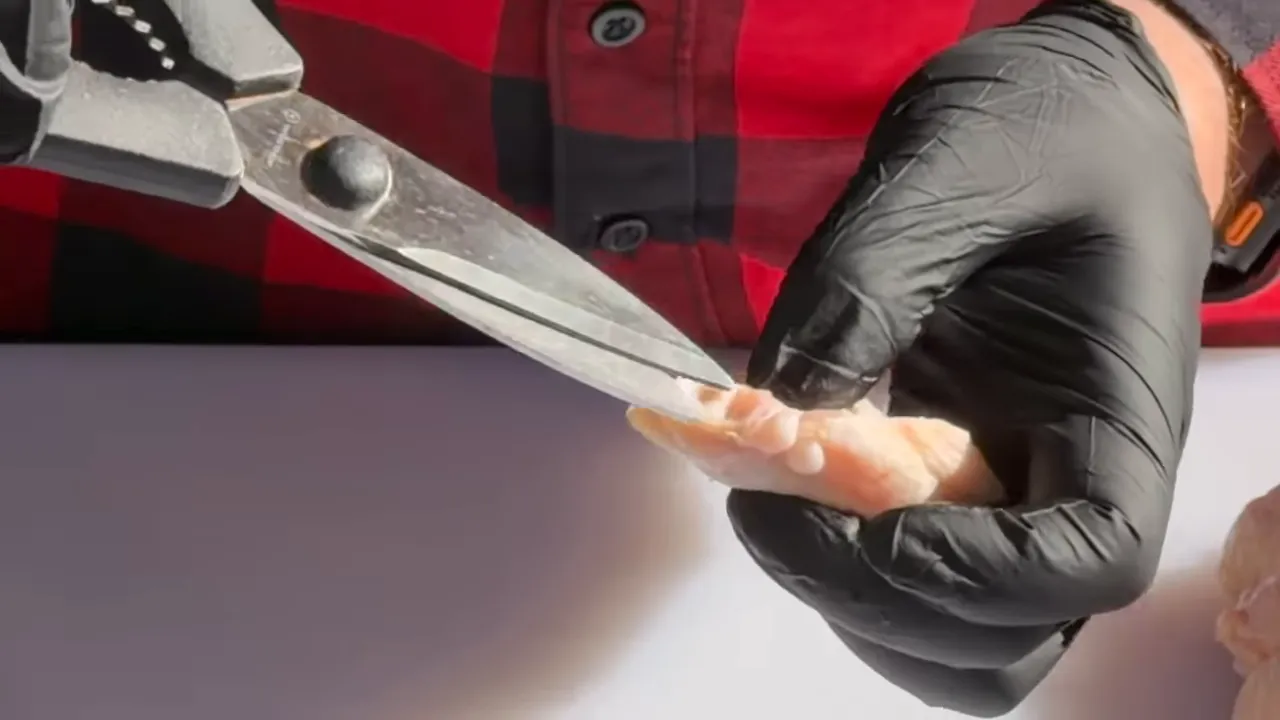
At the cut end of the flat, locate the connective tissue around the two bones. Use the kitchen shears to snip the tendons that hold everything together there.
3. Follow each bone with the shears
Work carefully along the bones, separating them from the flesh. Keep your cuts close to the bone instead of cutting through the outside of the wing. You are freeing the bones, not opening the flat into a sheet.
4. Push the meat down and remove both bones
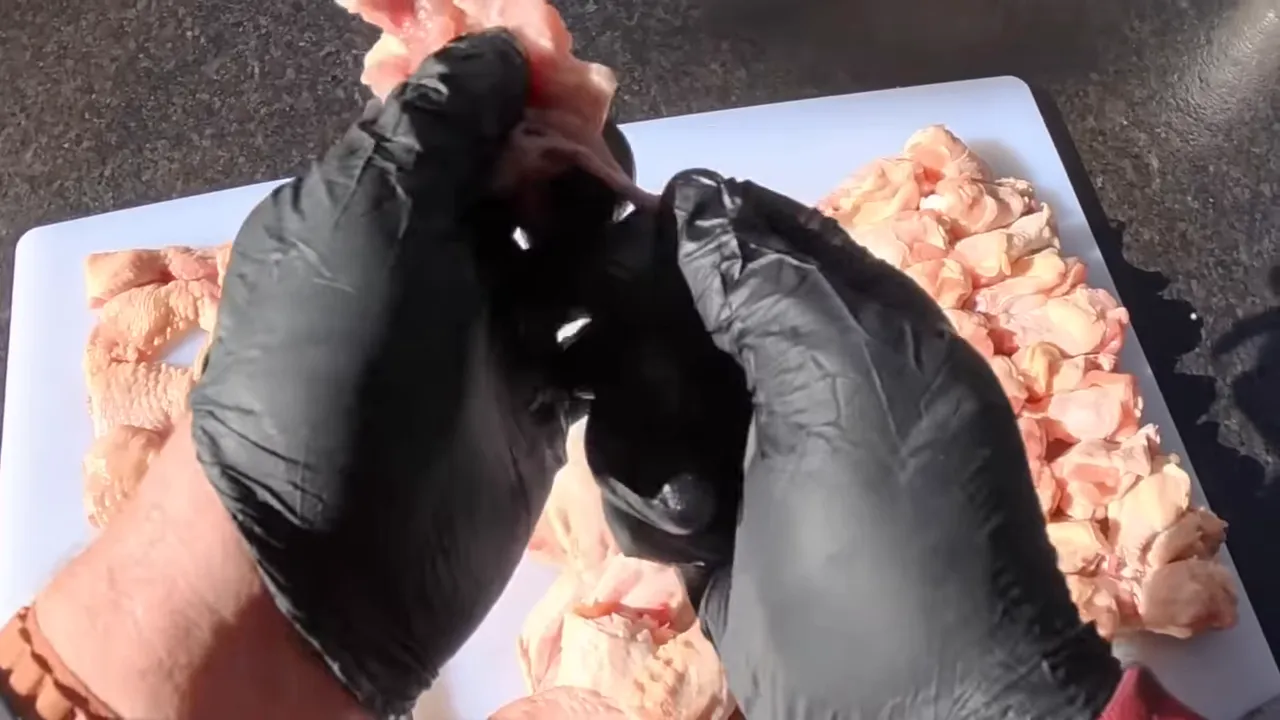
Once the tissue is released, gently press the meat down to expose the bones. Work one bone free, then the other. If a bone is still attached, release the remaining tissue rather than pulling hard enough to tear the pouch.
5. Turn the wing back into shape
Ease the meat and skin back into their original position. You should now have a hollow flat ready to hold the filling. Repeat with the remaining wings.
Season the deboned wings with salt, pepper, and garlic, then return them to the cooler or refrigerator until the pork is ready. If you have friends or family willing to help, this is the job to share. A few extra hands make a big difference.
Stuff the Wings With Pulled Pork
Transfer the shredded, seasoned pork into a piping bag or sturdy zip-top bag. For a tailgate, a zip-top bag is exactly what I would use. Snip off one corner so the pork can pass through.
- Pick up a deboned wing and gently open the pouch.
- Place the cut corner of the bag into the opening.
- Squeeze pulled pork into the cavity while supporting the wing with your other hand.
- Set the filled wing down and repeat with the rest of the batch.
- Apply a light coating of barbecue spice rub to all sides before cooking.
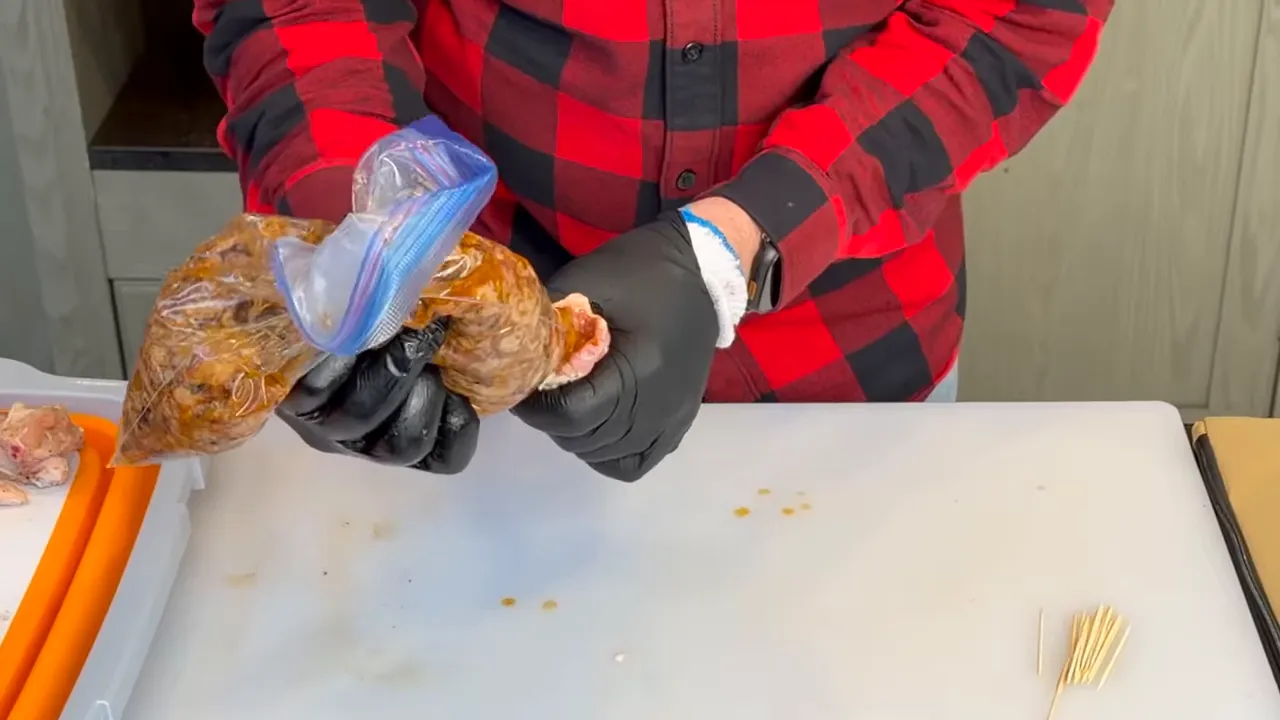
I started by securing the openings with toothpicks, then abandoned that step because the pork was staying inside just fine. Toothpicks are optional, not essential. If a particular wing needs help staying closed, use one and remember to remove it before serving.
Once the cooked pork comes into contact with raw chicken, treat the whole stuffed wing as raw poultry. Keep your tools and work surfaces clean, and do not let the finished appearance of the pork filling fool you into thinking the wing is ready to eat.
Smoke, Flip, and Finish With Buffalo Sauce
Place the stuffed wings on the cooking grate of the preheated smoker. Keep the cook at the same 325°F setup, giving the chicken skin time to color and crisp.
Flip the wings around the halfway point so both sides get a chance to develop that exterior texture. I did not use a fixed cooking time for this recipe, so use a thermometer rather than guessing from color alone.
For food safety, check that both the chicken and the center of the stuffing reach 165°F, or 74°C, consistent with the safe minimum internal temperature guidance for poultry and stuffing.
Near the end of the cook, drizzle on your Buffalo sauce. I kept it simple with a store-bought sauce. Flip the wings again to coat the other side, then let the sauce tack onto the surface before taking them off.
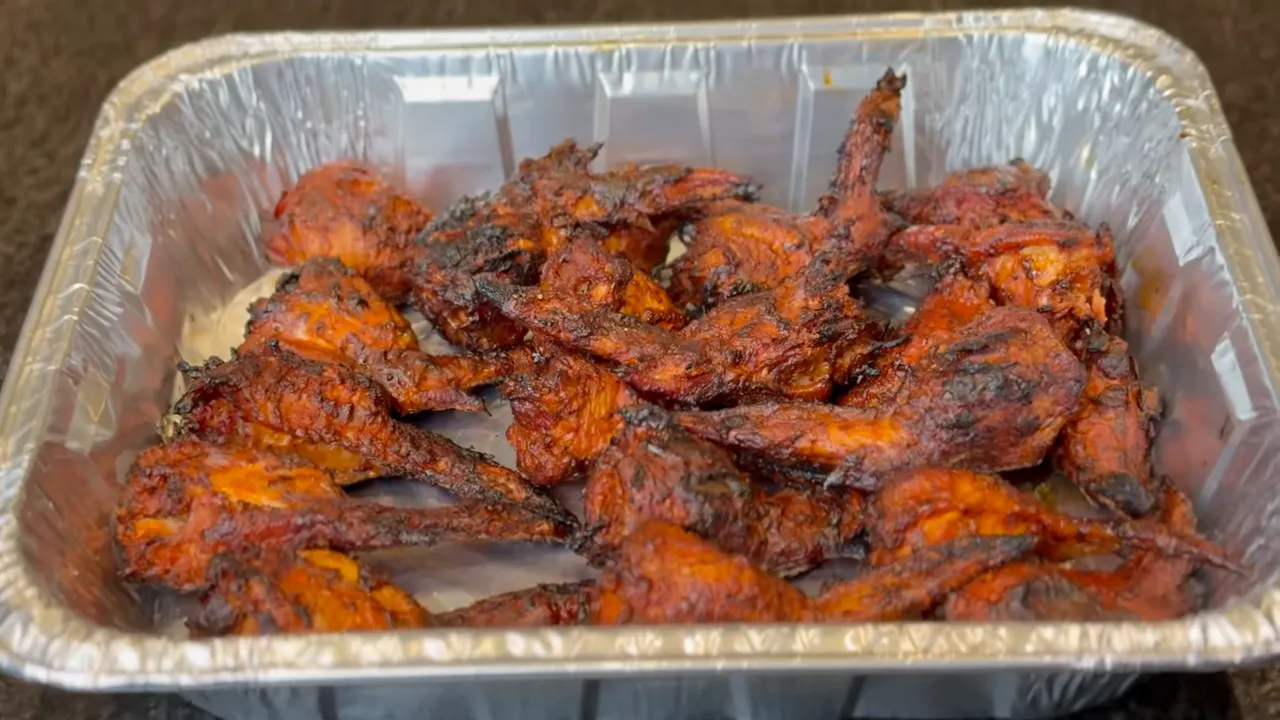
The finish is exactly what I wanted: a proper wing shape, a browned exterior, Buffalo sauce on both sides, and smoked pulled pork tucked inside.
Are Stuffed Chicken Wings Worth the Work?
These are not the wings I would choose when speed is the only priority. Deboning takes patience, and cooking fresh pulled pork adds another stage. But using leftovers removes a lot of that work, and the stuffing itself is straightforward once those pouches are ready.
The result was stunning. A lot of work? Yes. A lot of fun? Absolutely. This is a great cook for an afternoon when the preparation is part of the occasion and you have good company around the barbecue.
ChefsTemp sponsored this cook. I became a customer after trying the X10 instant-read thermometer, and the S1 system is what I used here to reduce the amount of hands-on fire management. The promoted offer was up to 25% off eligible products with code SDBBQ; check the current terms and eligible discounts before ordering.
Whether you are cooking in the backyard or packing the smoker for a tailgate, do not be afraid to fire it up. These stuffed Buffalo wings earn their place on the game-day menu.
|


