I love the flavor of barbecue cooked over real wood splits. What I don’t always love is tending that fire all night.
On my backyard offset smoker, I’m usually looking at about 45 to 60 minutes between fire checks. That’s part of the fun when I have an afternoon to dedicate to barbecue. It becomes a different proposition when a massive pork shoulder needs to be ready for lunch the next day, and family, friends, and sleep are also on the schedule.
So I put a hybrid approach to the test: start with real wood, switch to pellets in the evening, and let a programmed hot hold carry the pork through to serving time.
The cooker was the Lone Star Grillz El Fuego Trio, which combines live-fire cooking with a pellet system. The question wasn’t whether it could replace every part of running an offset. It was whether it could deliver the wood-smoke flavor I enjoy without demanding my attention for the entire cook.
Disclosure: Lone Star Grillz provided free product or sponsorship support for this cook.
Key Takeaways
- Starting with wood splits and finishing with pellets reduced overnight fire management while delivering satisfying smoke flavor.
- Separating dry-brining salt from flavor rubs gave me more control over the pork’s seasoning.
- Temperature-based programming stepped the cooker down from cooking heat to an approximately 150°F hot hold.
- The finished shoulder pulled cleanly from its bones and was juicy, tender, and ready for lunch.
Table of Contents
- Why Combine a Wood Fire With a Pellet Grill?
- The Overnight Pulled Pork Game Plan
- Prepare the Pork Shoulder the Night Before
- Set Up the El Fuego Trio for Live-Fire Cooking
- The Pellet Handoff and Automatic Hot Hold
- The Next Morning: Did the Program Actually Work?
- Is This a Replacement for an Offset Smoker?
Why Combine a Wood Fire With a Pellet Grill?
Pellet grills and offsets solve different problems.
A wood-burning offset gives me the smoke profile I prefer. A pellet grill removes some of the variables that make long cooks difficult to schedule. Combining those strengths is a pretty appealing idea, particularly for overnight pulled pork.
I’ve been outspoken about pellet grills not delivering the same flavor as a traditional offset. That even came up during a conversation with Aaron Franklin about the marketing around getting a true Texas barbecue experience from pellets alone.
But that doesn’t mean pellet grills lack value. Far from it.
When I competed at Memphis in May, the number of teams producing award-winning barbecue on pellet grills was striking. Competition cooking is about hitting your marks consistently, and predictable temperature control helps.
Restaurants solve the timing problem, too. Some leading Texas barbecue joints finish their briskets well ahead of service, then hold them in proper warming ovens for 12 to 14 hours. That helps with quality while removing the question every backyard cook knows: will the meat be ready when the guests arrive?
There’s no shame in borrowing either idea. Use the fuel you enjoy for flavor, then use temperature control and a planned hold to make serving time manageable.
The Overnight Pulled Pork Game Plan
I started just before 2 p.m., with lunch the following day as the deadline. That gave me an afternoon to run a wood fire before handing the cook over to pellets in the early evening.
The plan had three main stages:
- Build flavor with wood splits. Run a real wood fire during the opening portion of the cook.
- Finish with pellet control. Switch fuel systems when it’s time to stop tending the fire.
- Automatically transition to a hot hold. Reduce the cooking temperature as the pork approaches its target, then hold it until lunch.
Putting the wood-fire portion first was intentional. The beginning of the cook is the opportunity I wanted to prioritize for smoke flavor, before the surface developed its finished bark. That doesn’t mean smoke has no effect later. It means I wanted to spend my hands-on fire-management time where it made the most sense for this approach.
The real test would happen overnight. Could the controller recognize the programmed internal-temperature milestones, bring the heat down, and turn the smoker into a holding oven without me stepping in?
Prepare the Pork Shoulder the Night Before
Separate the salt from the flavor
For this large pork shoulder, preparation started the previous evening. I removed the remaining skin, scored the fat cap, and applied Diamond Crystal kosher salt for an overnight dry brine in the refrigerator.
This is one of the reasons I like separating salt from the rest of my seasoning. Salt-heavy barbecue rubs can make it harder to control the total salt level when you also want to dry-brine ahead of time.
Salting separately lets me choose the salt level first, then build the flavor profile without automatically adding another heavy dose of salt.
Add mustard and complementary rubs
Before the pork went on the smoker, I applied a little mustard as a binder, followed by two rubs I’ve been developing:
- Red Ash: a savory, spicy barbecue profile.
- Gold Ember: a sweet, tangy profile to complement it.
That combination gave me the direction I wanted for pulled pork: savory barbecue flavor with some sweetness and tang. I seasoned the surfaces thoroughly, including the edges of the roast.
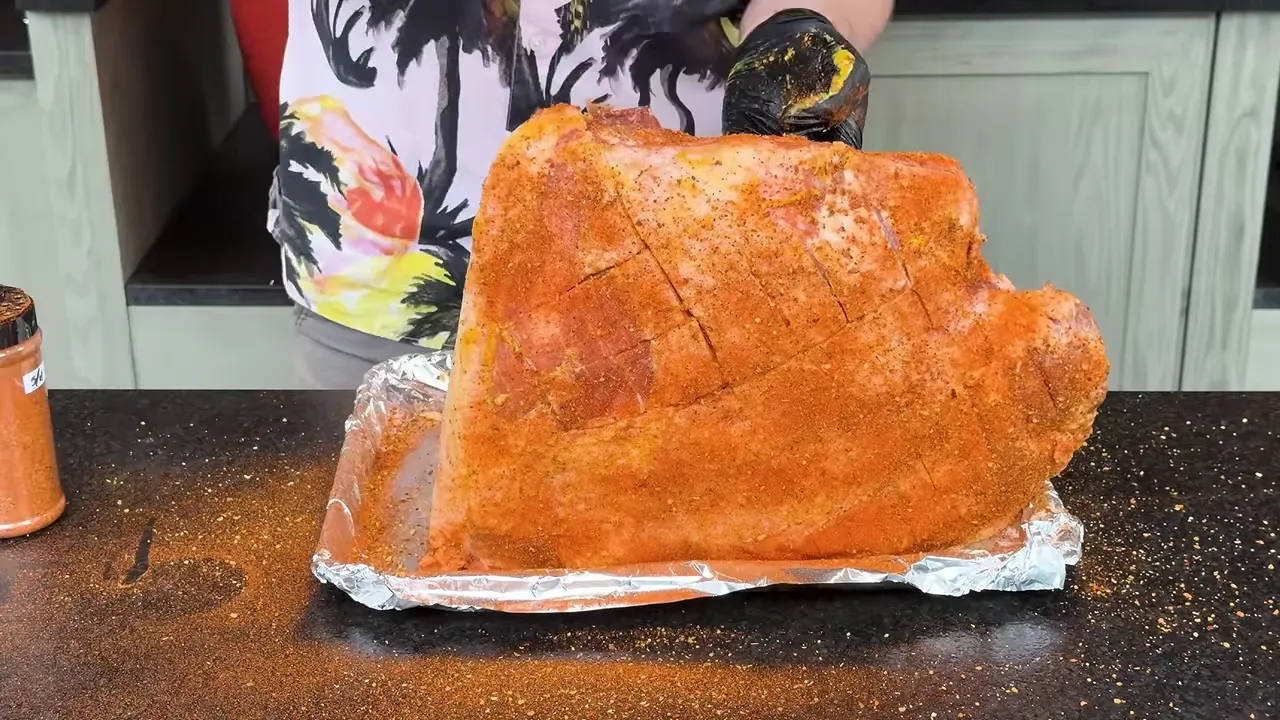
The exact salt quantity, rub ratios, and shoulder weight weren’t specified for this cook, so this is a method rather than a measured recipe. The important preparation choices were the overnight dry brine and treating the flavor seasoning as a separate step.
Set Up the El Fuego Trio for Live-Fire Cooking
The first stage used the cooker’s live-fire basket accessory. I raised the basket for access, added charcoal as a base, lit it with a grill torch, and added wood splits.
Once the fire was established, I lowered the basket into its cooking position.
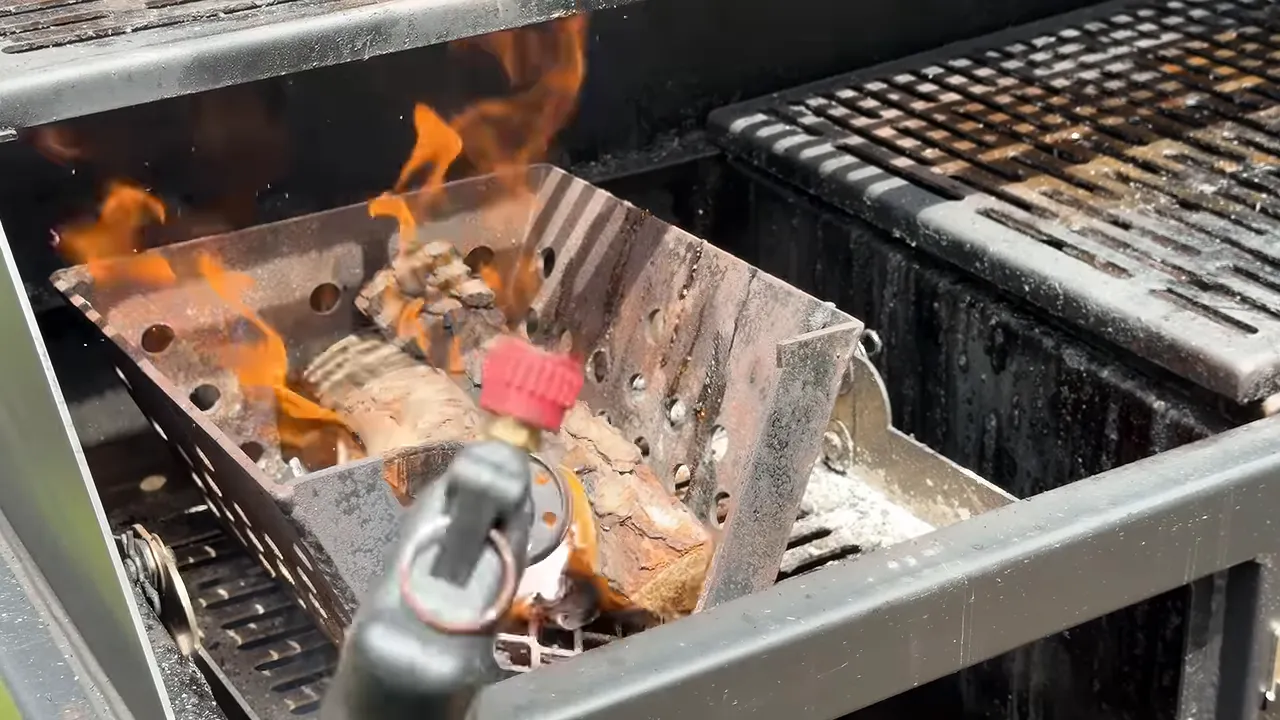
The vent arrangement matters because the heat source changes sides when switching modes. For live-fire cooking, I closed the exhaust vent on the fire side and opened the one on the opposite side, drawing heat and smoke across the cooking chamber.
When switching to pellets, that arrangement reverses to suit the new heat source. These are setup details for this cooker, not universal vent instructions for every smoker.
I also prepared the pellet side before I needed it. A wood split went into the supplemental wood basket above the pellet fire area, then the deflector went back into place. That split would provide additional smoke once the pellet system took over.
Finally, I placed the seasoned pork on the grate away from the live fire and inserted a wireless probe.
That distinction is important: hands-off finishing doesn’t mean cooking without temperature information. The experiment depended on temperature feedback and controller logic, even though I wasn’t planning to stay up checking the roast myself.
The Pellet Handoff and Automatic Hot Hold
By evening, the goal was to stop managing a wood fire and let the pellet system handle the remaining cooking time.
The feature that made this more than a simple fuel switch was the ability to program cooking stages. Rather than hold one cooking temperature indefinitely, I set the controller to respond as the pork approached its finishing temperature.
The sequence worked like this:
- Maintain the cooking stage. Keep supplying the heat needed to finish the shoulder.
- Step the temperature down. As the internal temperature approached the programmed milestones, reduce the cooker temperature gradually.
- Enter the holding stage. Settle at a programmed chamber temperature of approximately 150°F until serving time.
The idea was to ease the pork across the finish line rather than keep pushing it with full cooking heat after it was done.
Normally, I prefer judging a shoulder’s doneness by feel. A temperature reading is useful, but tenderness is the real test. In the middle of the night, though, I wasn’t going to be there to check probe resistance. This cook deliberately relied on temperature-based programming instead.
I haven’t provided a complete controller recipe here because the exact cooking setpoint and internal-temperature triggers weren’t specified. Those details matter, so they shouldn’t be filled in with guesses.
Hot holding still requires food-safety checks
The overnight challenge wasn’t just preventing dry pork. It was making sure the cooker completed the cooking stage and then maintained a safe hold.
A controller setpoint alone doesn’t establish that food stayed safe throughout the night. For practical guidance, the USDA recommends keeping hot food at 140°F or above. Verify food temperatures with a reliable thermometer rather than relying only on the chamber display.
The 150°F setting in this cook was a holding temperature after cooking, not the temperature used to smoke the raw shoulder from the start.
The Next Morning: Did the Program Actually Work?
We did get rain overnight. By morning, the cooker was still running, with smoke coming from the exhaust. The showers hadn’t interrupted this particular cook.
More importantly, the controller showed the grill running at about 150°F, the holding temperature I had programmed. That was the first encouraging sign that the overnight handoff had worked.
With guests arriving in less than an hour, there wasn’t much room for a backup plan. The next test was the pork itself.
The shoulder was so soft that moving it looked likely to pull it apart. Instead of forcing it into another dish whole, I started removing the bones and shredding it where it rested.
The bones pulled cleanly. The blade bone came out without a fight. As I worked through the shoulder, joints and knuckles separated with almost no effort.
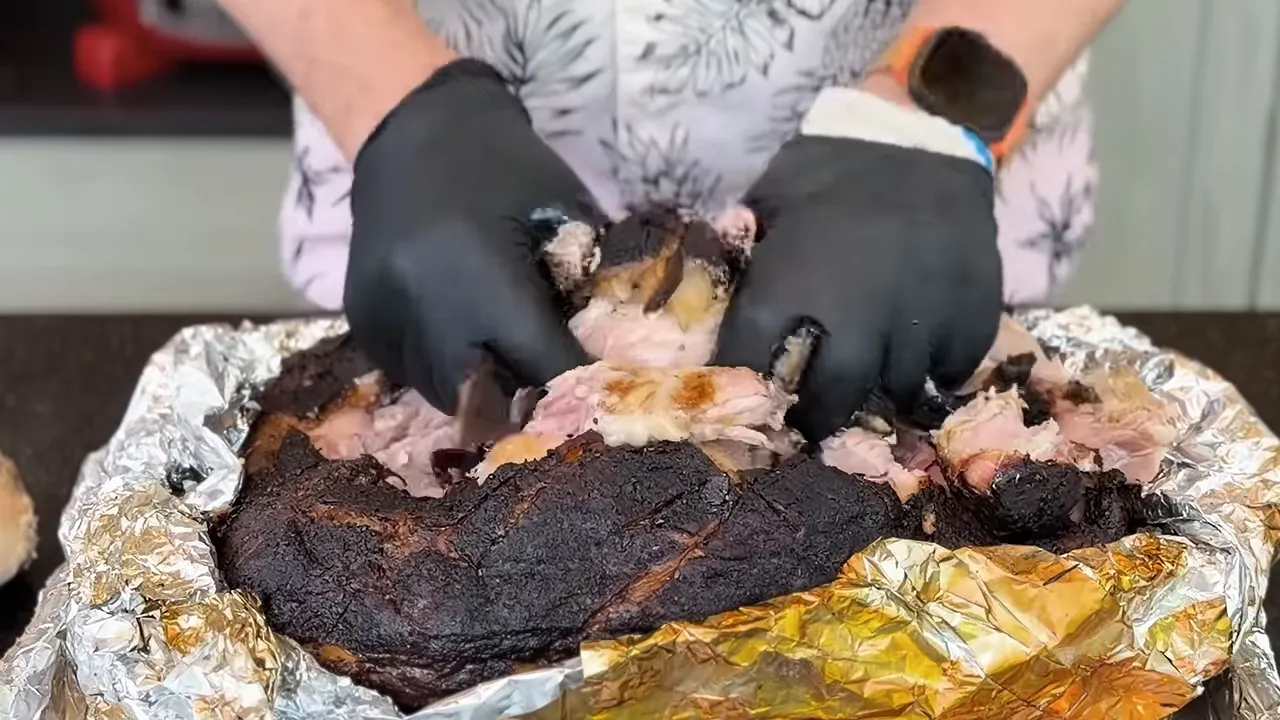
About halfway through shredding, I sprinkled in a little more rub and mixed everything together. That distributed the seasoning through the interior meat instead of leaving all the flavor concentrated on the outside.
Then came the taste test. The pork was incredibly juicy and tender, with the wood-smoke character I had wanted from the start.
Is This a Replacement for an Offset Smoker?
I’m not claiming this was better than running a stick-burning offset for the entire cook. If you have the time and enjoy managing that fire, there’s still plenty to love about doing it all the way.
This also wasn’t a controlled, side-by-side comparison that proves the two methods taste identical. It was a practical test: could I get close to the flavor I enjoy while removing the need to tend a fire through the night?
For that purpose, the result was pretty darn good.
- The wood-fire opening gave me the flavor-building stage I wanted.
- The pellet system took over the long finish.
- The programmed temperature reduction transitioned the cooker into its hot hold.
- The shoulder was tender, juicy, and ready for lunch.
That’s the appeal of this hybrid approach. It makes room for being a parent, spending time with friends, and having people over without making the fire the center of every hour.
I’ll admit that trusting the technology for the first time didn’t immediately give me the best sleep of my life. I still wondered whether the pork was cooking, holding, or heading completely off the rails.
But now I have a successful cook behind me. The system did what I asked it to do, and the pork delivered. Next time, I expect the sleep part to come a little easier.
Start with the fire for flavor. Use the technology for the long finish. Build the hold into the plan. That’s a useful compromise when you want serious barbecue without an all-night commitment.


