A smokeless fire pit is great, but I still want to enjoy the fire, not just the metal cylinder surrounding it. That is what made the new Solo Stove Summit interesting to me. It is shorter than the Bonfire, with a promise of more visible flame, faster starts, and fewer separate accessories.
Usually, “less is more” deserves a little skepticism. In this case, after putting the Summit and Bonfire side by side, I actually believe it. For my family, the biggest improvement was not the faster startup. It was how much more of the fire we could see.
Full disclosure: I was already a paying Bonfire customer and had bought a Summit before Solo Stove reached out. Solo Stove supplied another fire pit for this sponsored comparison and asked me to explain my decision-making criteria and share my honest opinions.
Key Takeaways
- The Summit’s lower profile made the flame more visible and improved my family’s campfire experience.
- The Summit established a stronger fire faster, though I did not verify the exact 30% claim.
- An integrated stand simplifies the Summit setup compared with the Bonfire’s separate stand accessory.
- The surround and heat deflector worked with both models tested, so accessories need not decide your choice.
What Changed Between the Bonfire and Summit?
The Summit keeps some of the useful features of the second-generation Bonfire while changing three things that affect everyday use: the stand, the fire-starting plate, and the height.
Removable ash cleanup stays
The second-generation Bonfire introduced a removable ash pan, and the Summit retains that convenient approach to cleanup. Instead of turning the entire fire pit upside down, you can remove the internal components and lift out the ash.
That becomes especially useful if your pit sits inside a surround. Once you have built a comfortable gathering space around it, the last thing you want is to pull the whole setup apart just to empty the ashes.
The Summit has an integrated stand
With first- and second-generation Bonfires, the separate stand accessory provides clearance beneath the pit for use on heat-sensitive surfaces such as a wooden deck. The Summit builds that stand into the fire pit, so there is one less separate accessory to buy.
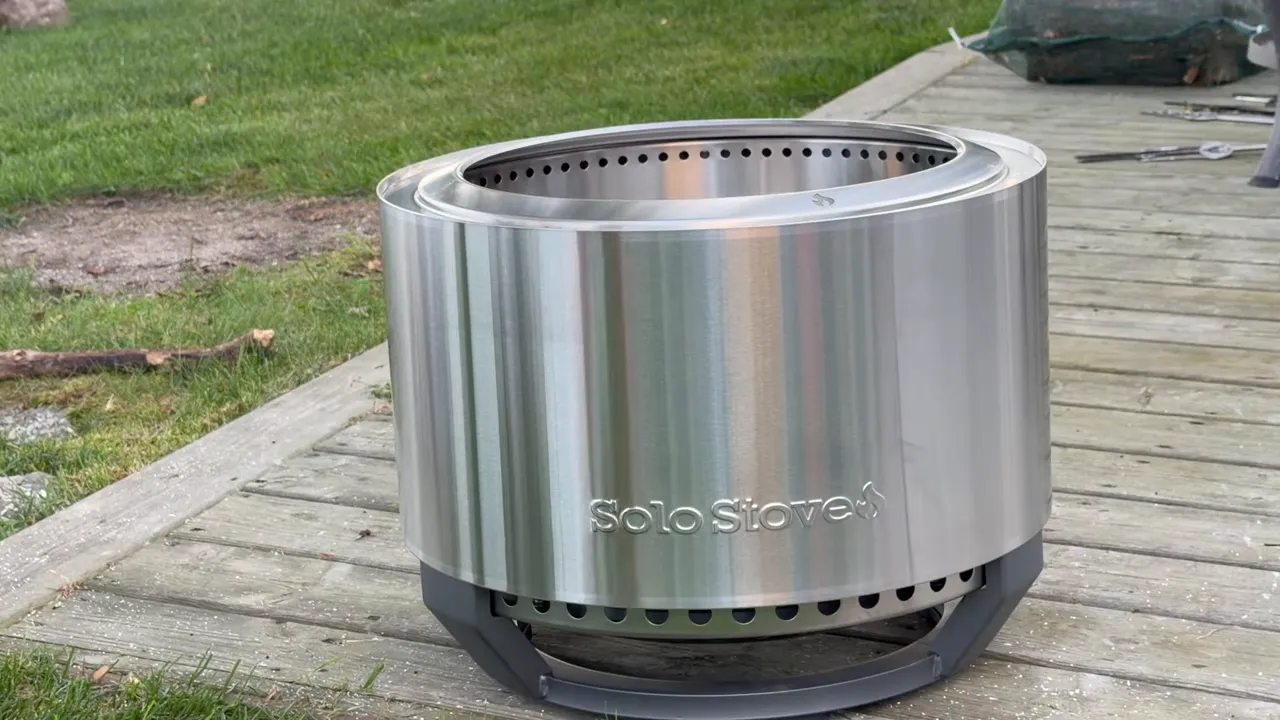
That is a useful simplification, but an integrated stand is not permission to ignore placement requirements. Follow the instructions for your specific fire pit and surface, along with basic outdoor fire safety guidance.
A new strike plate and a lower profile
The Summit-exclusive strike plate is intended to make getting a fire established easier. Solo Stove claims starts up to 30% quicker, which gave me something concrete to investigate.
The lower body is the other obvious change. Rather than having taller metal walls hide much of the fire, the Summit brings more of the flame into view. It also promises a better sightline across the pit to the people sitting opposite you.
The Startup Test: Does the Summit Light Faster?
I wanted a practical comparison: how quickly could each pit produce a proper campfire worthy of s’mores?
I used eight pieces of wood in each pit, matching the sticks and kindling as closely as I could, then started a timer. The goal was to give both pits a reasonably equal opportunity rather than help one along with a torch.
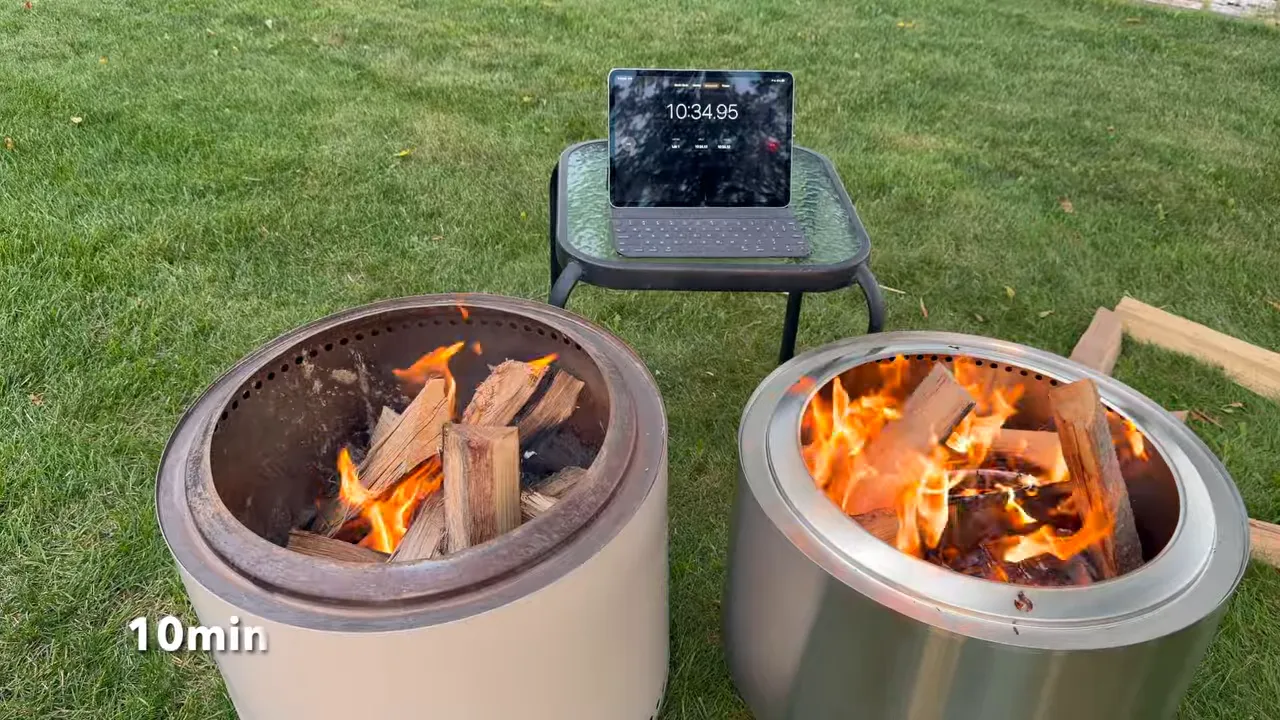
Just past the 13-minute mark, the difference was significant. Both fires were burning, but the Summit had developed a much more vigorous fire.
My result supports easier, faster startup, not a verified 30% measurement. I do not know exactly how Solo Stove defines or measures that claim, and this was a backyard comparison rather than a controlled laboratory test. What I can say is that the advantage was obvious in this test.
How much that matters depends on how you start your fires. If you already reach for a powerful torch or flamethrower, startup speed might not be a deciding factor. If you prefer kindling, a fire starter, and a lighter, the Summit’s easier start is a welcome improvement.
More Visible Flame Was the Biggest Upgrade
After the startup comparison, I built both fires up further to compare the experience around them. This is where the Summit really won me over.
The Bonfire’s taller body hides more of what is happening inside. The Summit’s shorter profile makes the fire feel more open, with more flame visible above the rim.
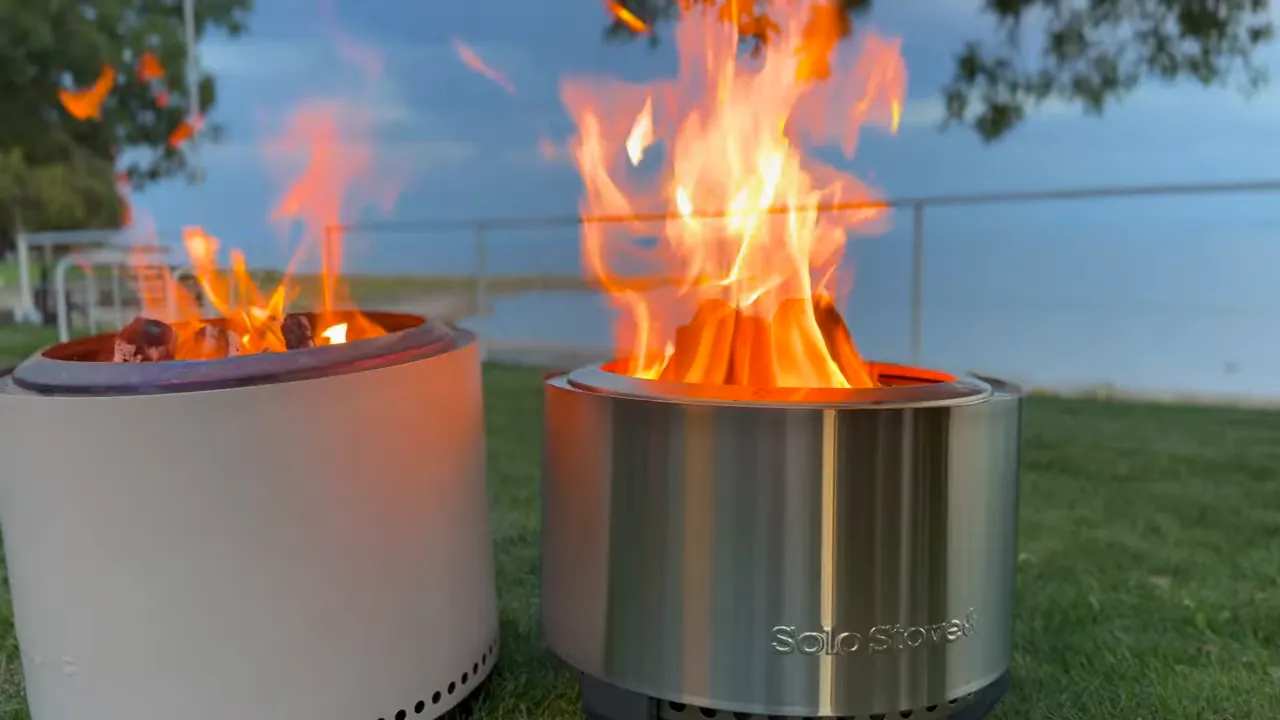
There is a difference between owning a fire pit that burns well and owning one you really enjoy sitting around. We love spending time together in front of a fire, and seeing more of that flame made the Summit noticeably more enjoyable for us.
This feature alone sealed the deal for my family. The faster startup is nice. The built-in stand is convenient. But the more open fire experience is what we appreciated throughout the evening, not just during setup.
Surround Compatibility: Both Pits Can Use It
The surround accessory is not a reason you have to choose the Summit. In my comparison, both the second-generation Bonfire and the Summit could take advantage of it.
The surround adds useful table space around the fire pit. It also makes the removable ash system more valuable because you can clean the pit without tipping the entire unit out of its installed position.
The important distinction is that this benefit is available with either of the models tested. Choosing the Bonfire does not mean giving up the option of a more complete gathering-space setup.
Does the Solo Stove Heat Deflector Actually Help?
The accessory I hear the most questions about is the heat deflector. It is also worth separating from the Summit itself: the deflector is an accessory option for both pits, not a Summit-only advantage.
I had previously tried assessing its effect using cast iron pans and an infrared temperature gun. This time, I wanted something more informative than simply reporting that I felt more or less heat.
I rebuilt a test fire, took an infrared-camera baseline without the deflector, then compared the heat signature with it installed.
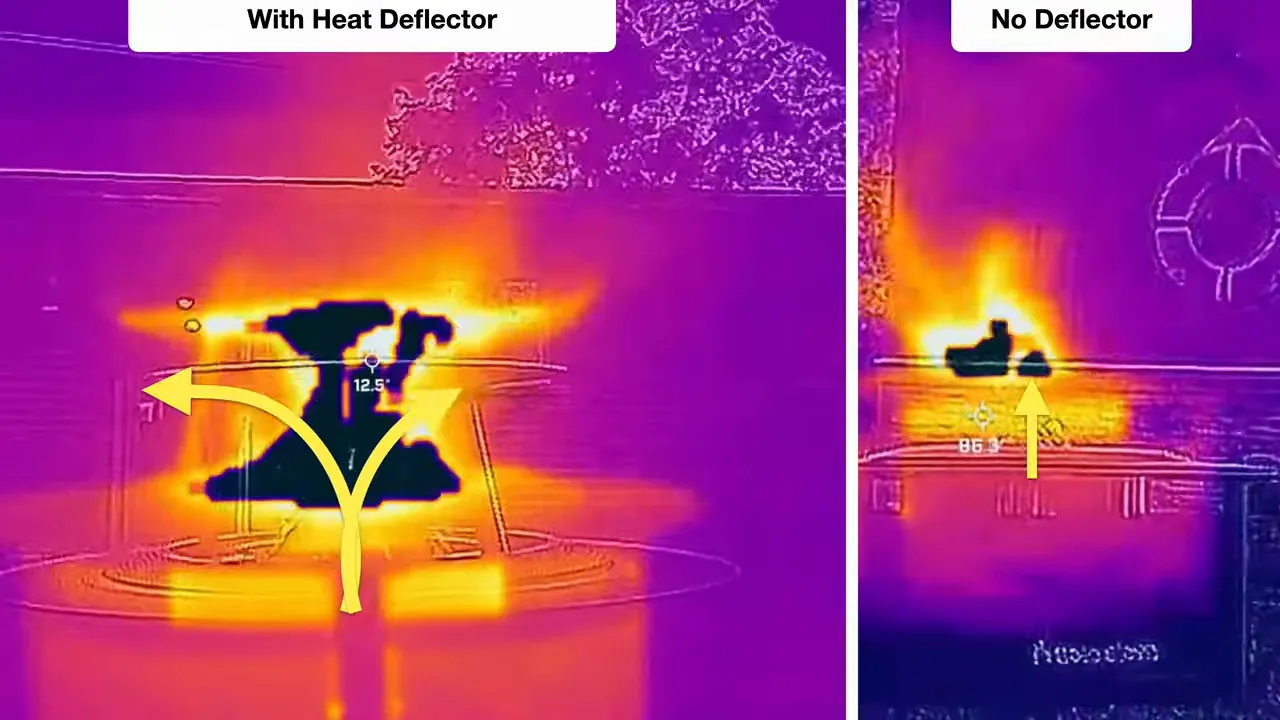
Without the deflector, the hot plume traveled primarily upward. With the deflector fitted, the thermal images showed heat spreading outward beneath it. That matched what I could feel from my seat.
The deflector redirects heat that would otherwise head upward, while leaving a path for the exhaust to escape. In my test, I did not feel that I was giving up the smokeless benefit to get more warmth around the pit.
This was a visual and seat-of-the-pants comparison, not a measured temperature increase at a fixed distance. Wind was a factor, and I moved to a slightly more sheltered spot as rain approached. Still, the change in heat distribution was clear enough to make the accessory’s purpose much easier to understand.
Which Should You Choose: Bonfire or Summit?
There is still a good case for either pit. Your budget and the parts of the campfire experience you value most should drive the decision.
- Choose the Bonfire for a lower starting price. It remains an option if you do not need the separate stand or are happy with its taller profile.
- Choose the Summit for the more visible fire. Its lower body was the biggest improvement for my family, with easier startup and an integrated stand adding convenience.
- Consider accessories separately. The surround and heat deflector worked with both models tested, so those benefits do not require choosing the Summit.
If you already own a Bonfire and mainly want more warmth around your seating area, the heat-deflector test is particularly relevant. That improvement is available without making the Summit’s lower profile the deciding factor.
For us, though, the Summit changed how much we enjoyed being around the fire. I already liked my Solo Stove gear. The more visible flame, easier starts, and simpler stand arrangement pushed that appreciation further.
So, did Solo Stove fix the problem? For my family, the Summit addressed the biggest drawback of the taller design: too much fire hidden behind metal. Less fire pit really did make for a better fire experience. Don’t be afraid to fire it up.


