“Season liberally” might be the most repeated advice in barbecue. Keep shaking until the meat disappears under a blanket of rub, then add a little more for good measure. It looks impressive. But does it actually make better barbecue?
I put two racks of St. Louis ribs head to head to find out. One received a measured amount of seasoning, while the other got more than double the rub. Same cooker, same charcoal, same wood, same approach. Just one difference: how much seasoning went onto the pork.
The heavily seasoned rack delivered more rub flavor. No surprise there. What surprised me was how strongly I preferred the rack with less.
Key Takeaways
- The measured rack used 1 tablespoon of rub per pound, divided across both sides.
- More than double the rub increased seasoning intensity but masked more of the pork flavor.
- Both racks finished juicy with excellent bite-through texture and increasingly similar appearances.
- Competition flavor intensity and backyard eating enjoyment are different goals.
Competition Barbecue and Backyard Barbecue Have Different Goals
Before we start measuring tablespoons, we need to decide what kind of barbecue we’re trying to make.
I’ve competed at Memphis in May, cooked for a Texas Monthly Top 50 barbecue joint, and sampled winning competition barbecue as well as food from many Top 50 restaurants. Those experiences have reinforced something important: a competition entry, a restaurant meal, and dinner for friends and family aren’t necessarily aiming at the same target.
In competition, you might have only one or two bites to convince a judge that your food deserves first place. That encourages big, concentrated flavor.
Multiple-time world champion Harry Soo has explained this distinction repeatedly. A winning competition formula can pack so much flavor into a bite that most people wouldn’t want to eat a whole meal of it.
That doesn’t make the formula wrong. It makes it suited to a particular job.
For backyard ribs, I want something I’ll happily keep eating, not just a bite that grabs my attention.
There’s another reason to question the blanket advice to season heavily. Some of the people recommending generous applications also sell barbecue rub. Going through a bottle quickly might be good for business, but that doesn’t automatically make it the best approach for the average backyard cook.
My question was simple: could I make ribs I enjoyed more while using less seasoning and keeping a little money in my pocket?
The Test: Measured Rub Versus the Heavy-Handed Special
Most of us can describe the coating we want, but we probably couldn’t say exactly how much rub we used. For this comparison, I wanted an actual measurement rather than a guess.
Here’s how I set up the two racks:
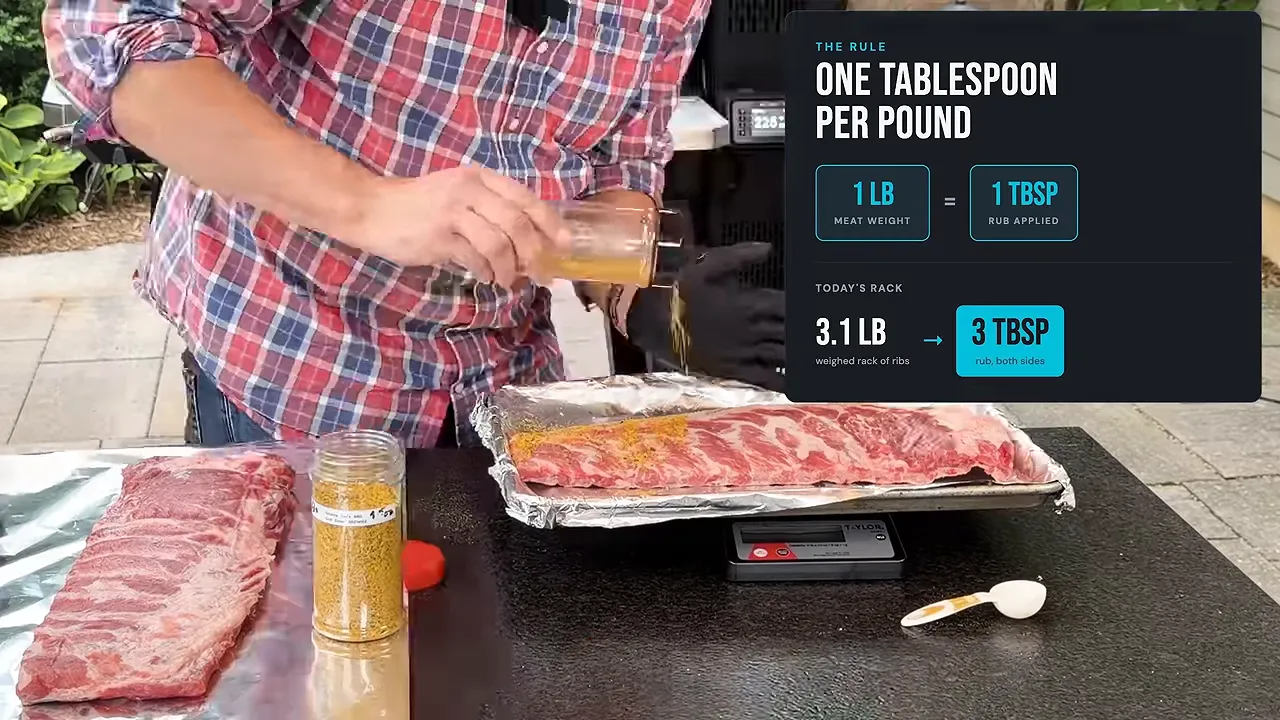
- Measured rack: About 1 tablespoon of rub per pound of ribs, distributed across both sides.
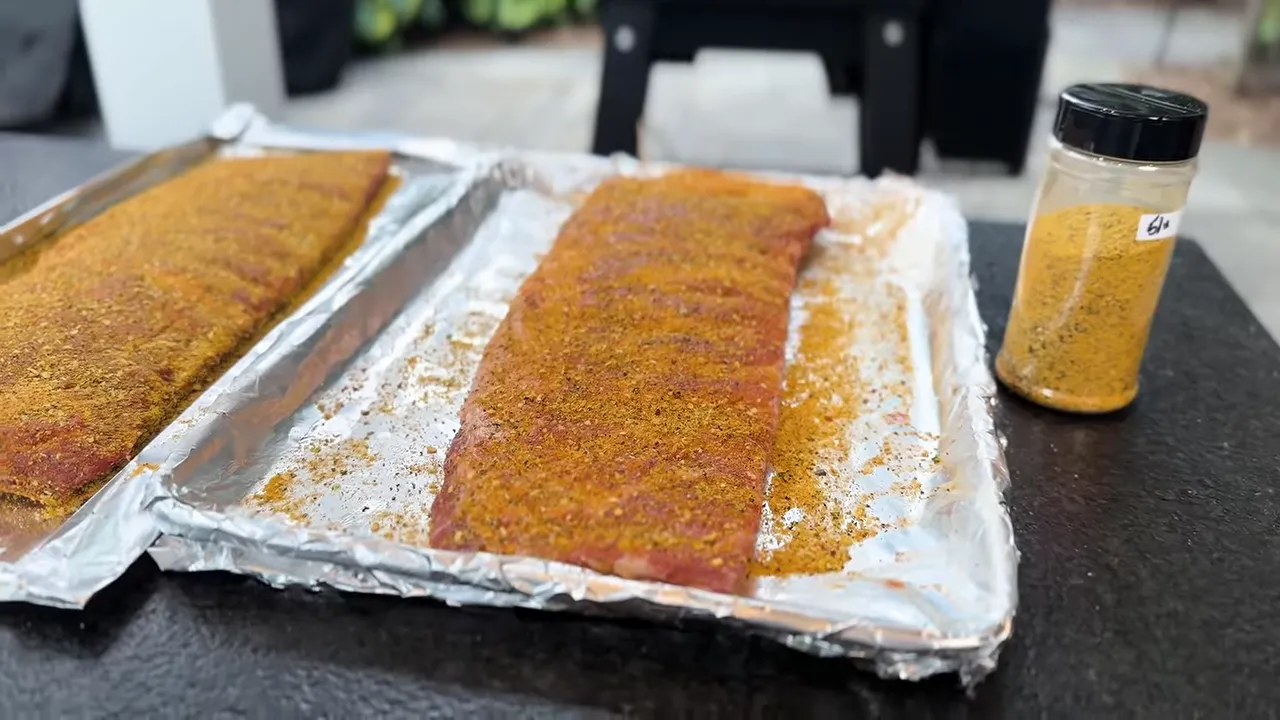
- Heavily seasoned rack: More than twice the amount of rub, applied generously rather than portioned to the meat’s weight.
The control rack weighed just over 3 pounds, so I measured out 3 tablespoons of rub total. That’s total seasoning for the rack, not 3 tablespoons on each side.
Everything else stayed the same:
- The same type of ribs
- The same rub blend
- The same cooker
- The same charcoal and smoking wood
- The same cooking treatment
I marked the measured rack with a toothpick so I wouldn’t lose track of it. That little marker turned out to be more useful than I expected.
I also planned to swap the racks’ front and back positions around the halfway point. Previous infrared checks had shown very even heat in my Masterbuilt Gravity XT, but switching positions helped account for any potential difference inside the cooking chamber.
Why the Rub Formula Matters
I used my own prototype rub for this test. Partly, that was an accountability exercise. If it eventually becomes a commercial product, I want my advice about how much to use to remain the same whether I’m testing it or selling it.
The blend also differs from many all-in-one rubs. Some rubs contain as much as 50% combined salt and sugar. Mine keeps those ingredients low, leaving room to add them separately at home.
That lets me salt-brine the ribs before applying the seasoning, which is my preferred approach.
This distinction matters when applying the result to your own cooking. The 1-tablespoon-per-pound ratio worked beautifully with this particular blend. It isn’t proof that every rub, regardless of its salt, sugar, or spice content, should be used in exactly the same quantity.
The Smoker Setup and Cooking Approach
I cooked both racks on the Masterbuilt Gravity XT. Masterbuilt supported this cook with free product or sponsorship.
Getting the cooker going was straightforward. I cleaned out the ash from the previous cook, placed a fire starter in position, and lit it with a torch.
One habit I recommend with this setup is leaving some room in the hopper between cooks rather than keeping it completely full. That gives me space to add fresh smoking wood along with the charcoal.
I built alternating layers of wood and charcoal so the smoking wood was distributed through the fuel. Our family likes a little extra smoke, so I also placed a piece of wood in the ash collector. As hot coals fell onto it, that wood combusted and provided supplemental smoke.
The cooking plan was deliberately simple:
- Start around 225°F for the first hour. Both racks went through the same opening stage.
- Spritz with apple cider vinegar and water. I applied the same treatment to both racks after that first hour.
- Swap positions around halfway through. The rack at the back moved to the front, and vice versa.
- Check near the finish. I spot-checked temperatures with my Chef’sTemp X10 before taking the ribs off and slicing them.
This wasn’t an attempt to develop a new rib schedule. It was a seasoning comparison, so keeping the cooking treatment consistent mattered more than adding extra steps.
Did More Rub Make Better Bark?
Early in the cook, the heavily seasoned rack looked fantastic. That’s exactly why this advice is so easy to accept. A thick coating delivers an immediate visual payoff.
But as the ribs cooked, the difference became less obvious.
The measured rack developed plenty of color and a convincing bark of its own. It didn’t look like a rack that had been shortchanged on seasoning. By the end, it was getting genuinely difficult to tell which was which without that toothpick.
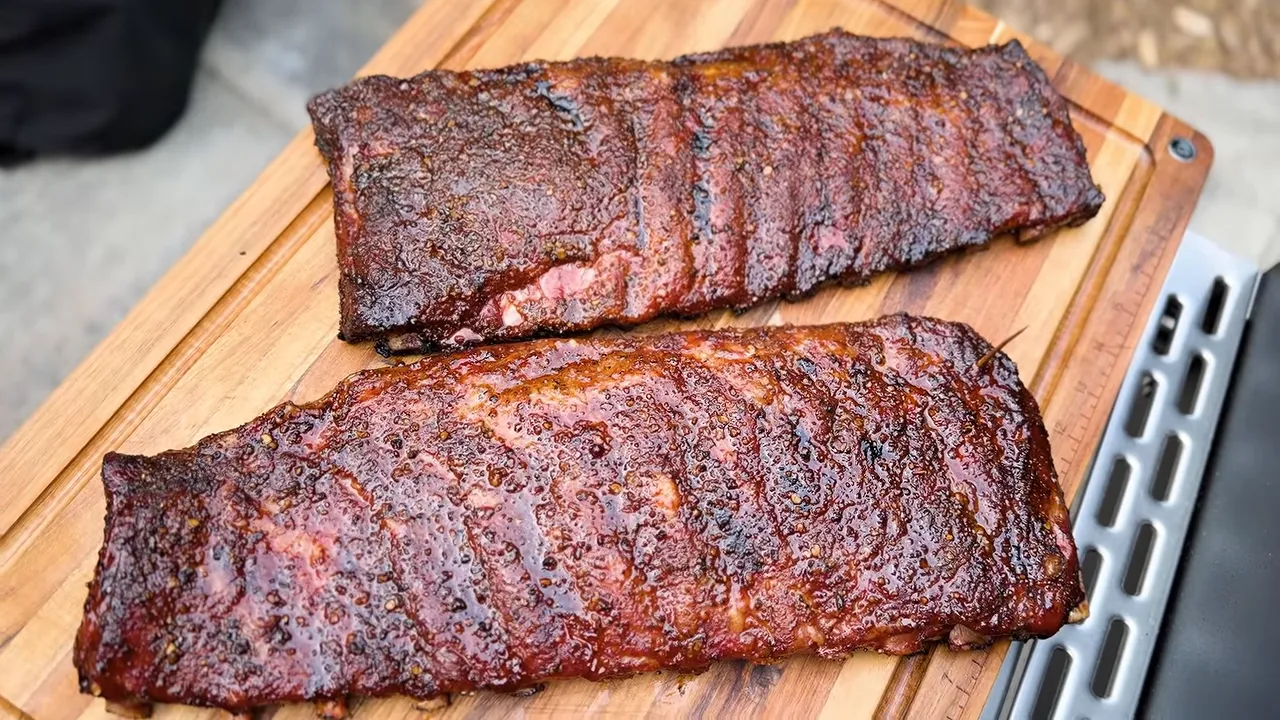
I wouldn’t turn that into a claim that rub quantity never affects bark. What this cook showed was that more than doubling the seasoning did not produce an equally obvious visual advantage at the finish. The measured rack held its own.
Of course, ribs aren’t judged by appearance alone. The important part was still ahead.
The Taste Test: More Seasoning Flavor, Less Pork Flavor
I tasted the measured rack first. It had the bite-through texture I wanted, plenty of juice, and a lively combination of flavors. This was a seriously good rib.
Then I tried the heavily seasoned rack. The difference was bigger than I expected.
Both racks were juicy. Both had excellent bite-through texture. I couldn’t identify a meaningful difference in juiciness, so neither rack lost because it was poorly cooked.
The separation came down to flavor balance.
The Measured Rack
At 1 tablespoon per pound, I could taste what the rub was adding without losing the pork underneath it. The blend brought sweetness, spice, and a little citrus tang, but the meat still had a clear place in the bite.
The Heavily Seasoned Rack
The heavier application delivered a stronger seasoning hit. If the question is whether more rub creates more rub flavor, the answer here was yes.
But side by side, it was striking how much that extra seasoning covered up the taste of the pork.
I’d spent about a year and a half developing this blend, and I was proud of it. Even so, I didn’t want the meal to taste like eating seasoning straight from the bottle. I wanted the rub to make the ribs better.
More flavor from the rub wasn’t the same thing as a better-flavored rib.
For me, the measured rack was the clear winner. It wasn’t just the one I admired after a single bite. It was the one I wanted to reach for next.
How Much BBQ Rub Should You Use on Ribs?
For backyard St. Louis ribs with a blend like the one I tested, 1 tablespoon of rub per pound of ribs is a useful starting point, divided across both sides.
The bigger lesson is to measure before assuming you need more. Weigh the food, portion the seasoning, and pay attention to whether the finished result tastes like well-seasoned pork or mostly like the rub.
Keep the goal in mind, too. If you’re developing a competition entry, that concentrated flavor punch may be exactly what you need. If you’re cooking dinner for family and friends, balance deserves more attention than how dramatic the coating looks.
This was one side-by-side cook with one rub, not a universal verdict on every seasoning blend. But it changed how closely I’ll track the amount of rub I apply relative to the amount of food I’m cooking.
The measured rack gave me excellent bark, juicy meat, clean bite-through texture, and more of the pork flavor I wanted. Using less rub wasn’t a compromise. In this test, it made the better meal.
Season with purpose, not just enthusiasm. And don’t be afraid to fire it up.


