The Weber Smokey Mountain has earned its reputation. People swear by it, championships have been won on it, and it helped make low-and-slow barbecue approachable for an entire generation.
But a smoker can be a legend and still have limitations.
After years of cooking on my own WSM and working through hundreds of owner comments, five complaints keep coming up: temperature management, leaks, overnight confidence, fuel flavor, and capacity. Those happen to be exactly the kinds of problems the Masterbuilt Gravity Series XT aims to solve.
So, has old school finally been replaced by new school? I put them through a real backyard cook, used an infrared camera to examine heat distribution, measured exhaust airflow, and then threw in an unplanned challenge: adding chicken and steaks halfway through a rib cook.
The Gravity XT gets my win, but that does not make the Weber obsolete. The interesting part is why it wins, and whether those advantages matter to the way you cook.
Disclosure: Masterbuilt and Weber provided products for this comparison, and the production included free product/sponsorship.
Table of Contents
- Key Takeaways
- Why the Weber Smokey Mountain Became a Barbecue Legend
- The Five WSM Complaints That Keep Coming Up
- What the Gravity XT Does Differently
- The Gravity XT Questions Worth Asking
- The Cooking Test: Heat Distribution and Airflow
- When a Rib Cook Suddenly Becomes Dinner for More People
- Final Verdict: Is the Gravity XT the Better Charcoal Smoker?
Key Takeaways
- The Gravity XT won through easier temperature control, greater usable capacity, and simpler high-heat transitions.
- The WSM’s hot perimeter limits usable rib space despite its large circular grate.
- The XT produced crisper chicken skin during the expanded ribs, chicken, and steak cook.
- My upgraded WSM approached XT pricing without resolving its cooking-chamber capacity limitations.
Why the Weber Smokey Mountain Became a Barbecue Legend
The Smokey Mountain arrived in 1981, before pellet grills became a backyard option and before offset smokers were as widely accessible to home cooks. It offered a relatively straightforward way to make proper low-and-slow barbecue.
It also had a practical advantage that still matters: portability. You can break it into sections and fit it under a tonneau cover in the back of a truck. That is useful for competitions, travel, or anyone who does not want to haul a large, one-piece cooker.
The WSM’s appeal has never been complicated. It is a charcoal smoker with a proven track record and a community that knows how to get excellent food out of it.
The trade-offs become clearer when you ask it to do more than a carefully planned low-and-slow cook.
The Five WSM Complaints That Keep Coming Up
1. Temperature management can become a chase
A controlled briquette arrangement, such as the snake method used here, can hold temperatures steady for hours. The difficulty comes when the fire changes behavior, including when it reaches a wood chunk.
A temperature spike or dip can turn a relaxed cook into a series of vent adjustments. You make a correction, wait for the smoker to respond, and then try not to overcorrect in the other direction.
That does not mean the WSM cannot run steadily. It means its stability depends on your fire setup, airflow, and ability to manage changes. Without added technology, you are the controller.
2. Air and grease find ways out
My Smokey Mountain is what I affectionately call a leaky bucket. Smoke escapes around the access door and lid joint rather than traveling exclusively through the intended exhaust.
That leakage matters for two reasons. Uncontrolled airflow can make temperature management less predictable, and grease can work its way down the exterior. I regularly clean those streaks and the area beneath the smoker.
It is not just a cosmetic complaint. Sealing and airflow are part of how a charcoal cooker responds to adjustments.
3. Overnight cooks require confidence
There is a difference between holding a temperature while you are nearby and trusting a smoker with an expensive brisket while you sleep.
On the WSM, the overnight question is whether your fuel arrangement and vent settings will keep doing their job without intervention. Remote monitoring and temperature-control accessories can help, but they add equipment and cost.
Automation reduces the workload; it does not remove the need for a sound setup and temperature monitoring. For general food-handling and smoking guidance, the USDA’s meat and poultry smoking guidance is a useful reference.
4. Steady briquette burns are not everyone’s flavor preference
Fuel flavor is a little like coffee. People have strong preferences, and there is no point pretending otherwise.
My personal ranking moves from gas at the mildest end, through pellets, briquettes, lump charcoal, and finally real wood splits for the strongest wood-fired character. That is a taste preference, not a laboratory scale.
The WSM’s traditional low-and-slow approach pairs well with briquettes because of their predictable burn. That does not mean lump charcoal cannot be used. The issue is that I prefer the flavor of lump and wood, and I want that preference to fit easily into the way the smoker operates.
The Gravity XT can burn briquettes too, but its fuel system gives me more flexibility to work with lump charcoal and supplemental wood.
5. Usable capacity runs out faster than the diameter suggests
I am using the larger 22-inch Smokey Mountain, and I still run into space limitations. Long racks of ribs push toward the perimeter, where the heat is more aggressive.
There may be room on the grate, but that is not the same as having equally useful cooking space everywhere on it. Avoiding scorched rib ends effectively shrinks the area I want to use.
A second cooking grate helps with total capacity, but stacking food introduces access and rearrangement challenges. And after adding up the upgrades I have made over the years, my WSM setup ends up in roughly the same price territory as the Gravity XT without solving the chamber-size limitation.
That is a comparison of my modified setup, not a claim that a stock WSM and a Gravity XT have the same purchase price.
What the Gravity XT Does Differently
I think of the Gravity Series as Team Charcoal’s answer to the pellet grill. It brings temperature-control and remote-monitoring convenience to a cooker that burns charcoal and can incorporate real wood.
The appeal is not replacing fire with technology. It is using technology to manage the fire so you do not have to spend the whole cook adjusting vents or feeding sticks.
Charcoal flavor with automated control
App connectivity, remote monitoring, and controlled cooking temperatures make long cooks less demanding. For an overnight brisket, that is a meaningful change in the experience.
I still get the charcoal character I prefer over pellets, with several ways to add wood smoke:
- Mix wood chunks into the charcoal supply to introduce smoke as the fuel burns.
- Add wood chunks to the ash bin as part of an appropriate smoking setup.
- Use a separate, specialized wood-burning approach for a more offset-like experience.
I have explored wood-only cooking separately and have produced results I consider comparable to a backyard offset. It is not a complete setup procedure here, and fuel arrangements should follow the manufacturer’s guidance rather than treating every method as interchangeable.
More room and more ways to cook
The XT’s large chamber is a major part of its usefulness. I have loaded it heavily with ribs in previous cooks, and the extra space becomes especially valuable when the menu grows.
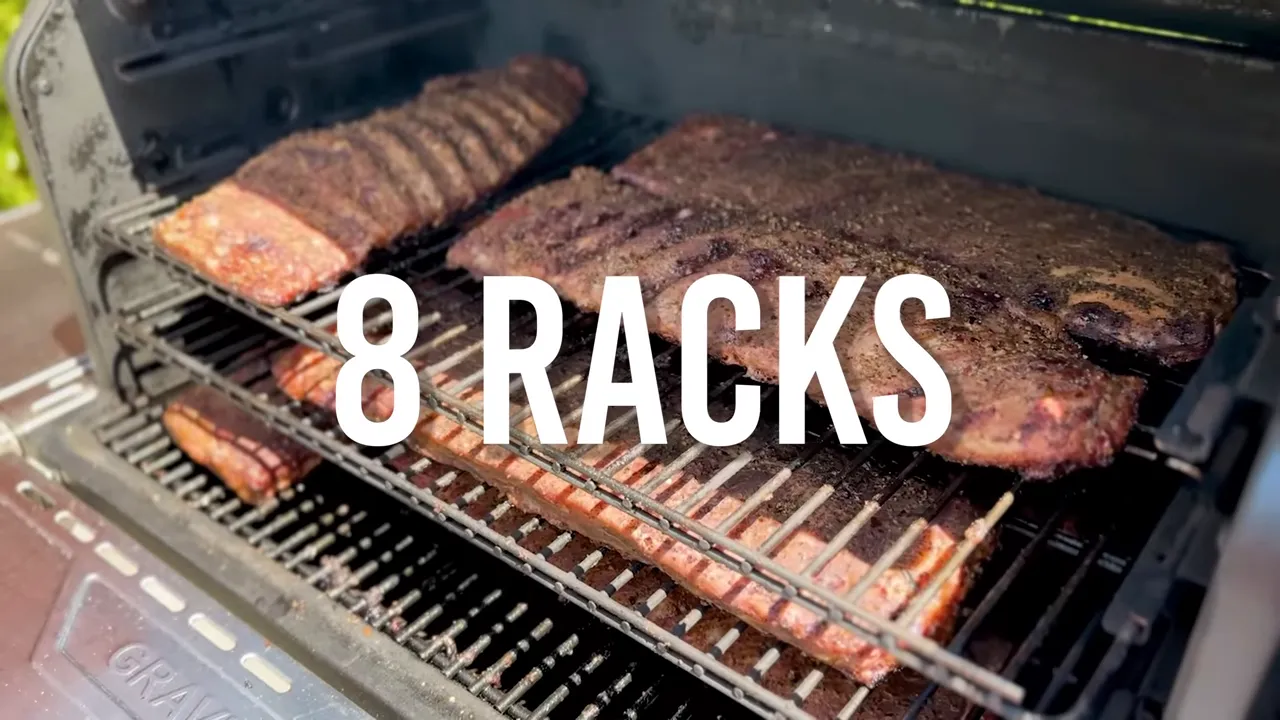
Smoking is only part of the appeal. The Gravity Series also gives me high-heat cooking and options for griddle cooks. That versatility matters if you want one backyard cooker to handle more than ribs and pulled pork.
The Gravity XT Questions Worth Asking
Does an off-to-the-side fire compromise flavor?
I hear this question often, especially in comparisons with a kettle. My answer is that a separate fire does not automatically mean inferior barbecue. Offset smokers are built around that basic arrangement.
What I think people are often describing is their love of steak seared directly over charcoal. Fair enough. I love that too.
But direct-coal searing and indirect smoking are different jobs. The location of the fire alone does not tell you whether a smoker will produce great ribs.
What about electronics outdoors?
This is a legitimate ownership question. Any electronically controlled grill needs to be used and stored within the conditions specified in its manual. Rain, snow, and outdoor exposure are not things to dismiss just because the grill feels substantial.
The XT does feel substantial. Compared with my older Gravity 1050, it carries roughly 40% more weight despite a similar overall size. It also has a double-wall cooking chamber, a gasket, and a more durable firebox with ceramic inserts.
At the time of this comparison, the XT carried a three-year warranty versus the one-year warranty on the older Gravity models discussed here. Those are meaningful improvements, though build quality and warranty coverage are not a reason to ignore care instructions.
Are grease fires a unique Gravity Series problem?
Grease near a heat source is a concern on any cooker. Pellet grills, kettles, kamados, WSMs, and gravity-fed smokers all need maintenance.
My approach is straightforward: remove accumulated grease, empty the collection tray as directed, and keep the cooker clean between cooks. Proper maintenance reduces the risk; it is not a guarantee that a fire can never happen.
For me, grease management is an ownership responsibility, not a reason to dismiss this entire smoker category.
The Cooking Test: Heat Distribution and Airflow
About two hours into the rib cook, I used two tools to look beyond the control dial and the appearance of the food:
- An infrared camera to examine visible surface heat patterns and identify hot areas.
- An anemometer to check whether exhaust air movement registered at the outlet.
These were practical backyard observations, not a controlled laboratory trial. The infrared images show surface heat patterns, and the airflow checks do not provide a complete measurement of everything moving through either smoker.
WSM: hotter around the perimeter
The Smokey Mountain behaved as its layout suggests. The fire sits at the bottom, the water pan acts as a heat deflector, and heat travels around the pan toward the cooking grates.
The infrared images showed a pronounced hot perimeter. That is the area I want to keep long rib ends away from when possible.
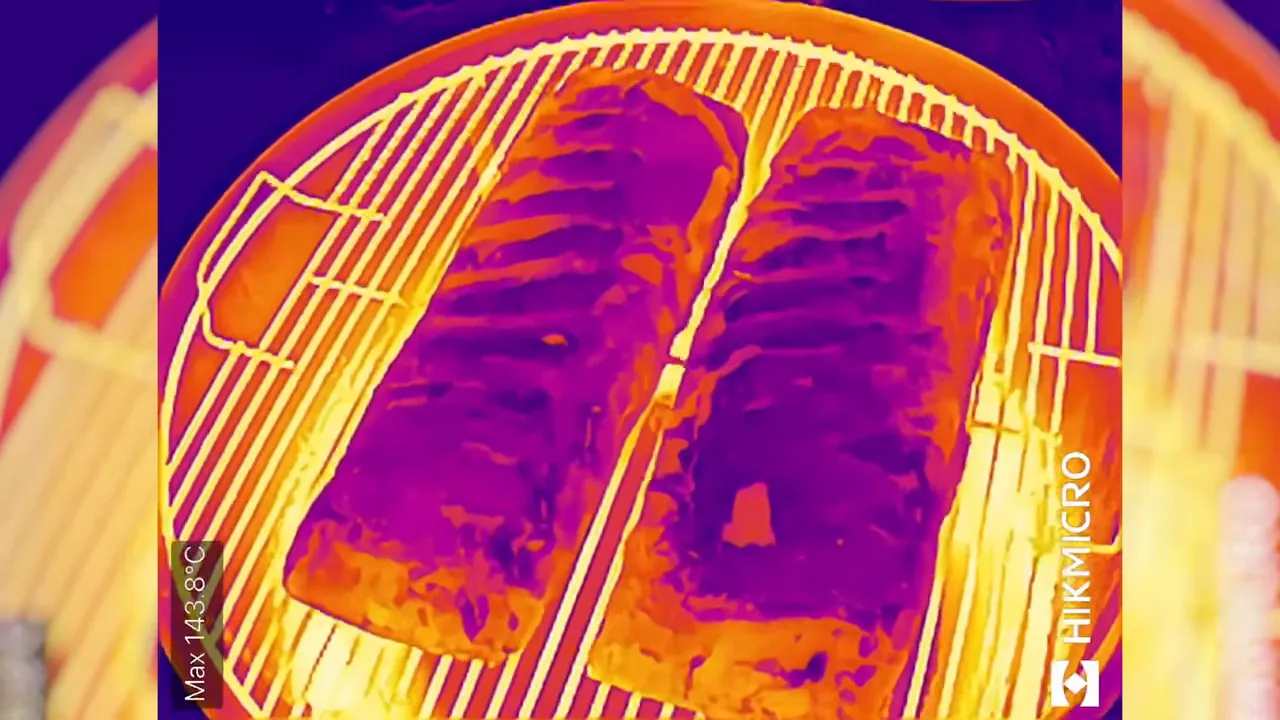
At the top vent, I could not obtain a useful exhaust-speed reading. Smoke was also escaping around the access door and lid joint, which I suspect contributed to the difficulty.
No useful reading does not mean no airflow. It means I could not quantify it reliably with this tool at that location.
Gravity XT: a broad usable cooking zone
In the XT, the infrared inspection showed a generous cooking area that appeared more even across the chamber. That supports what I have experienced when filling it with food: there is a lot of space I can actually use.
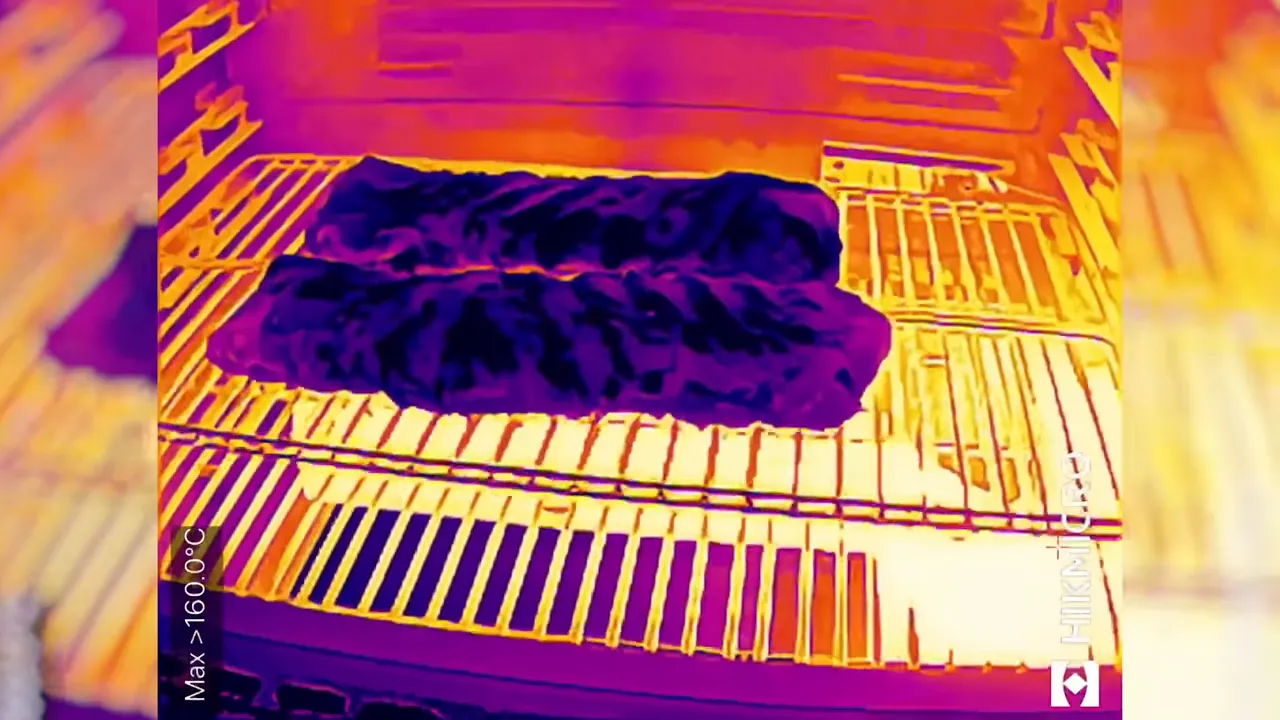
The anemometer also registered air movement at the rear exhaust. The larger chamber needs heat and smoke supplied throughout, and that moving convection air became particularly interesting once chicken joined the cook.
I often say more fuel can mean more flavor. Here, that is my explanation for part of the XT’s appeal, not a fuel-efficiency result. I did not establish a measured consumption comparison in this test.
When a Rib Cook Suddenly Becomes Dinner for More People
A couple of hours into cooking, I got the call every pitmaster recognizes: the families who could not make dinner now could.
Thankfully, I had half chickens and steaks already prepared in the refrigerator. Each cooker now had to handle additional food while finishing the ribs.
This was not the original plan, but it exposed something useful. A smoker is not only judged by how it performs when everything goes perfectly. It also matters how easily it adapts when dinner changes.
Chicken: the clearest difference
On the WSM, I tried to raise the temperature and added lump charcoal to the existing briquette fire. I also moved the ribs onto a lower grate so the chicken and steak could fit above.
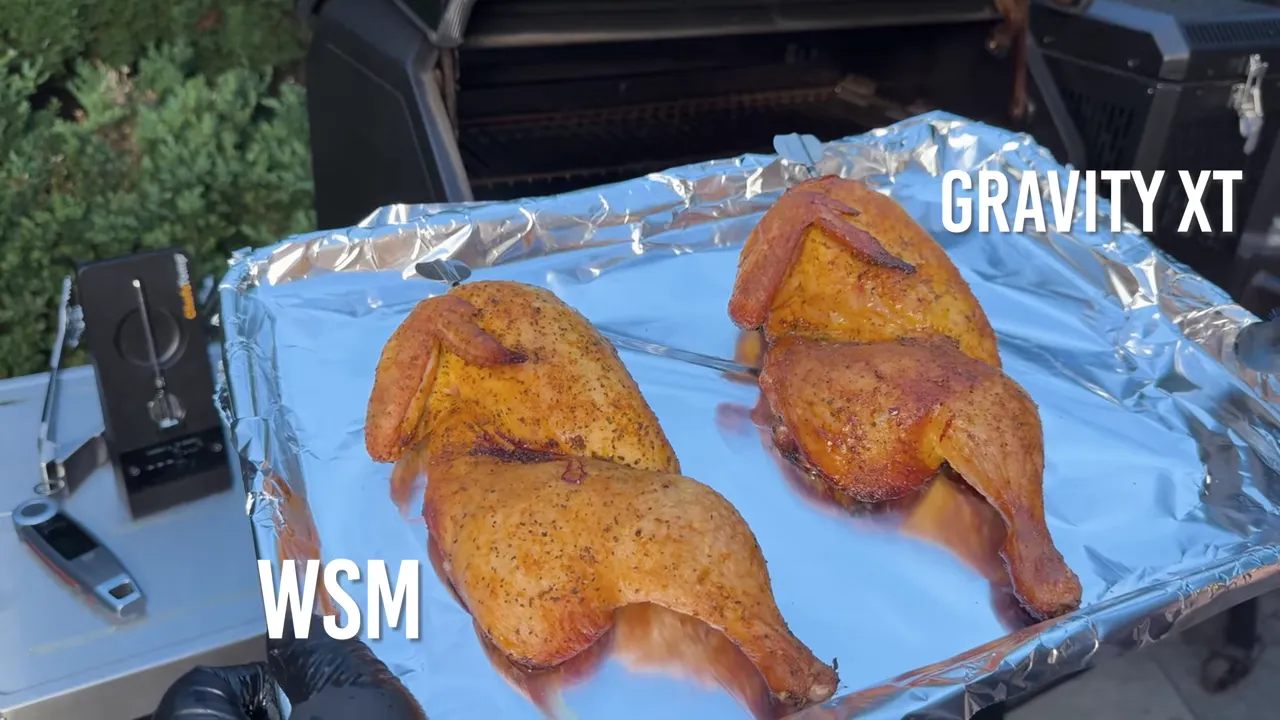
That worked as a way to keep cooking, but it introduced more handling, fuel management, and rearrangement. The finished chicken skin was not crispy.
The Gravity XT produced chicken with better color and a noticeably crisper skin texture. I suspect the moving convection air contributed, alongside the cooking conditions. This cook does not isolate airflow as the only cause, but the result was clear.
Ribs: strong bark from charcoal and wood
The XT ribs developed excellent bark while cooking with lump charcoal and real wood. That was one of the outcomes I liked most.
I preferred the flavor too, but I do not want the entire comparison to rest on my taste buds. Bark, chicken-skin texture, usable space, and ease of changing temperature are more concrete differences you can use to make your own decision.
Steaks: smoking was easy, searing separated them
The WSM brought the steak to around 125°F internally, my staging point before a finishing sear. But in the configuration I was using, it did not have the accessible high heat needed to finish that job.
Getting closer to the coals would have required dismantling or rearranging a hot cooker while other food was still involved. That is not a convenient mid-dinner transition.
On the XT, I could change the setting and bring the cooker toward its roughly 700°F high-heat range in minutes. That made moving from smoking to searing much simpler.
I also experimented with a grate over the open charcoal hopper for a direct-flame sear. That is an unofficial modification, not a manufacturer-approved cooking instruction. I would not treat it as a recommended procedure; the normal high-temperature cooking chamber is the supported option to focus on.
Final Verdict: Is the Gravity XT the Better Charcoal Smoker?
For the way I cook, yes. The Masterbuilt Gravity XT wins this comparison.
It addresses the frustrations I have spent years trying to work around on the Smokey Mountain:
- Less hands-on temperature management for long, low-and-slow cooks.
- More convenient overnight cooking through automated control and remote monitoring.
- The lump-charcoal and wood flavor I prefer without the same fire-management workload.
- More usable capacity when family dinner becomes a larger gathering.
- Easier transitions to high heat when chicken and steaks join a smoking session.
The WSM still makes sense if you value a traditional charcoal-smoking experience, portability, and a well-established community. It has not suddenly forgotten how to make excellent barbecue.
What the XT changes is the amount of work required to get the experience I want. In my opinion, it delivers some of the best backyard smoke flavor short of tending a proper offset, without requiring me to feed wood every 30 to 40 minutes throughout a long cook.
And once I compare the XT with what I have actually spent upgrading my WSM, rather than comparing it with a bare stock cooker, the value argument gets much stronger.
You are choosing more than a smoker. You are choosing how much fire management you enjoy, how many people you need to feed, and how easily your cooker can handle a change of plans. For my backyard, the smart money is on the smart grill.
|


