Meat prices are enough to make any barbecue fan wince. But some of the extra money leaving your wallet has nothing to do with better beef or better chicken. You are paying someone else to use a knife.
Packaged chicken breasts, neatly cut ribeyes, and split party wings are convenient. No argument there. The question is whether that convenience is worth what you pay for it, especially when the same preparation takes just a few minutes at home.
Three simple skills can make a real difference: breaking down a whole chicken, cutting steaks from a rib roast, and splitting whole wings. Put those habits to work throughout the year, and the savings can add up to thousands for a family that cooks barbecue regularly.
This is not about buying worse meat. It is about buying less preparation.
Key Takeaways
- Whole chickens provide multiple meal-ready cuts plus bones for stock with a little preparation.
- Cutting ribeye steaks from a roast can reduce costs while giving you thicker portions.
- Splitting whole wings takes two cuts per wing and only a few minutes per batch.
- Annual savings depend on local prices, usable yield, and how much meat your household buys.
Table of Contents
- The Hidden Cost of Convenient Meat Cuts
- 1. Break Down a Whole Chicken
- 2. Cut Ribeye Steaks From a Rib Roast
- 3. Split Whole Chicken Wings Yourself
- Two More Meat-Buying Swaps Worth Considering
- Season for Flavor Without Giving Up Salt Control
- Pay for the Meat, Not Every Knife Cut
The Hidden Cost of Convenient Meat Cuts
I compared prices across several stores, both locally and during trips through Buffalo, Florida, and Texas. Prices change, sales come and go, and your grocery bill will not look exactly like mine. Still, the same pattern kept showing up: a substantial premium for meat that someone had already portioned or deboned.
Here are the swaps worth checking at your own meat counter:
- Whole chicken instead of packaged breasts and thighs: My examples showed potential savings approaching 50%.
- Rib roast instead of individual ribeye steaks: Cutting the steaks yourself offered roughly a one-third saving in my comparison.
- Whole wings instead of split party wings: The price gap was substantial for a job that takes only two cuts per wing.
- Bone-in pork shoulder instead of boneless: In some comparisons, the boneless shoulder cost more than twice as much per pound.
- Homemade bacon instead of premium smoked bacon: There can be a large price advantage, but this is a much bigger project than a few minutes of knife work.
One important distinction: a 50% markup and a 50% saving are not the same calculation. Treat the percentages as rough shopping comparisons, not a universal discount. Your local prices, usable yield, and the cuts your family actually eats determine your savings.
What Those Habits Can Add Up To
Using my family-of-four consumption assumptions and price comparisons, the approximate annual savings were:
- Chicken: $944.
- Steaks cut from roasts: $1,500 for a steak-loving household like mine.
- Bone-in pork shoulder: $924.
- Whole chicken wings: About $450, with some comparisons closer to $500.
- Homemade bacon: $700.
Those rounded estimates put the full set of swaps at roughly $4,500 a year. That is the scale of the opportunity, not a promise that every household will save that amount. The bigger total includes pork shoulder and homemade bacon, not just the three quick preparation skills below.
And the ten minutes? Think of that as a small, recurring investment in preparation, not one ten-minute session that permanently cuts your grocery bill.
1. Break Down a Whole Chicken
This might be the easiest win in barbecue that people regularly overlook. In my shopping comparison, a whole chicken and a package of prepared breasts cost nearly the same amount. The whole bird gave me breasts, legs, wings, and bones for stock.
You also get choices. Keep the skin or remove it. Cook chicken halves or separate everything into individual pieces. Choose a fresh, air-chilled bird if the price and quality make sense locally. Buying whole does not mean giving up control. It gives you more of it.
Remove the Backbone and Open the Bird
- Place the chicken with the backbone accessible. Using a sharp knife or sturdy poultry shears, cut along one side of the spine, staying close to the bone.
- Cut along the other side. Remove the backbone and set it aside for stock.
- Open and flatten the chicken. Press and flex the bird to expose the central breastbone and cartilage.
- Free the keel bone. Work the knife carefully underneath and alongside it, tracing the bone rather than cutting deeply into the breast meat.
- Pull out the loosened bone and cartilage. If you want to keep the skin intact, avoid cutting through it on the other side.
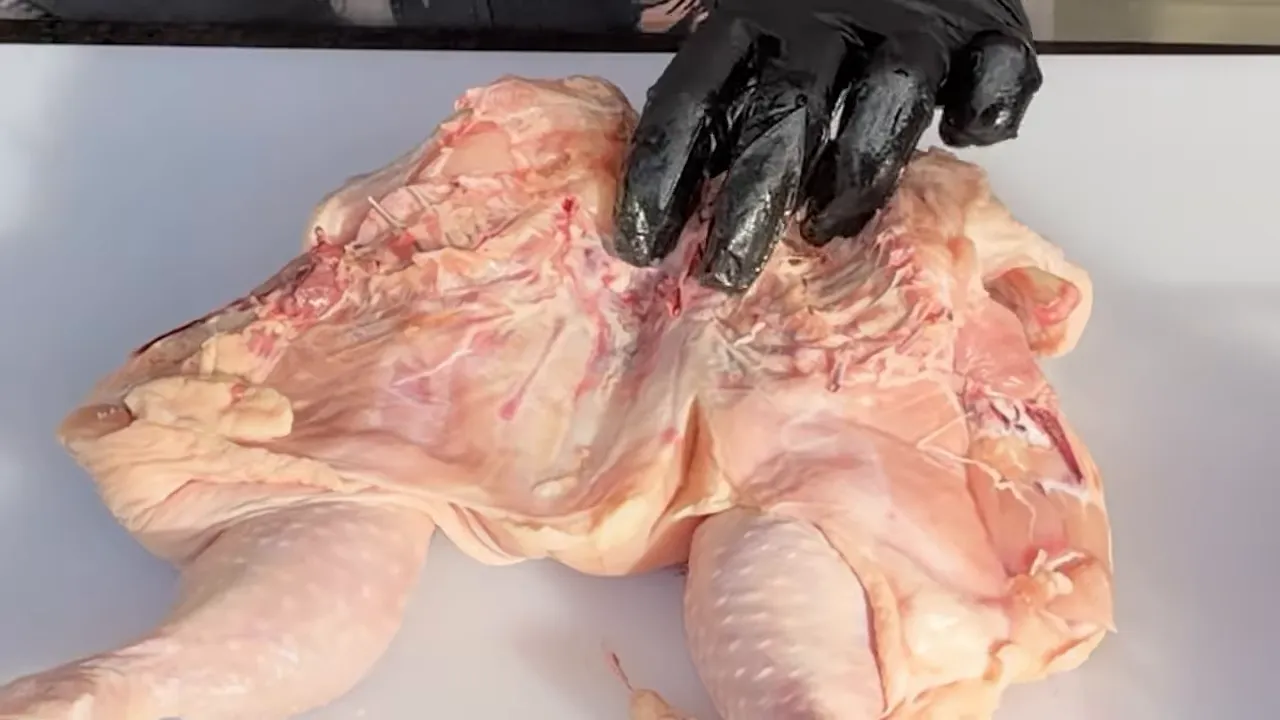
Removing that central bone makes splitting the chicken much easier. Cut down the middle, and you have two chicken halves. You could stop there and cook them just like that.
Separate the Breasts, Legs, and Wings
To get closer to the prepared cuts sold in the grocery store, continue breaking down each half:
- Separate the leg quarter from the breast. Follow the natural division between the two sections.
- Remove the rib cage from the breast. Slide your knife underneath the ribs and work close to the bone, trimming away unwanted cartilage and connective tissue.
- Remove the wing at its joint. With the surrounding bones out of the way, the joint is easier to locate.
- Check the breast. Trim any remaining bone fragments or unwanted tissue.
- Choose whether to keep the skin. I removed it for a more consistent comparison with the packaged skinless breasts.
- Split the leg quarter if desired. Find the joint between the thigh and drumstick and cut through it.
The recurring trick is to follow bones and find joints. You are not trying to force a knife through solid bone.
After about ten minutes, you have a useful selection of chicken cuts, plus the backbone and trimmings for stock. That is a pretty good return on a little preparation.
Keep raw poultry preparation separate from ready-to-eat food, and clean hands, tools, and work surfaces afterward. The FoodSafety.gov food safety basics are a useful reference for avoiding cross-contamination.
2. Cut Ribeye Steaks From a Rib Roast
Ribeye is my favorite steak, so this is a saving I am happy to make repeatedly. A rib roast gives you the same section of beef before it has been portioned into steaks. In my price comparison, doing that slicing myself saved roughly 33%.
The main complication is not the meat. It is the bones.
A butcher's band saw can cut through bone and produce a consistent steak thickness, whether that is 1½ inches, 2 inches, or another size. A kitchen knife cannot do the same job. At home, you need to plan the cuts around the bone structure.
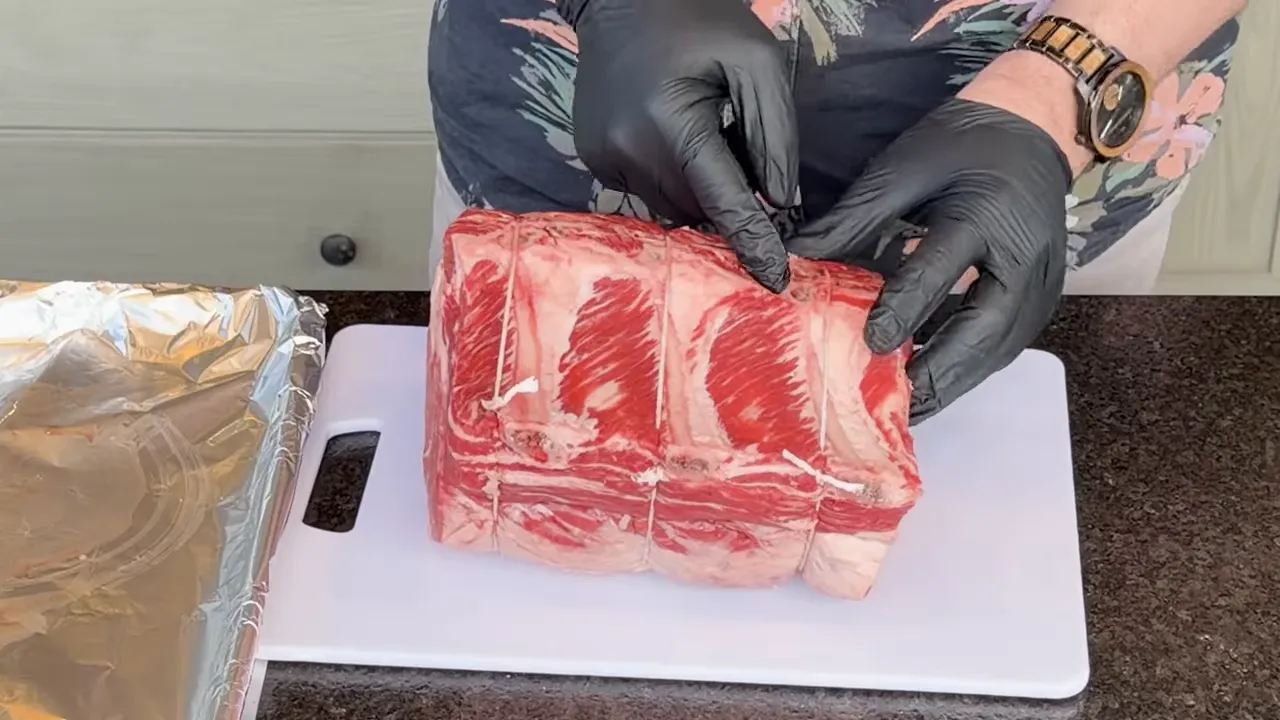
Work With the Bones, Not Through Them
- Inspect the roast before cutting. Locate the ribs and any connected bone or joints that could block the knife.
- Choose your cutting path. Aim for the spaces between the ribs rather than trying to copy the exact thickness of a store-cut steak.
- Accept a thicker steak where necessary. I opted for thicker portions to avoid the areas that would require a saw.
- Slice through the meat. Use controlled cuts, and do not force the blade through hard bone.
- Season what you need for the current meal. Save the remaining portions for another day.
That is the trade-off: a little planning and potentially thicker steaks in exchange for a lower price per pound. For my family, thicker ribeyes are hardly a hardship.
You do not need to cook an entire roast's worth of steaks just because you bought them together. I prepared two for the grill and kept the rest for another meal.
3. Split Whole Chicken Wings Yourself
This one is so simple that it almost feels too obvious to include. But if a couple of minutes of preparation can keep several hundred dollars in your pocket over a year, it deserves a place on the list.
Party wings, wing splits, and whole wings can sound like different products. The preparation is the main difference. A whole wing has three sections:
- Drumette: The meatier section closest to the body.
- Flat: The middle section with two slender bones.
- Tip: The pointed end, which you can save for stock or leave attached as a handle.
Two Cuts Turn a Whole Wing Into Party Wings
- Find the joint between the drumette and flat. Bend the wing slightly to help identify the knuckle, then cut through the joint.
- Find the joint between the flat and tip. Cut through that joint and set the tip aside.
- Repeat with the remaining wings. Finding the joints becomes quicker as you get a few under your belt.
There is no complicated trimming or special equipment involved. Two quick cuts, and you have the same basic pieces sold in the prepared package.
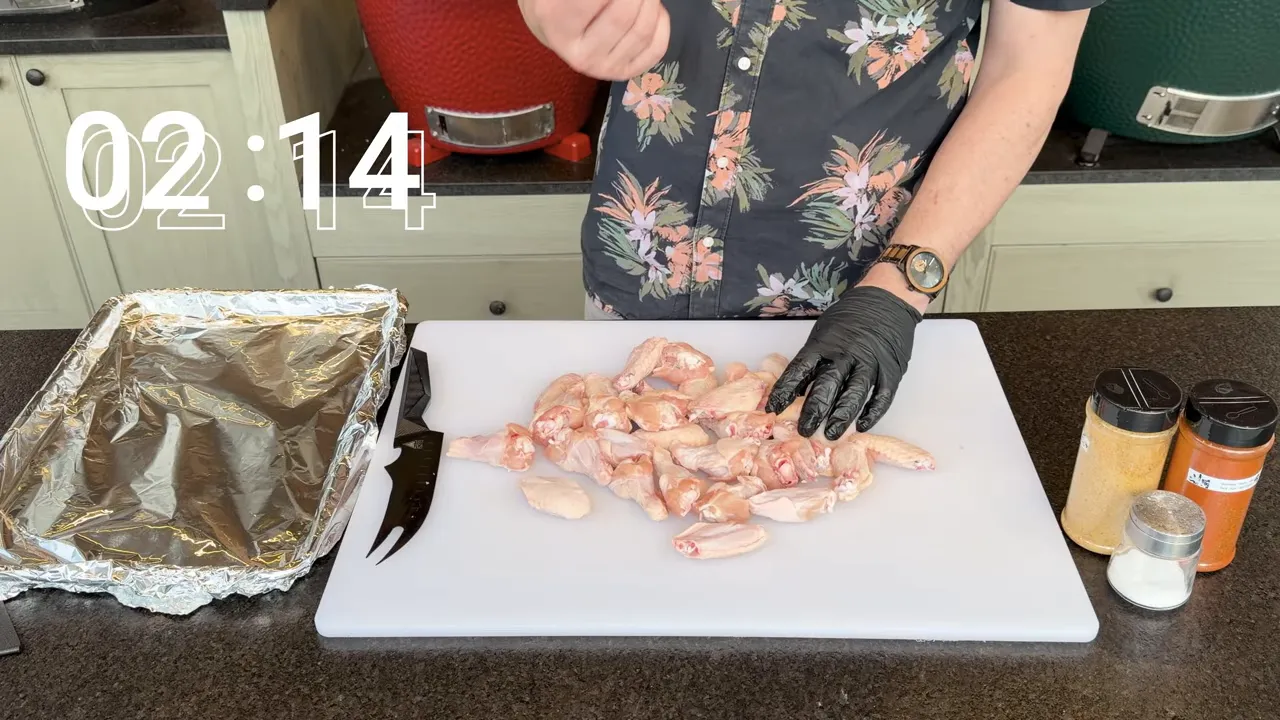
For tailgates, family wing nights, or anyone who regularly loads up the grill, this is an easy habit to change. The prepared wings and the ones you split yourself look the same once they are ready to season.
Two More Meat-Buying Swaps Worth Considering
Bone-In Pork Shoulder Instead of Boneless
Boneless pork shoulder can carry a surprisingly large premium. In my comparisons, its price per pound was sometimes more than double that of a bone-in shoulder.
You will not always have both options. Costco, for example, often has boneless shoulders available where I shop. But when you do have a choice, check the labels rather than assuming the price difference is small.
Remember that bone-in weight includes the bone. Compare the value of the meat you will use, not just the lowest number on the shelf. Even so, the price gap can make bone-in shoulder well worth considering for regular pulled-pork cooks.
Homemade Bacon Instead of Premium Packaged Bacon
Homemade bacon can offer excellent flavor and control over the ingredients, salt, and curing approach. Compared with some premium smoked bacon, the store-bought product can cost nearly three times as much.
But bacon does not belong in the same quick-prep category as splitting wings. It can involve roughly a week of elapsed time and hours of work across the process.
Think of homemade bacon as a separate barbecue project, not a ten-minute money-saving shortcut. Ingredient control also does not mean guessing at a cure. Use a properly tested curing recipe and follow it accurately.
Season for Flavor Without Giving Up Salt Control
There is another kind of control I like to keep in my own hands: seasoning.
For the wings, I used Diamond Crystal kosher salt separately from the low-salt rub blends I have been developing. They contain a little salt, but the idea is to concentrate on flavor rather than fill a bottle with salt and fillers.
Separating the salt from the rest of the seasoning lets you adjust each independently. It also makes an overnight dry brine easier to work into your preparation when you have the time, without automatically piling on more salt when you add the rub.
Once the chicken, steaks, and wings are portioned and seasoned, they are ready for the grill. These buying habits work whether you cook on a Kamado Joe, Big Green Egg, Primo, pellet grill, offset smoker, kettle, or gas grill. The savings happen before the fire gets involved.
Pay for the Meat, Not Every Knife Cut
Rising grocery prices get plenty of attention. The cost of convenience is easier to miss because it is spread across individual packages and shopping trips.
A whole chicken takes a little more work than opening a package of breasts. A rib roast needs slicing. Whole wings need two cuts apiece. None of those jobs requires you to become a professional butcher.
Start with the cut your family buys most often. Compare the prepared and less-prepared versions, learn the relevant knife skill, and repeat it when the numbers make sense.
A few extra minutes at the cutting board can leave you with excellent barbecue and more money in your pocket. That is a feast worth celebrating. Don't be afraid to fire it up.


