You can cook great barbecue without a digital meat probe. Some of the most accomplished pitmasters in the world do exactly that. But there is a big difference between cooking by feel on a pit you know inside out and trying it on a smoker you have never cooked on before.
That sounded like a challenge worth taking. Possibly a terrible idea for dinner, but a worthwhile challenge.
I smoked a pork shoulder on a brand-new Hunsaker Vortex drum smoker with the temperature gauge covered and no access to thermometer readings. My decisions came down to smoke, bark, tenderness, and a firm 7:00 p.m. dinner deadline.
The result? Very good pulled pork, a few humbling temperature guesses, and a much clearer answer about where technology helps and where your senses still need to do the work.
Key Takeaways
- Smoke, bark, and tenderness provide useful cooking cues, but none measures an exact internal temperature.
- Feeling a smoker’s exterior proved unreliable for estimating cooking temperature, especially as sunlight changed.
- Temperature data helps manage airflow, finishing time, and rest when dinner has a firm deadline.
- The best approach combines sensory judgment with thermometer readings rather than choosing one over the other.
Table of Contents
- The Experiment: A New Smoker and No Peeking
- Preparing the Pork Shoulder
- The Three Cues That Matter When Cooking by Feel
- Starting the Cook: Aiming for Hot and Fast
- Three Hours In: The Bark Was Talking, but the Sun Was Too
- Wrapping the Pork Shoulder at Four and a Half Hours
- The Toothpick Test: Close Is Not the Same as Done
- The Result: Very Good Pulled Pork, Not a Personal Best
- So, Do You Need a Meat Probe?
- A Separate Piece of BBQ Insurance: Fridge Backup Power
The Experiment: A New Smoker and No Peeking
Doing this on a kamado would have been a little too comfortable. I have spent years working out fire setups and vent settings for those grills. To make this a genuine test, I needed unfamiliar equipment.
Enter the Hunsaker Vortex smoker. After years of buying Hunsaker components to upgrade my Weber Smokey Mountain, Hunsaker supplied a complete drum for me to try. This would be my first food cook on it. My only prior experience with this particular smoker was its initial burn-in and seasoning.
I covered its built-in temperature gauge with a no-peeking sign. A ChefsTemp ProTemp 2 Plus recorded data in the background, but I could not consult it. When I used an instant-read thermometer to assess resistance, I kept its display out of sight.
This was a test of making cooking decisions without temperature data, not a claim that thermometers have no value. In fact, removing that information made me appreciate it more.
Preparing the Pork Shoulder
The pork shoulder received an overnight dry brine, and I scored its surface before cooking. A short, rigid 6-inch knife worked well for that preparation because it gave me control without much blade flex.
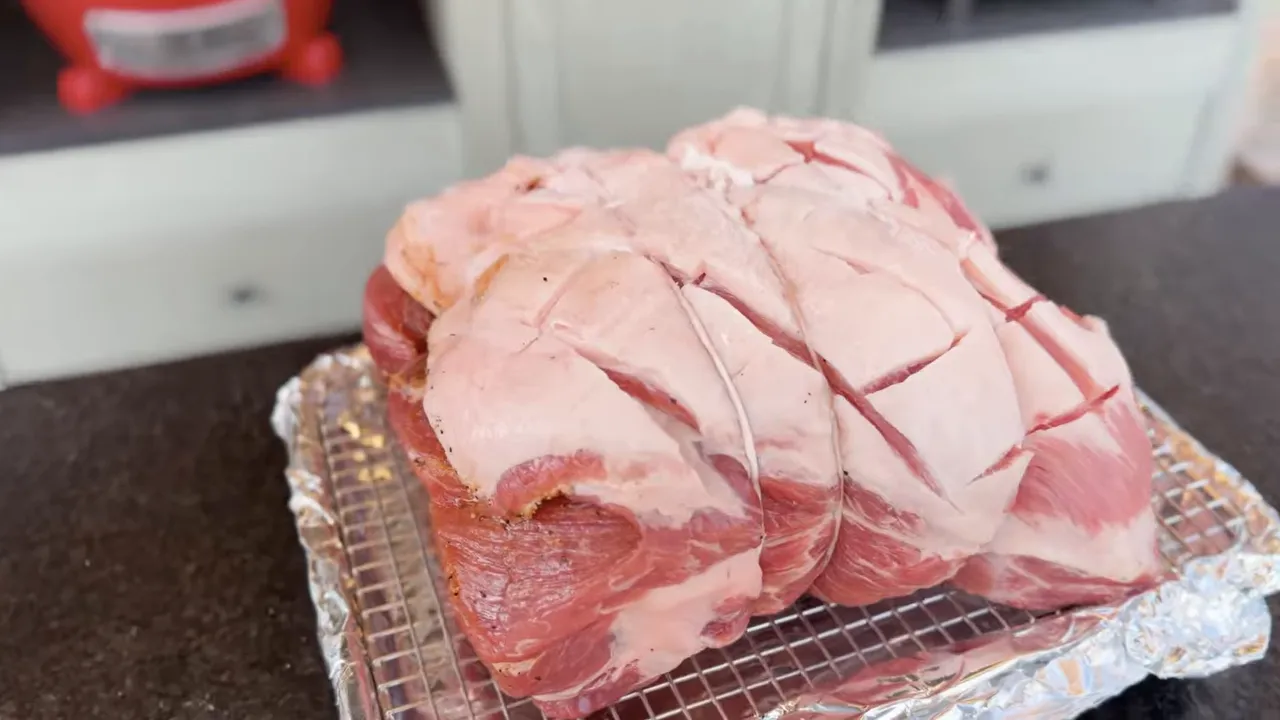
The next day, I applied a light coating of mustard as a binder, then layered on the seasoning. The flavor direction was savory first, supported by sweet heat and a smaller umami component.
- Savory: The dominant part of the seasoning profile.
- Sweet heat: Honey-jalapeño notes, buttery flavor, and a little kick.
- Umami: A smaller supporting layer to round things out.
This was a preview of rub recipes I was still developing, rather than a finished formula with exact ingredient quantities. The useful principle is balance: build a pork seasoning around a clear savory base, then use the other flavors to support it.
For smoke, I placed four pieces of wood beneath the charcoal and two smaller pieces on top. That gave me wood available early in the cook, with more waiting as the charcoal burned.
The Three Cues That Matter When Cooking by Feel
Tootsie Tomanetz at Snow’s BBQ is famous for relying on experience and instinct. Aaron Franklin, meanwhile, has pushed back on the idea that your hand can tell you a precise cooking temperature. You can establish that something is hot. Assigning an accurate number to that sensation is another matter.
Those ideas are not necessarily contradictory. Experienced pitmasters are reading a collection of familiar signals, not simply turning their palms into thermometers.
For this cook, I concentrated on three things.
1. Smoke quality
I wanted smoke that looked and smelled like clean combustion, without that harsh, bitter, creosote-like character. My less-than-appetizing comparison for bad smoke is the flavor you might imagine from licking a wet tree. Not exactly the seasoning we are after.
Smoke appearance and aroma can tell you something useful about the fire even without a temperature reading. They do not, however, tell you the internal temperature of the pork.
2. Bark development
The bark would guide decisions about spritzing and wrapping. Was the surface drying out? Were dark patches developing too quickly? Had the seasoning formed a crust that stayed attached when lightly touched?
I would normally start considering a wrap around 160°F to 165°F internal, but that is a checkpoint, not a substitute for inspecting the meat. With the numbers hidden, bark had to carry more of that decision.
3. Tenderness
A toothpick or probe can tell you how much resistance remains inside the shoulder. If the meat grips the probe tightly, it is not ready for the kind of easy shredding I want.
As the pork approaches tenderness, that resistance decreases. The limitation is that resistance does not reliably translate into an exact internal temperature. Pork at 130°F and pork at 165°F can both feel quite tight.
Feel is useful for judging tenderness, but much less useful for telling you how far through the cook you are.
One important distinction: this experiment focused on barbecue quality, not replacing food-safety checks. Use a thermometer to verify safe internal temperatures, and follow safe minimum internal temperature guidance. Do not use bare-hand contact with hot metal as a temperature-measuring method.
Starting the Cook: Aiming for Hot and Fast
The pork went on shortly after 11:00 a.m. My intended cooking range was about 275°F to 310°F, a hot-and-fast approach suited to this drum smoker.
The Hunsaker’s vortex system was part of the appeal. Its convection makes it an interesting option for this style of cooking, and my previous experience with Hunsaker upgrades gave me enough confidence to attempt the experiment.
That confidence did not make my temperature guesses accurate.
At the beginning, I thought the smoker could use a little more heat, so I opened the airflow slightly. The recorded comparison later showed a guess of about 250°F against an actual reading around 270°F. Not disastrous, but already a reminder that feeling heat and measuring it are different jobs.
At 90 minutes: Spritzing and reducing airflow
By 12:30 p.m., the smoke had cleaned up nicely. I suspected the two small pieces of wood on top had burned through, with the buried pieces available to provide smoke later.
I spritzed with apple cider vinegar and water to keep the surface from drying and help smoke adhere. No precise mixing ratio was part of this test.
The bark was already fairly advanced. One darker patch on the upper right side of the shoulder caught my attention, and the smoker felt hotter than it had earlier. I guessed it might be near 350°F. The recorded temperature was closer to 305°F.
That was the first meaningful trap: I interpreted a hot exterior and rapidly developing bark as evidence of a higher cooking temperature than I actually had.
I made a small reduction at the top exhaust, then tightened the bottom intake slightly as well before stepping away for a vehicle-service appointment.
Managing the lid opening
One technique I carried over from other charcoal cookers was briefly closing the bottom intake before opening the lid. Opening a charcoal smoker introduces air, and some cookers respond with a temperature surge.
My sequence was:
- Close the bottom intake before opening the lid.
- Open the smoker and spritz or inspect the pork.
- Close the lid and wait about a minute.
- Return the intake to its intended cooking position.
That was my attempt to keep each inspection from becoming a major change to the fire. Small, deliberate adjustments were especially important when I could not see their measured effect.
Three Hours In: The Bark Was Talking, but the Sun Was Too
At about 2:00 p.m., the smoker still felt very hot. I guessed the food was cooking around 330°F. The recorded reading was about 285°F.
The drum had started in shade and was now sitting in direct sun. Its dark exterior was receiving heat from both the fire and the sunshine. That made its surface an even less dependable indicator of what was happening at the food.
Inside, the pork looked encouraging. The bark stayed attached when I lightly checked it rather than rubbing away onto my finger. It was setting, but I thought it could develop further before going into foil.
I gave the shoulder another spritz and kept cooking. The smoke looked good, and the bark was progressing nicely. On those two fronts, the sensory information was genuinely useful.
Wrapping the Pork Shoulder at Four and a Half Hours
By 3:30 p.m., the dinner deadline was becoming part of every decision. I wanted the pork finished with enough time for at least an hour of rest, preferably two.
I still thought the smoker was running around 320°F to 330°F. In reality, the recorded comparison showed about 267°F. My impression that we were cruising along hot and fast was getting further from the measured situation.
The shoulder’s bark, however, looked ready for wrapping.
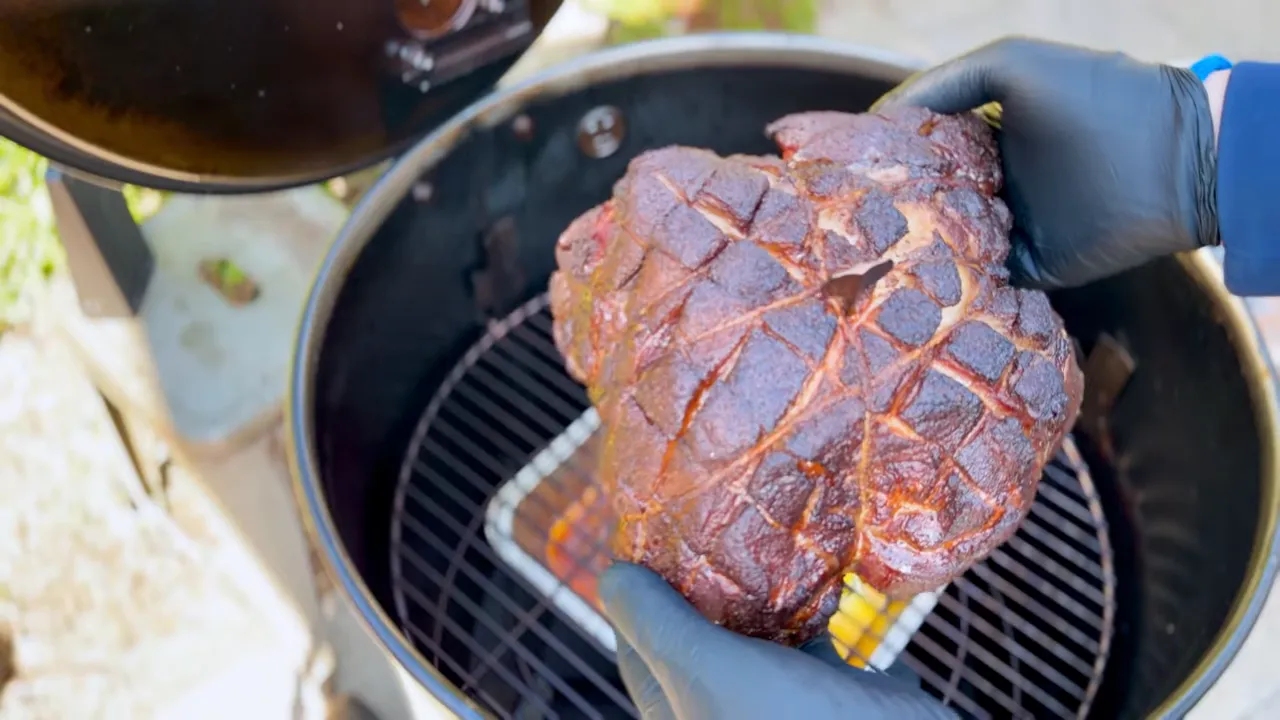
I checked resistance with a probe while keeping the display hidden. The meat grabbed it firmly. That told me we were nowhere near finished, but it could not tell me whether we had reached my usual wrapping range.
The actual internal reading was around 140°F, below the 160°F to 165°F checkpoint I would normally consider. I wrapped anyway, based on the bark and the time available.
A good-looking exterior does not tell you how far the center has progressed. That became one of the biggest lessons of the day.
With the shoulder wrapped in foil, I opened the airflow to push the finish. Earlier, I had wanted temperatures in the upper 200s to low 300s. For the wrapped portion of a hot-and-fast pork shoulder cook, I was comfortable aiming as high as about 350°F.
The foil gave the bark more protection from continued darkening and direct exposure while I worked toward tenderness.
The Toothpick Test: Close Is Not the Same as Done
5:30 p.m.: Still too tight
At 5:30 p.m., I hoped to find the shoulder ready to come off. That would have preserved a useful rest before dinner.
No such luck.
The toothpick still met substantial resistance. It felt as though the meat held it firmly enough that I could almost lift the roast with it. That is not the feeling I want from finished pulled pork.
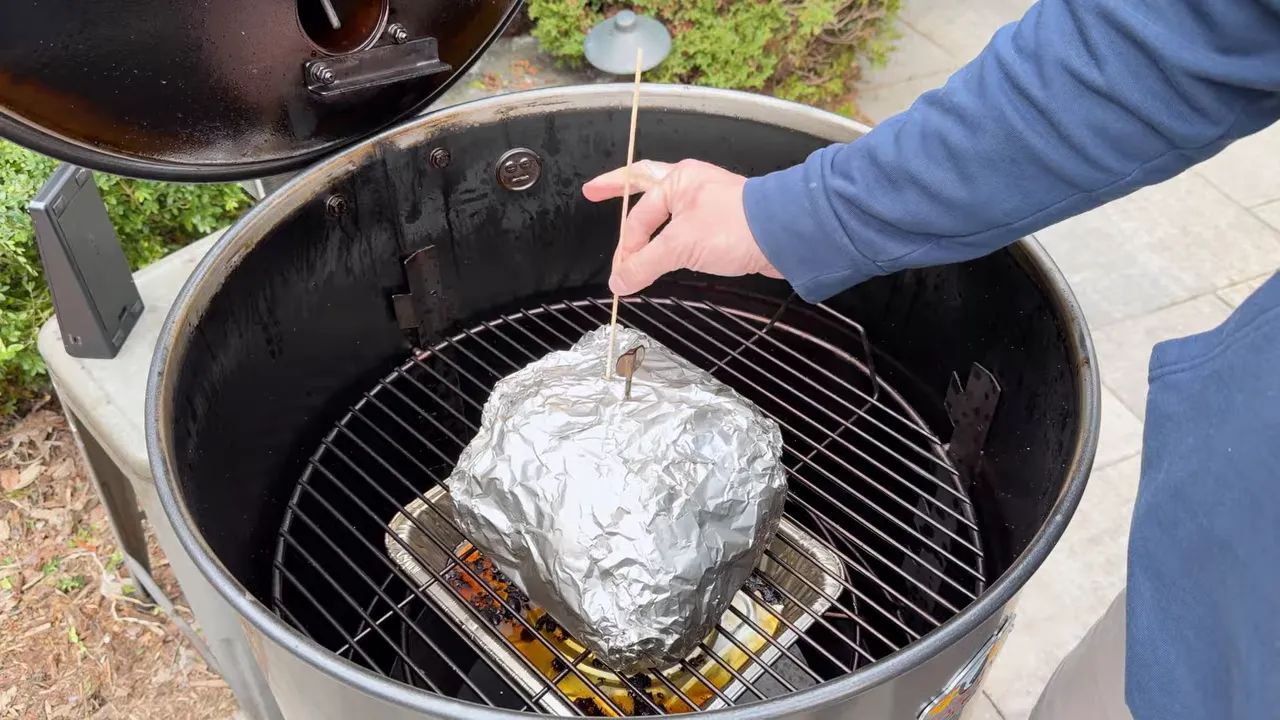
I guessed the internal temperature might be around 175°F to 180°F. The actual check was around 185°F. My tenderness assessment was more useful than my earlier estimates of smoker temperature: whatever the exact number, the pork still needed time.
I also guessed the smoker was near 350°F, while the recorded reading was around 370°F. I opened the airflow a little further, still working without that information, to push the finish.
This was where the lack of data became particularly uncomfortable. I knew the meat was tight. I did not know enough about the cooking conditions to manage the remaining hour confidently.
6:30 p.m.: Better, but not perfect
At 6:30 p.m., resistance had decreased considerably. Using the familiar instant-read probe without looking at its display, I could feel it wanting to slide farther into the shoulder.
It was not perfect, but it felt pretty good. I guessed we had reached the 200s, and the recorded internal reading was about 201°F.
With dinner almost upon us, I pulled the shoulder around 6:32 p.m. That left only about 20 minutes of rest before shredding, far less than the hour or two I had hoped to allow.
Could it have benefited from a little more cooking? Based on the feel, probably. But the schedule had made the decision for me.
The Result: Very Good Pulled Pork, Not a Personal Best
Once unwrapped, the shoulder looked excellent. It had a dark, textured bark, a nice smoke ring, and meat that pulled apart without a struggle.
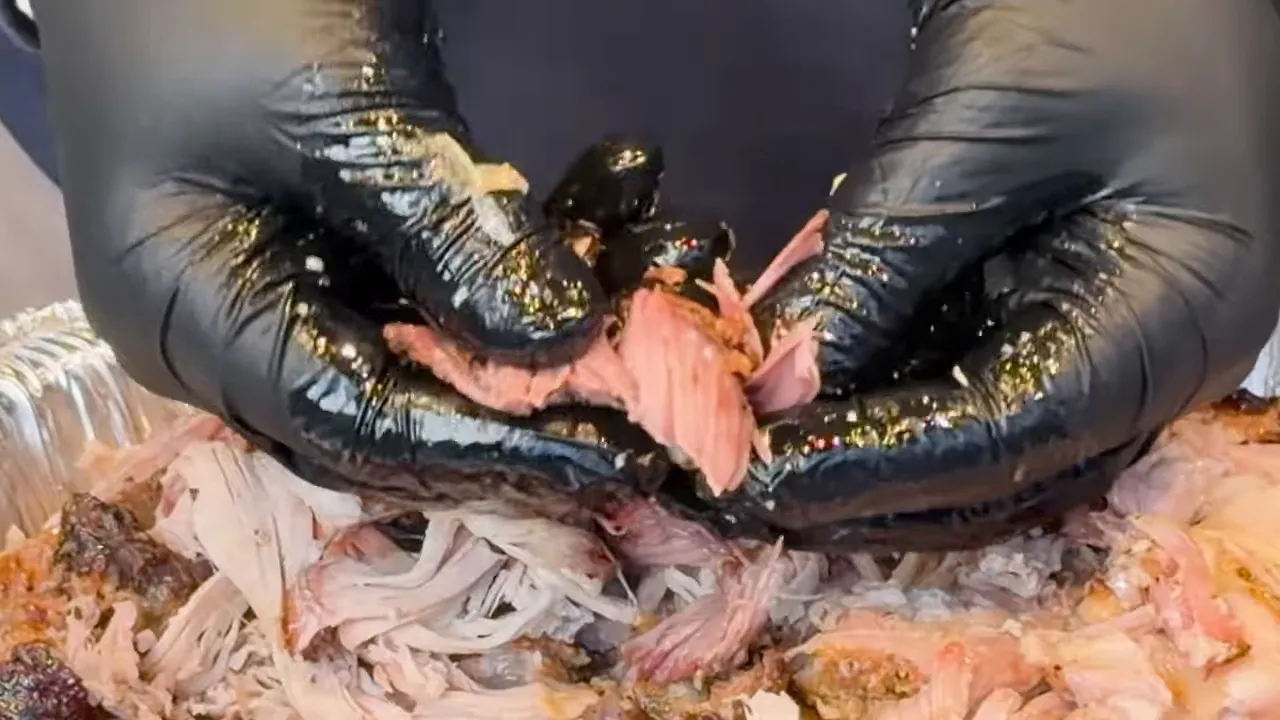
For a first cook on unfamiliar equipment with the temperature information deliberately hidden, it was a heck of an effort. Perfect? Nope. Better than I had feared? Absolutely.
- Smoke: Clean and pleasant, though I would use more wood next time for a stronger smoke flavor.
- Bark: Excellent texture, flavor, and crispness alongside the juicy pork.
- Tenderness: Very good, roughly eight out of ten, but short of my best pulled pork.
The shortened rest and late push to meet dinner were likely contributors to that final tenderness result. Starting at 11:00 a.m. left less margin than I wanted, and the missing temperature data made it harder to recognize how the cook was progressing.
The Hunsaker itself made a strong first impression. Based on the fire, smoke, and food, it felt stable rather than erratic. My experience suggested something closer to kamado-like temperature stability than I had been used to with a Smokey Mountain. Still, this was one cook, not a long-term verdict.
And yes, it came with a perfectly functional temperature gauge. I was the one making things difficult.
So, Do You Need a Meat Probe?
You do not need a digital probe to develop great bark, recognize clean smoke, or assess tenderness. But temperature data makes the whole process easier to manage, especially when dinner has a deadline.
Familiarity is the missing ingredient in many discussions about cooking by instinct. A pitmaster who cooks repeatedly on the same equipment has a reference point for every adjustment. My first food cook on a new drum did not give me that advantage.
There is also a scheduling difference. Some Texas barbecue operations cook ahead and use an overnight hot hold as part of their process. That is a different situation from trying to finish, rest, shred, and serve a shoulder on the same afternoon.
For a backyard cook, temperature readings can help answer practical questions:
- Is the smoker actually running hotter, or does its exterior just feel hotter?
- Should I add airflow or reduce it?
- Am I leaving enough time for the wrapped stage and a proper rest?
- What worked last time that I can repeat?
Apps and recorded cooking notes are useful for that last point, particularly with expensive cuts or cooks you do not make very often.
My takeaway is not to choose technology instead of skill. It is to use both. Read the smoke. Inspect the bark. Feel the resistance. Then let a thermometer provide the information your senses cannot measure precisely.
I cannot remember the last time a cook made me this anxious. A little digital assistance would have made the day easier and probably helped turn very good pulled pork into something closer to a personal best.
A Separate Piece of BBQ Insurance: Fridge Backup Power
Bluetti sponsored this experiment with its FridgePower refrigerator backup system. It addresses a different barbecue problem: protecting the ingredients before they ever reach the smoker.
Between brisket, ribs, pork shoulder, leftovers, and meal prep, I can easily have $500 or more tied up in refrigerated or frozen food. A power outage can become expensive quickly.
The FridgePower system presented here is a slim backup unit, just over 3 inches thick, with a stated 10-millisecond switchover when household power fails. Its roughly 2 kWh battery capacity and 1,800-watt output are intended for refrigeration and cooling appliances. Bluetti describes runtime of more than a day for many refrigerators and freezers, although actual runtime depends on the appliance and operating conditions.
Up to three BlueCell 200 expansion batteries bring the stated total capacity to roughly 8 kWh. Its thin form offers placement options above, behind, or beside a refrigerator, subject to the installation requirements.
It is a separate kind of peace of mind from a meat probe, but if your freezer looks anything like mine, protecting the food supply is worth considering too.
|


