A NASCAR connection, computational fluid dynamics, and a backyard offset smoker might sound like an unlikely combination. But that combination helped Primitive and Workhorse Pits validate something much simpler: a cooking environment that gives you a fair shot at making outstanding barbecue.
At the Woodfire Cookery Campus in Cleveland, Georgia, home to Workhorse Pits, Primitive Pits, and El Bandido Grills, I sat down with JD to talk about what actually makes an offset smoker work. We covered firebox insulation, airflow, biscuit tests, commercial pit sizing, and the difference between useful features and expensive distractions.
What I appreciated most was that, for all the engineering involved, JD kept bringing the conversation back to the food. A good pit creates the opportunity. The cook still has to turn that opportunity into great barbecue.
Key Takeaways
- CFD helped validate Primitive and Workhorse designs, but fire management still determines the cooking environment.
- Firebox insulation should suit the complete cooker, climate, and workload rather than serve as an automatic upgrade.
- Prioritize proven performance and realistic capacity before adding racks, accessories, or unconventional features.
- Develop cooking judgment and taste exceptional barbecue to establish a meaningful benchmark for your own food.
Table of Contents
- It Started With Food, Not Welding
- Does an Offset Smoker Need an Insulated Firebox?
- How a NASCAR Connection Led to CFD Testing
- Why a Biscuit Test Shouldn’t Decide Which Smoker You Buy
- What Would a Meaningful Offset Smoker Test Measure?
- Buying an Offset: Look for a Track Record, Not Just a Platform
- Capacity and Options: Shop for the Engine Before the Sunroof
- A Trailer Pit Can Be About More Than Selling Barbecue
- The Most Important Upgrade May Not Be the Smoker
- So, Did Science Build a Better Offset Smoker?
It Started With Food, Not Welding
A lot of pit-building stories begin with a welder, a family fabrication shop, or somebody learning the trade from their dad or granddad. JD’s story took a different route.
He started as someone who loved food and was frustrated with the cookers available to him. Years of struggling to get the results he wanted eventually led him toward building a better cooking vessel. The fabrication expertise came together after the idea, rather than the other way around.
His engineering background also needs a little clarification. Despite some of the stories circulating online, he described his career as more than 20 years in audio engineering, not the MIT credentials sometimes attached to his name. He sees similarities between the way sound travels and the movement of heat, moisture, and air, but the starting point was always practical: could the cooker consistently produce the food he wanted?
That distinction matters. The goal wasn’t to build something complicated enough to impress an engineer. It was to build something that a person could learn to cook on instinctively.
Does an Offset Smoker Need an Insulated Firebox?
I’ve cooked on offsets at both ends of this discussion. I’ve used heavily insulated designs that were so efficient they started to feel like a kamado, only with considerably more work. I’ve also cooked in bitter winter weather and found myself wishing for more insulation.
So why does Workhorse use a non-insulated firebox?
JD’s answer was essentially that insulation has to suit the whole cooker, not exist as an isolated selling point. The Workhorse backyard models use 3/8-inch steel, and he considers that construction appropriate for what those pits are being asked to do.
There’s a meaningful difference between a substantial steel firebox and a thin, inexpensive offset. Calling both of them non-insulated doesn’t tell you much about their actual behavior.
Designing for Norway and South Florida
Workhorse has customers cooking in very different climates. JD described roughly 100 pits in Norway and owners cooking in temperatures as low as minus 10°F or minus 20°F. At the other extreme, a customer in South Florida may rarely encounter genuinely cold conditions.
The objective was to create backyard pits that could work across those environments without requiring a fundamentally different design for every region.
His point about temperature was straightforward: a fire may be around 900°F, but you aren’t trying to deliver 900°F across the cooking grate. You’re trying to maintain a barbecue environment at something like 225°F, 250°F, or 275°F.
That doesn’t make weather irrelevant. It means the firebox, cooking chamber, stack, and airflow need to work together to deliver the temperature you actually need.
Why Primitive’s Commercial Fireboxes Are Different
Primitive’s larger commercial smokers have different demands. They must move heat through a much larger cooking vessel, and the company offers different firebox constructions to suit that work.
- Semi-insulated construction: JD described a double-wall design using 3/8-inch steel.
- Air-gap insulation: One design uses approximately 2 to 2.5 inches of space between the walls.
- Fiber insulation: Another incorporates fiber insulation, which JD said can help keep the coal bed more active in cold, dry conditions.
He also emphasized that cold, rainy weather can influence draft through the stack, not just heat loss from the firebox. That’s a useful reminder that an offset is an airflow system. Focusing exclusively on the firebox can miss what is happening elsewhere.
The takeaway isn’t that insulation is bad or unnecessary on every offset. It’s that more insulation is not automatically a better specification. Ask what it contributes to that particular pit, in your particular climate and cooking situation.
How a NASCAR Connection Led to CFD Testing
As someone who grew up following NASCAR and later got into Formula 1, I had to ask about the racing connection.
It turns out this wasn’t a grand plan to bring race-car engineering into barbecue. JD described it as a happy accident. Someone came into the shop, made an introduction, and introduced him to computational fluid dynamics.
Computational fluid dynamics, or CFD, uses numerical analysis to study fluid flow. In motorsport, that can mean understanding how air moves over and under a car. In an offset smoker, the useful questions concern how hot gases, moisture, and airflow move through the cooking chamber.
Once you close the lid on a brisket, much of that environment is hidden. A thermometer gives you a temperature at a particular location, but it doesn’t explain everything taking place around the meat.
JD described testing with measurement probes distributed through the pit, alongside the CFD work, to better understand that environment. For Primitive and Workhorse, the value was validation: would customers have the same opportunity to achieve the results he had experienced?
Validation, Not a Magic Certificate
This is where the story gets more interesting than a simple claim that science built the ultimate smoker.
JD was quick to acknowledge that the testing captured a particular operating condition. Small changes in the firebox, coal bed, air supply, stack, or damper could change that condition.
His straightforward operating approach was to keep the stack wide open and give the fire enough air through the firebox door. Under the tested conditions, the results gave the team confidence in the way hot air was being drawn through the pit.
But he did not present CFD as something that should make your buying decision for you. It helped validate the design. It did not remove the cook from the equation.
That’s an important distinction. You can appreciate the engineering without disappearing into a rabbit hole of simulations and forgetting that the purpose is to cook dinner.
Why a Biscuit Test Shouldn’t Decide Which Smoker You Buy
Biscuit tests make an appealing demonstration. Spread biscuits across the grates, cook them, and use the browning pattern to judge heat distribution.
The problem is that the fire you build can dramatically change the result on the very same pit. You can produce badly scorched biscuits or nicely browned biscuits simply by changing the operating conditions.
JD’s preferred use for a biscuit test? Making breakfast for the family on Saturday morning. Hard to argue with that part.
The more serious point is that a single demonstration is not a standardized comparison. Without comparable fire management and test conditions, it’s easy to draw conclusions that the demonstration doesn’t support.
JD credited Texas cook Jordan Jackson with helping reinforce the idea that the cook can overshadow the pit. Modern, well-developed offsets can provide an excellent vessel, but the person managing the fire still has enormous influence over the result.
He also gave credit to other respected builders, including Moberg and Mill Scale. His position wasn’t that only one brand could make good barbecue. It was that several builders have established strong track records, and a biscuit demonstration should not outweigh that history.
What Would a Meaningful Offset Smoker Test Measure?
With cars, we have familiar benchmarks. If a manufacturer claims a certain acceleration time or fuel economy, independent testing can evaluate those claims.
Offset smokers don’t have the same widely accepted comparison framework. That leaves plenty of room for impressive claims without much agreement about how to test them.
When I asked JD what he would want measured, he started with the coal bed.
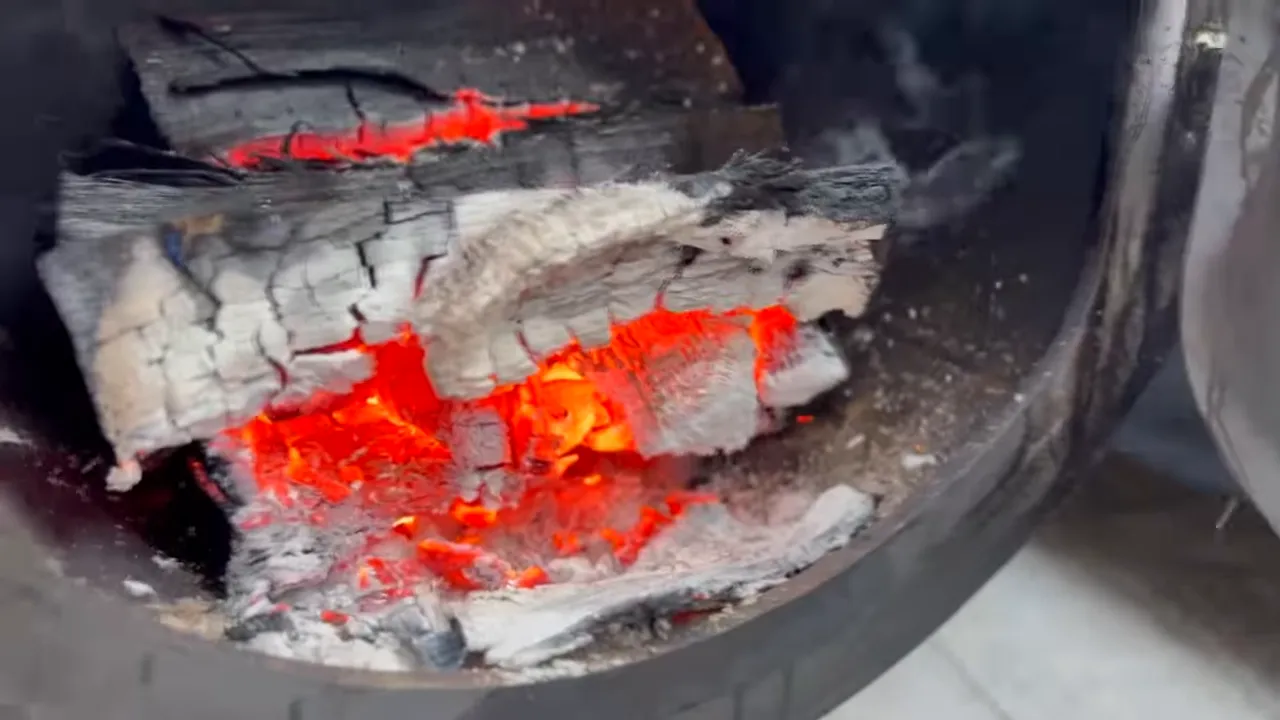
Once that bed is established, can the pit provide a controllable cooking environment with meat inside? That matters more than simply counting square inches of grate space.
Primitive and Workhorse have made claims about temperatures being within plus or minus 5°F across the grates. JD acknowledged that those claims deserve an asterisk: the operator needs to understand fire management and maintain the coal bed.
That is not the same as promising that anyone can light any fire and automatically achieve those numbers.
From our conversation, the useful evaluation questions were:
- Coal-bed management: Can you establish and maintain the fire that the cooker needs?
- Temperature control: Once established, does the environment respond predictably to the cook?
- Draft: Does the pit move air appropriately, rather than struggling with too much or too little draw?
- Stack proportions: Do the stack diameter and height work with the rest of the design?
- Steel construction: Is the material appropriate for a stable cooking environment?
- Real cooking performance: Does the complete system give you the opportunity to produce excellent barbecue?
JD was also skeptical of treating common online pit-building calculators as unquestionable engineering rules. His experience led him to reject some of their assumptions.
I wouldn’t turn that into a blanket claim that every calculator is useless. The practical lesson is narrower: a formula is a starting point, not a substitute for validating how the finished cooker actually behaves.
A slightly larger firebox or a taller stack is not automatically decisive. What matters is whether those dimensions work together.
Buying an Offset: Look for a Track Record, Not Just a Platform
There is no shortage of noise in barbecue equipment. A new feature, an unconventional baffle, or a clever firebox can sound like the missing ingredient you’ve been searching for.
Sometimes a new idea may work. But novelty alone is not evidence.
JD said the Workhorse design spent about three years in development before release, with hundreds of cooks informing his confidence in it. He wasn’t comfortable taking somebody’s hard-earned money until he knew how the smoker performed.
That’s the kind of history I would want to understand before buying any expensive offset.
For Commercial Buyers, Start With the Operation
If you’re opening a restaurant, the first questions should be about the business:
- What food are you cooking?
- How much do you need to produce?
- Are you cooking for long daily services, several days a week, or occasional pop-ups?
- Will the pit support a food truck, a brewery event, or an established restaurant?
JD’s advice was to look at builders whose equipment is already succeeding in comparable operations. Restaurant use provides meaningful evidence because those cooks depend on the equipment repeatedly, not just for a single demonstration.
During my visit, he was also planning a restaurant on the campus, so these weren’t abstract questions. They were questions he was asking for his own operation.
For Backyard Buyers, Ask What Has Actually Been Proven
A backyard pit doesn’t need a restaurant’s production capacity, but it still benefits from a proven design.
If an unusual feature is being presented as essential, look for evidence of that feature working outside the marketing material. Is there a history of successful use? Are experienced cooks getting the promised results?
The absence of a feature from well-established barbecue operations doesn’t prove it cannot work. It does mean you should ask for more evidence before treating it as an obvious upgrade.
Buy demonstrated performance before buying the promise of a better mousetrap.
Capacity and Options: Shop for the Engine Before the Sunroof
Our conversation kept returning to cars, and JD had a good analogy for the options sheet.
Some buyers start with the equivalent of screen size, leather seats, and a sunroof. He would rather begin with the engine and fuel economy. In smoker terms: does it perform, and does it fit the amount of food you need to cook?
Workhorse’s backyard lineup discussed here included the 1957, 1969, and 1975. Choosing among them should begin with your cooking needs and family size, not simply the longest list of accessories.
Extra Racks Add Space, Not Automatically Better Cooking
An upper rack provides more cooking real estate. If you need it, that can be useful. But more grate area isn’t the same thing as better performance.
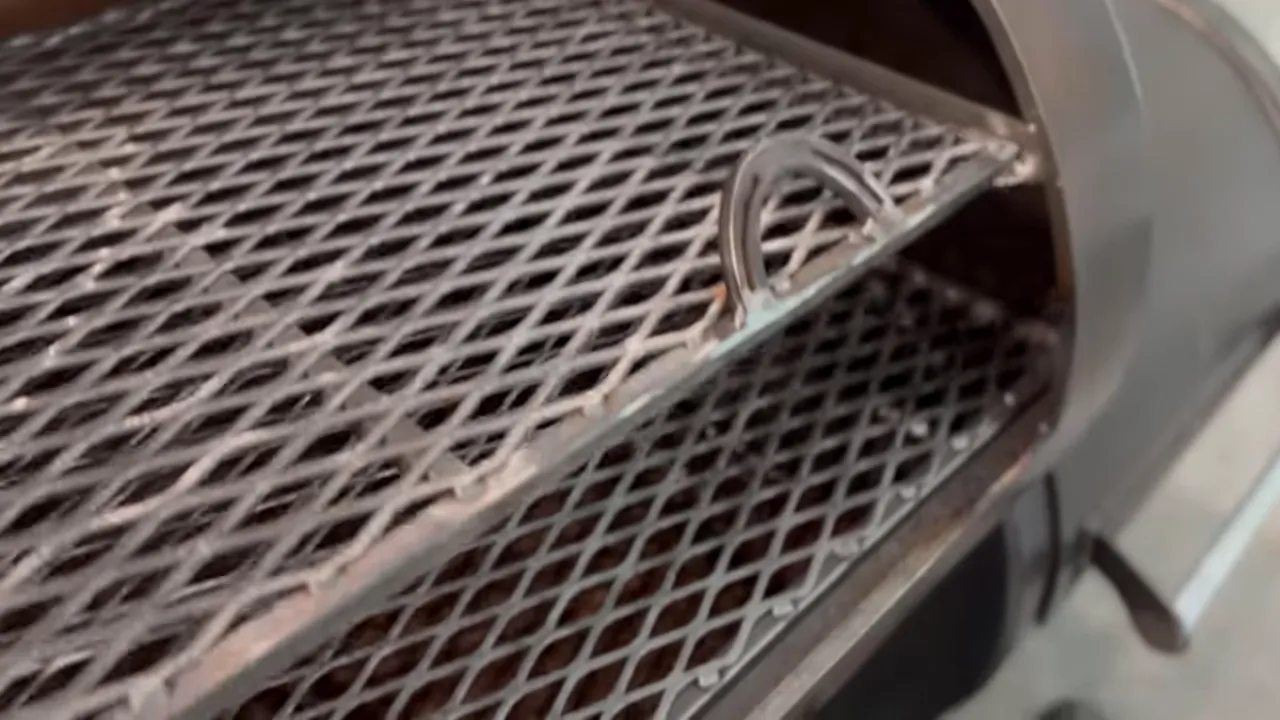
For commercial use, JD’s personal preference was one pit with one rack, followed by another pit when the operation needed more capacity. He values a stable cooking environment over maximizing the number of racks in one vessel.
That’s a preference, not a rule for every business. The useful question is whether you will actually use the additional rack space and how that arrangement fits your cooking process.
Don’t Size a Commercial Pit Only Around Today’s Budget
JD described a familiar situation: a customer buys a 250-gallon pit because it fits the budget, then calls a month later urgently needing a 500-gallon or 1,000-gallon unit.
A brewery pop-up illustrates the problem. A venue may have 300 people on a Saturday, while the food operation initially expects to serve only 50 to 75. If the barbecue catches on, the cook may soon need to feed 200 to 300.
That doesn’t mean every new business should buy the largest smoker available. It means capacity planning should account for the business you reasonably expect to run, not just the first service you can afford to equip.
Climate belongs in that discussion too. JD noted that a commercial customer in South Florida might choose a semi-insulated firebox rather than a fully insulated option.
Sliding racks, extra thermometers, insulation, and tool storage may all have a place. But they should follow the core questions about performance, capacity, and workflow, rather than replace them.
A Trailer Pit Can Be About More Than Selling Barbecue
I’ll admit there was a little personal motivation behind my trailer questions. I’ve cooked pop-ups and competed at Memphis in May, and I’ve been making the case to my wife, Sarah, for a trailer rig of my own.
JD was happy to help that argument along. More importantly, he pointed to a purpose beyond business growth.
He described seeing the barbecue community help feed people after flooding in the North Carolina and Tennessee region. A mobile cooker can become a way to serve people, bring a community together, and introduce Central Texas-style barbecue to places where it isn’t a local tradition.
For all the attention given to restaurant rankings and destination barbecue, that community potential deserves attention too. Great equipment can support more than great service at a restaurant. It can help people show up when a meal really matters.
The Most Important Upgrade May Not Be the Smoker
At the end of our conversation, I asked what else a potential Primitive or Workhorse customer should know.
JD didn’t finish with a list of specifications. He finished with two ideas that apply regardless of the name on your cooker.
Learn the Craft, Not Just a Schedule
Barbecue is full of methods, timelines, and rules. Use this rib schedule. Wrap in butcher paper. Wrap in foil. Follow these temperatures.
Those can be helpful tools, but JD’s concern is what happens when they replace judgment. Wood-fire cooking is an instinctive craft, and part of its appeal is learning to respond to the food and the fire.
His point wasn’t that temperatures have no value. It was that a time-and-temperature formula alone doesn’t guarantee outstanding barbecue. You still need to develop your own decisions, method, and cooking philosophy.
The fire, the food, and the process are part of the pleasure. There’s theater in it, and there’s therapy in it too.
Give Yourself a Real Benchmark for Great Barbecue
The second idea was to develop your palate by eating barbecue that gives you something to aim for.
If your experience with a food is limited, your expectations are limited by that experience. JD used burgers as an example: if you’ve only eaten a couple of familiar fast-food burgers, that’s the reference point you have.
The same applies to brisket. Travel when you can. Try respected barbecue restaurants, whether that means Franklin Barbecue in Austin or another destination that helps you understand what is possible.
You don’t have to copy somebody else’s food. But tasting something exceptional can establish a clearer target than another afternoon comparing smoker specifications.
So, Did Science Build a Better Offset Smoker?
For Primitive and Workhorse, the CFD work helped validate a design developed through actual cooking. It gave the team more confidence in the airflow and cooking environment they were offering customers.
What it didn’t do was produce a shortcut around learning to cook.
My biggest takeaway from Cleveland is to evaluate an offset as a complete system: appropriate construction, sensible airflow, controllable fire, proven results, and capacity that fits the job. Then give your own skills at least as much attention as the equipment.
The pit should give you a stable place to practice the craft. The wow moment still comes from what you do with it.


