Can a pellet grill deliver the depth of flavor you get from a wood-burning offset? I have tested plenty of grills that promised to close that gap, and until now, I have never struggled to tell which barbecue came from which cooker.
The Lone Star Grillz El Fuego Trio gave me a reason to try again. It does not simply burn pellets or add a few wood chips for extra smoke. It has a dedicated wood split basket that lets you burn the same kind of splits you would feed a live fire, while the pellet controller manages the temperature.
So I cooked St. Louis ribs on two nearly identical grills, one running a manually maintained wood fire over charcoal and the other running pellets plus real wood splits. The live-fire ribs won our blind taste test, but this was easily the closest result I have had.
The interesting part is not that the two tasted identical. They did not. It is how small the difference became, and how much convenience the hybrid setup brought to dinner.
Disclosure: Lone Star Grillz provided free product/sponsorship for this test.
Key Takeaways
- The El Fuego Trio combines pellet temperature control with real wood splits for smoke flavor.
- Both tasters preferred the live-fire ribs, but the hybrid ribs finished remarkably close.
- The live-fire setup used an estimated 40% more wood splits during the cook.
- Pellet mode simplified the wrapped finish and kept the ribs warm while dinner came together.
Table of Contents
- Why This Pellet vs. Offset Test Was Different
- What the Two Grills Share, and What the Trio Adds
- How the Two Fires Worked
- The St. Louis Rib Cook
- The Blind Taste Test: Close, but Not Identical
- The Fuel Difference That Helps Explain the Result
- The Bar-A-BBQ Rib Glaze
- So, Can the El Fuego Trio Replace an Offset Smoker?
Why This Pellet vs. Offset Test Was Different
Most pellet grill versus offset smoker comparisons come with a fairly large asterisk. Different cooking chambers, different sizes, different airflow, different grate layouts. When the food tastes different, how much of that comes from the fuel, and how much comes from everything else?
For this test, I used my Lone Star Grillz Adjustable Charcoal Grill alongside the El Fuego Trio. They are not literally the same cooker, but they share enough of their design to remove many of those usual variables.
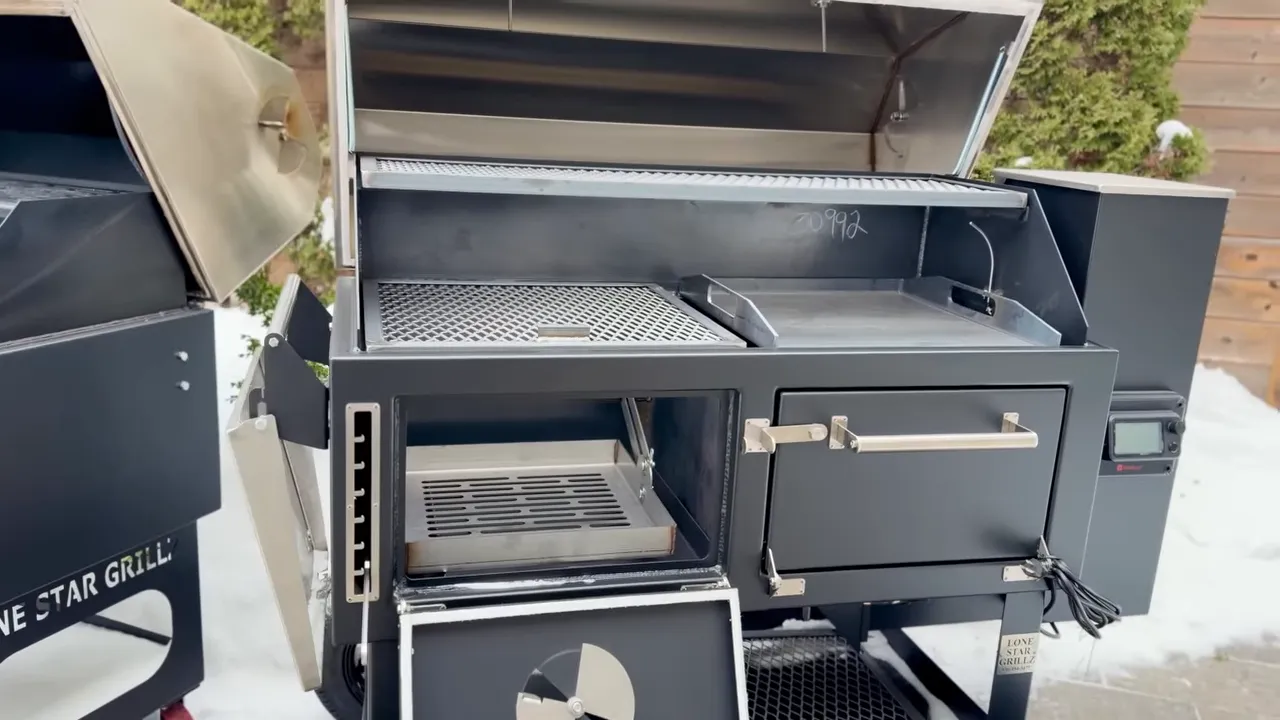
There is an important distinction here: the live-fire cooker was an adjustable charcoal grill operated in what I call offset mode, not a conventional barrel offset smoker. It used a small charcoal bed to support burning wood splits, with the ribs cooking beside the fire. The comparison was that manually maintained fire against the Trio's pellet-assisted wood fire.
My skepticism going into this was real. During a visit to Franklin Barbecue in Texas, I asked Aaron Franklin about pellet grill manufacturers promising a true Texas offset experience. He was blunt about treating those promises as marketing. My previous cooking tests had generally left me feeling the same way.
But the Trio changes something fundamental: it introduces actual wood splits into the pellet cooking process.
What the Two Grills Share, and What the Trio Adds
The shared cooking platform
Both grills are handmade in Conroe, Texas, and offer more than 1,400 square inches of cooking space. Their rectangular layout also makes fitting full racks of ribs much easier than on a smaller round grate.
The common features include:
- A 16-inch firebox with more than 12 inches of vertical lift adjustment.
- Eight inches of clearance between the main and upper cooking grates.
- Dual exhaust vents, one on each side.
- A double-wall carbon steel firebox with an insulated barrier.
- A 304 stainless steel charcoal/fire grate and moving parts.
- 304 stainless steel hood springs, gasket, and handle components.
- Independently controlled air intake and grate height.
- A removable ash pan.
That shared layout matters to this experiment. We are comparing fires inside broadly similar cooking environments rather than trying to draw conclusions from two completely different smoker designs.
The El Fuego Trio's additional features
The Trio retains charcoal and wood cooking capability while adding a pellet system. It can run charcoal on one side and pellets on the other, with the ability to switch modes during a cook.
- Ceramic hot-air ignition: startup without manually lighting the pellet fire.
- Open-center auger: supports pellets blended with wood chips, up to a 50/50 mix.
- 40-pound hopper with pellet dump: storage and a way to empty the hopper.
- Externally removable burn pot: easier ash cleanup without taking apart the cooking chamber.
- 1/8-inch steel deflector plate: includes access for direct grilling.
- Temperature flexibility: stated air temperatures from 160°F to 450°F, with grate temperatures above 700°F.
- Patent-pending burn pot design and wood split basket: real wood combustion while the pellet controller runs the cook.
The wood split basket is the feature that made me want to do this test. The chip-blending capability is interesting, but this cook tested pellets plus wood splits, not a pellet-and-chip blend.
How the Two Fires Worked
The theory behind the comparison was simple. Both fires would have a small supporting bed of fuel, and both would burn wood splits of the same size and type for flavor.
- Adjustable grill in live-fire mode: charcoal provided the coal bed, with wood splits burning on top.
- El Fuego Trio in hybrid mode: the controller fed pellets to maintain the fire beneath the wood split basket.
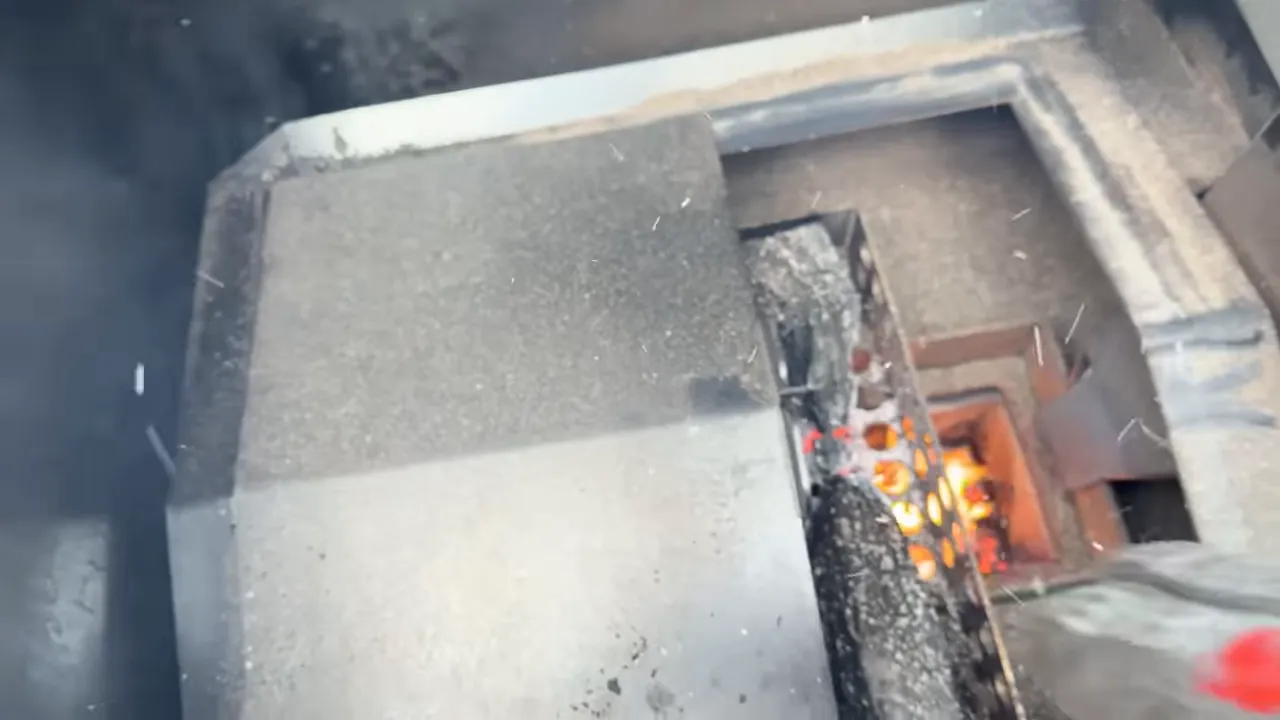
On the adjustable grill, I lit charcoal with my GrillBlazer GrillGun and waited until the coals were white and ashed over. I also placed spare splits nearby inside the cooker to preheat, helping them ignite quickly when it was time to feed the fire.
The goal was to avoid struggling to get a cold split burning. A healthy coal bed and preheated wood made the manual fire much easier to maintain cleanly.
Startup on the Trio was simpler: power it on and set the controller to 265°F. I placed a split on the grate to preheat while the cooker came up to temperature, ready to move into the wood basket for the smoke portion of the cook.
The pellet controller did not eliminate the need to add splits. It took over the underlying temperature management. That distinction is worth keeping in mind if your idea of a pellet grill is a completely hands-off smoke session.
The St. Louis Rib Cook
Minimal trimming and matching seasoning
I picked up two packs of good-looking St. Louis ribs at Costco. They needed very little trimming, just a small loose flap removed.
On an 18-inch kamado, such as a Kamado Joe Classic or large Big Green Egg, I sometimes have to sacrifice end bones to make a full rack fit. There was no need for that here. The larger rectangular cooking area accommodated the racks without trimming them down for space.
I used a base layer of Diamond Crystal kosher salt and the same seasoning blend across the ribs. The blend was still under wraps at the time, so I am not going to invent a rub recipe for it. The useful point for the comparison is that the seasoning treatment was consistent.
About four hours of smoke
With the ribs on, I maintained both wood fires through the unwrapped portion of the cook. On the adjustable grill, that included occasionally adding charcoal to keep enough of a coal bed underneath the splits. On the Trio, the auger supplied pellets as needed.
Whenever I checked the fires, both had visible open flames. I also spritzed the ribs during the cook. The spritz liquid was not specified, so there is no special mixture to reproduce here.
At almost three hours, my impression was that both cookers were consuming wood at about the same rate. That turned out to be wrong, and it becomes an important part of interpreting the result.
Wrap, finish, and glaze
At roughly four hours, I wrapped the ribs meat-side down in foil with butter and brown sugar. Once they were sealed in foil, there was no benefit to maintaining separate wood fires for smoke exposure.
All the wrapped ribs went into the El Fuego Trio to finish. That gave me a break from fire management and time to prepare the rest of dinner.
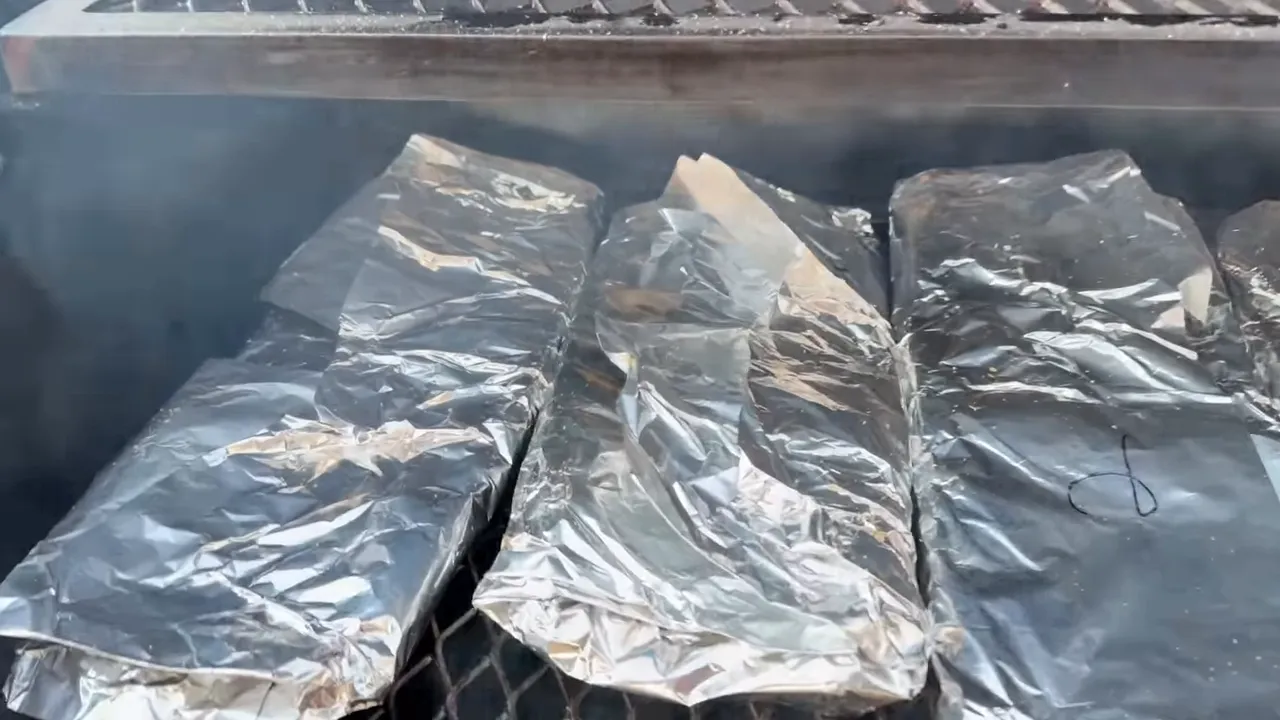
After about an hour wrapped, I unwrapped the ribs, applied the Bar-A-BBQ rib glaze, and returned them to the grate to finish. I marked the packages so I could keep the two cooking methods straight until the blind tasting.
That is a practical advantage of a hybrid cooker: enjoy the wood fire when it contributes to the food, then let pellet control handle the wrapped finish and holding duties.
The Blind Taste Test: Close, but Not Identical
Before Sarah joined me, I prepared a cutting board with a hidden answer key, covered the identifying labels, and rotated the board to make it harder to track which ribs were which.
I sliced only a few ribs from each group and kept the remaining sections together to preserve their temperature. Both batches looked excellent, with good color, a visible smoke ring, and plenty of juice.
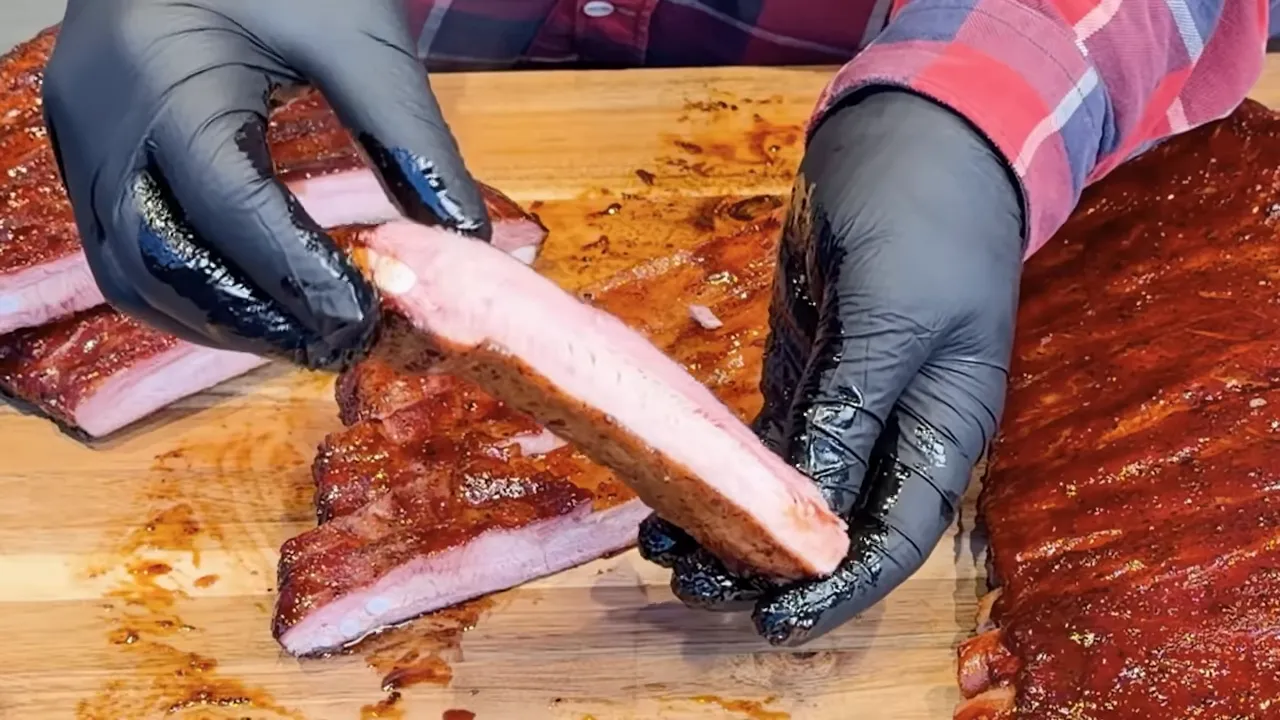
Sarah did not know which cooking methods we were comparing when she started tasting. Her first reaction was simply that these were really good ribs. After trying both, we agreed that there was a difference, but a small one.
The preferred ribs had a little more depth of flavor. Not a huge leap in quality, not one delicious batch and one disappointing batch. Both were excellent.
When I asked Sarah to put a rough number on it, treating her favorite as 100, she put the other around 90. That matched my impression.
Those numbers are a conversational way to describe how close the food tasted, not a scientific measurement of smoke flavor. This was a backyard blind comparison with two tasters.
When we uncovered the labels, the manually maintained live-fire ribs were the winner. The pellet-plus-splits ribs were the very close second.
The biggest compliment came after the reveal: eaten on their own for dinner, neither of us would have confidently identified the Trio ribs as coming from a pellet-assisted cook. That has not been my experience with previous pellet-versus-offset tests.
The Fuel Difference That Helps Explain the Result
Remember my impression that the two grills were using splits at about the same rate? After checking the available cook footage, I estimated that the live-fire setup had used about 40% more wood splits.
I had not logged every addition as it happened, so that figure is an estimate rather than a precisely measured fuel-consumption result. Still, it changes the interpretation of the tasting.
The setup that burned more wood also produced the ribs we thought had a little more depth of flavor. That is consistent with the way I think about barbecue: fuel contributes flavor.
It does not prove that adding 40% more wood to the Trio would make the ribs identical. We did not test that. It does mean this was not an equal-quantity wood experiment, even though the split size and fuel type were matched.
There are a few other boundaries to the result:
- The comparison covered one rib cook, not every barbecue cut or cooking condition.
- The live-fire cooker was an adjustable grill in offset-style operation, not a conventional offset.
- Both batches finished wrapped in the same cooker and received the same glaze.
- The hybrid result came from real wood splits plus pellets, not pellets alone.
Within those limits, the result was impressive. This was the narrowest flavor gap I have found between these two approaches.
The Bar-A-BBQ Rib Glaze
The glaze deserves its own space because it was a big part of how delicious these ribs turned out. This scaled-down batch makes approximately a liter, with a sweet, tangy profile and a consistency intended for glazing rather than a thick finishing sauce.
Ingredients
- 1 1/4 cups ketchup.
- 1/3 cup brown sugar.
- 1/3 cup white sugar.
- 2/3 cup honey or maple syrup.
- 1/3 cup apple cider vinegar.
- 1/3 cup white vinegar.
- 1/3 cup water.
- 1/3 cup Worcestershire sauce.
- 2 teaspoons black pepper.
- 2 teaspoons cumin.
- 2 teaspoons granulated onion.
- 2 teaspoons granulated garlic.
Method
Combine everything in a blender and blend until thoroughly mixed. Adjust the consistency if needed; the finished glaze should be more liquid than solid.
Honey works, but maple syrup is a variation I suggested to Cooper at Bar-A-BBQ that he also used on pork belly burnt ends. It tastes great and mixes a little more easily.
For this cook, I applied the glaze after the wrapped stage, then returned the ribs to the grill to finish.
So, Can the El Fuego Trio Replace an Offset Smoker?
For a backyard cook who wants nearly all of that live-fire flavor with easier temperature management, the El Fuego Trio makes a compelling case.
It did not beat the manually maintained wood fire in this test. Sarah and I both preferred the extra depth in those ribs. If that final bit of flavor is your priority and you enjoy tending a fire, there is still a reason to keep doing it.
But the hybrid ribs were genuinely delicious, not merely good for a pellet grill. Nobody is going to be disappointed when you bring these to a family cook-off.
The convenience was equally real. Once the ribs were wrapped, pellet mode handled the finish. Later, it kept everything warm while I worked on dinner. I could choose when to tend wood and when to let the controller take over.
That is what impressed me most: not a claim that every pellet grill has suddenly become an offset, but a specific hybrid design that brought the two results remarkably close.
Keep the small flavor advantage of the live fire in perspective, and do not overlook how useful that flexibility can be in an actual backyard cook. Don't be afraid to fire it up.


