My favorite multiple-choice answer has always been “all of the above.” Ask the Lone Star Grillz El Fuego Trio whether it is a pellet grill, an offset smoker, a vertical smoker, or a direct heat cooker, and that is exactly the answer it gives.
That sounds fantastic. It also raises a fairly important question: can one cooker do all those jobs exceptionally well, or are we heading into jack-of-all-trades territory?
I already have the Lone Star Grillz adjustable charcoal grill, and there is not enough room in my yard to keep both long-term. Think of this as backyard smoker Survivor. Eventually, only one gets to stay.
These first impressions cover the familiar charcoal hardware, the new pellet system, and three early tests: switching fuels in a hot grill, checking heat distribution, and exploring low-temperature hot holding. This is not yet a verdict on smoke flavor or food quality. Those are the tests that will ultimately decide whether this all-in-one idea earns its space.
Disclosure: Lone Star Grillz provided free product/sponsorship for this evaluation.
Key Takeaways
- The Trio adds automated pellet cooking to hardware shared with LSG’s versatile adjustable charcoal grill.
- A heat-soaked charcoal-to-pellet handoff worked, with a brief adjustment as the remaining charcoal burned out.
- Matching hood gauges and infrared checks showed encouraging side-to-side heat distribution during initial testing.
- Early hot-holding behavior looked promising, but smoke flavor and overall replacement value remain unproven.
Table of Contents
- What the El Fuego Trio Is Trying to Replace
- What Carries Over From the Adjustable Charcoal Grill
- What Is New: FireBoard Control and Pellet Convenience
- The Options I Chose for This Grill
- Why I Am Still Skeptical About Pellet-Grill Flavor Claims
- Test 1: Can a Hot Charcoal Grill Hand Control Over to Pellets?
- Test 2: How Even Is the Heat From Side to Side?
- Test 3: Could It Double as a Brisket Hot-Holding Oven?
- Does Combining Four Cookers Make the Cost Worth It?
- First Impressions: Promising Hardware, Flavor Verdict Still Pending
What the El Fuego Trio Is Trying to Replace
The appeal is not simply having several fuel options. It is having several cooking styles available in one package:
- Pellet cooking: Automated fuel delivery and temperature management.
- Offset smoking: Live-fire cooking with the food positioned away from the fire.
- Vertical smoking: Cooking above the heat source.
- Direct heat cooking: Bringing the fire close enough for grilling and searing.
The adjustable charcoal grill already gave me a lot of that flexibility. The Trio adds pellet control, which creates an especially interesting possibility: start a cook with charcoal and wood, build the flavor I want, then hand temperature management over to pellets.
That is the dream. But we do not cook with a specification sheet. We cook with fire. Before trusting this setup with a brisket, I wanted to find out whether the basic mechanics work the way the idea suggests.
What Carries Over From the Adjustable Charcoal Grill
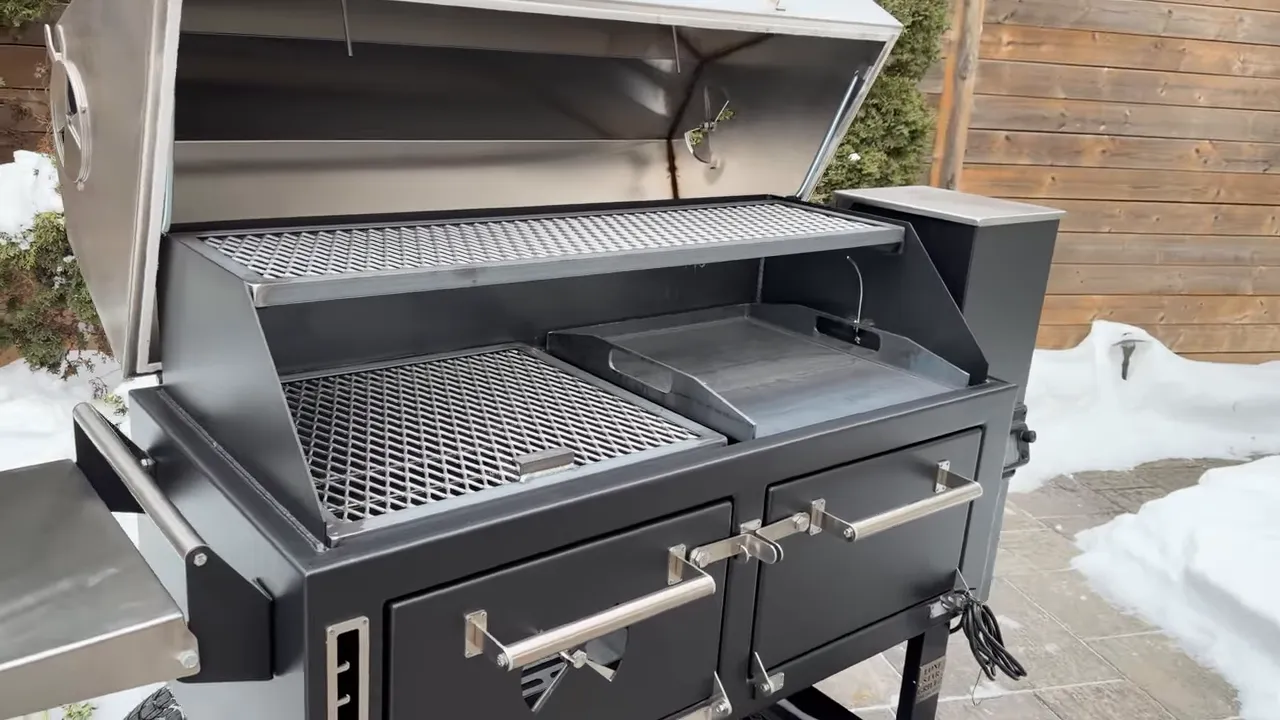
There is a lot here that feels familiar, and that is a good thing. Both grills are handmade in Conroe, Texas, and share the core features that made the adjustable charcoal model so versatile.
- More than 1,400 square inches of cooking space.
- A 16-inch firebox with more than 12 inches of vertical lift adjustment.
- 304 stainless steel hood springs and handle components, plus a hood gasket.
- Independently adjustable exhaust vents on the left and right.
- Eight inches of clearance between the main and upper cooking grates.
- A double-wall carbon steel firebox with an insulating barrier.
- A 304 stainless steel charcoal grate and moving parts.
- Independent air-intake and grate-height controls.
- A removable ash pan.
Adjustable fire height is more than a party trick
Being able to move the charcoal fire vertically is particularly useful for steaks. I can keep the heat farther away during the gentle part of a reverse sear, then bring it closer for the finish.
The separate intake and height adjustments also give me different ways to manage the fire. I am not relying on a single fixed distance between the fuel and the food.
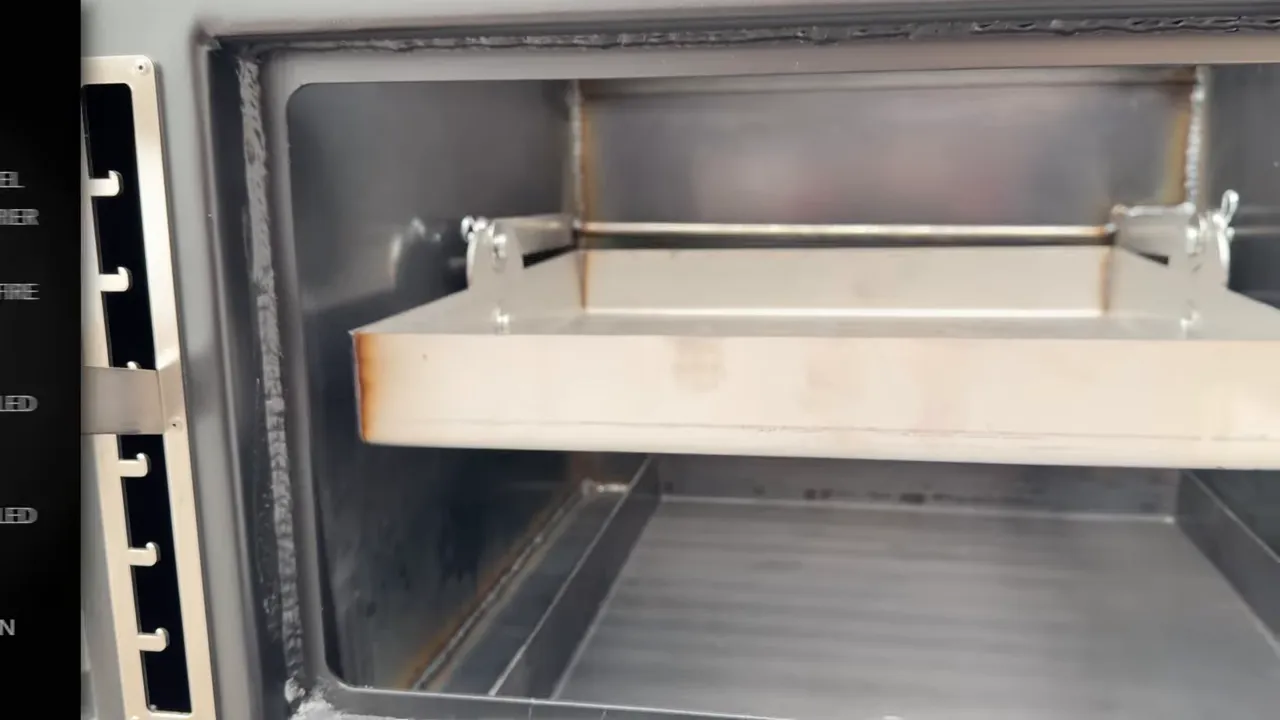
Upper-rack clearance makes the capacity useful
One of my favorite details is the eight-inch gap between cooking levels. I have used plenty of grills that advertise an upper rack, only to discover that the space underneath is too short for the food I actually want to cook.
Five or six inches may work for ribs, but pork shoulders and briskets can quickly turn that second level into an obstacle. The adjustable charcoal grill did not give me that problem, and the Trio retains the same useful clearance.
I also used the dual exhaust vents regularly in offset mode on the charcoal model. Having control at both ends is a feature I am happy to see carried over.
The important distinction is that shared hardware creates a strong expectation, not a completed test. I have already proven out vertical smoking, offset smoking, direct grilling, reverse searing, and long charcoal cooks on the adjustable model. I expect those techniques to transfer, but the Trio still needs to demonstrate that in practice.
What Is New: FireBoard Control and Pellet Convenience
The biggest addition is the integrated FireBoard controller. In an earlier comparison of temperature-management controllers, FireBoard came out on top for me when I considered price, capability, software, and the user interface.
One feature I have grown particularly fond of is programs. Rather than leaving the grill at one temperature for an entire cook, I can build a sequence that changes the target based on elapsed time or a probe reaching a chosen internal temperature.
For example, a brisket could begin with a lower-temperature smoking stage, then automatically move to a higher cooking temperature. At the end, a program could lower the target for hot holding.
That is a lot more useful to me than simply being able to change a number from my phone.
A controller I have already tried in another application
I previously tested a prototype FireBoard pellet-controller upgrade on an older Traeger Pro Series. It brought that grill features associated with newer pellet cookers, including remote temperature control, app functionality, additional probe capability, and integration with FireBoard’s wireless probe.
The wireless probe connected directly into that controller, which made the whole setup feel much more cohesive. Having that sort of functionality built into the Trio from the beginning is something I am excited to explore.
The pellet hardware
The controller is only part of the system. The new pellet side also includes:
- Ceramic hot-air ignition.
- An open-center auger: Intended to reduce jams and keep fuel moving consistently.
- Pellet and wood-chip blending: Support for a blend of up to 50 percent wood chips.
- A 40-pound hopper with a pellet dump: Designed to make fuel and flavor changes easier.
- An externally removable burn pot: Intended to simplify ash cleanup without dismantling the cooking chamber.
- A 1/8-inch steel deflector arrangement: Allows access to direct grilling without completely reconfiguring the pit.
The stated air-temperature range is 160°F to 450°F, with direct-grilling temperatures above 700°F also described. Those are different operating capabilities, not a claim that the entire cooking chamber runs above 700°F in normal pellet-smoking mode.
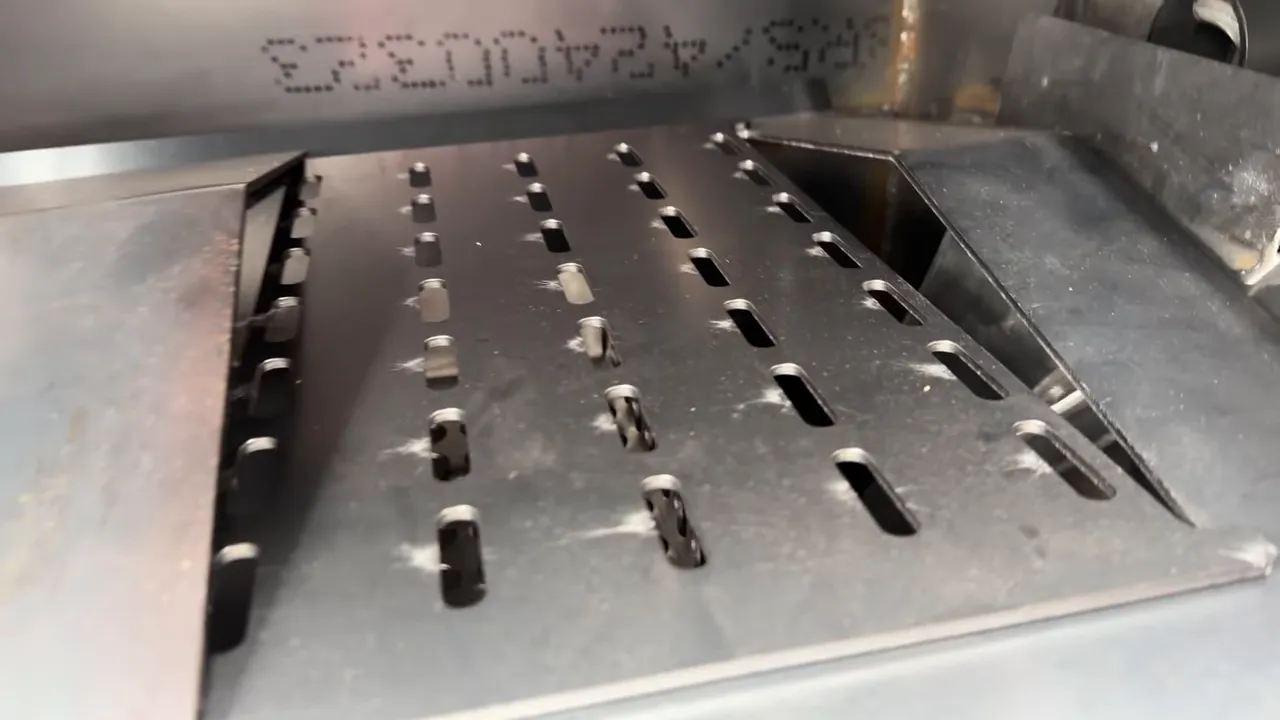
More than one way to add wood
The patent-pending burn-pot design is intended to produce clean heat while also allowing some smoldering smoke. The goal is to bring together characteristics that contribute to flavor in a stick burner.
There is also a wood-split basket for pellet mode. That means I can introduce a piece of real wood while the pellet controller manages the cook.
Between wood-chip blending, the split basket, and the separate charcoal firebox, there are several possible routes to a stronger smoke profile. Having those options is promising. Proving that they deliver offset-style flavor is a separate job.
The Options I Chose for This Grill
I deliberately ordered the Trio differently from my adjustable charcoal grill so I could explore a few more configurations.
Off-road wheels and dual temperature gauges
The large off-road wheels should make it easier to move the cooker around. Once the weather warms up, I want to roll it out front for neighborhood gatherings rather than leave it permanently parked in one spot.
I also chose two hood temperature gauges. With heat potentially coming from different sides, I want a quick way to compare what is happening across the chamber.
A plancha over the pellet side
I love having griddle capability, but a plancha on a live-fire grill can create a frustrating cycle. Every time I open the lid to turn or move food, the fire gets more air, and temperatures can take off.
With the Trio, I can position the plancha over the pellet-controlled side. My hope is that this avoids some of the temperature-management headaches I have experienced while griddling over a live charcoal fire.
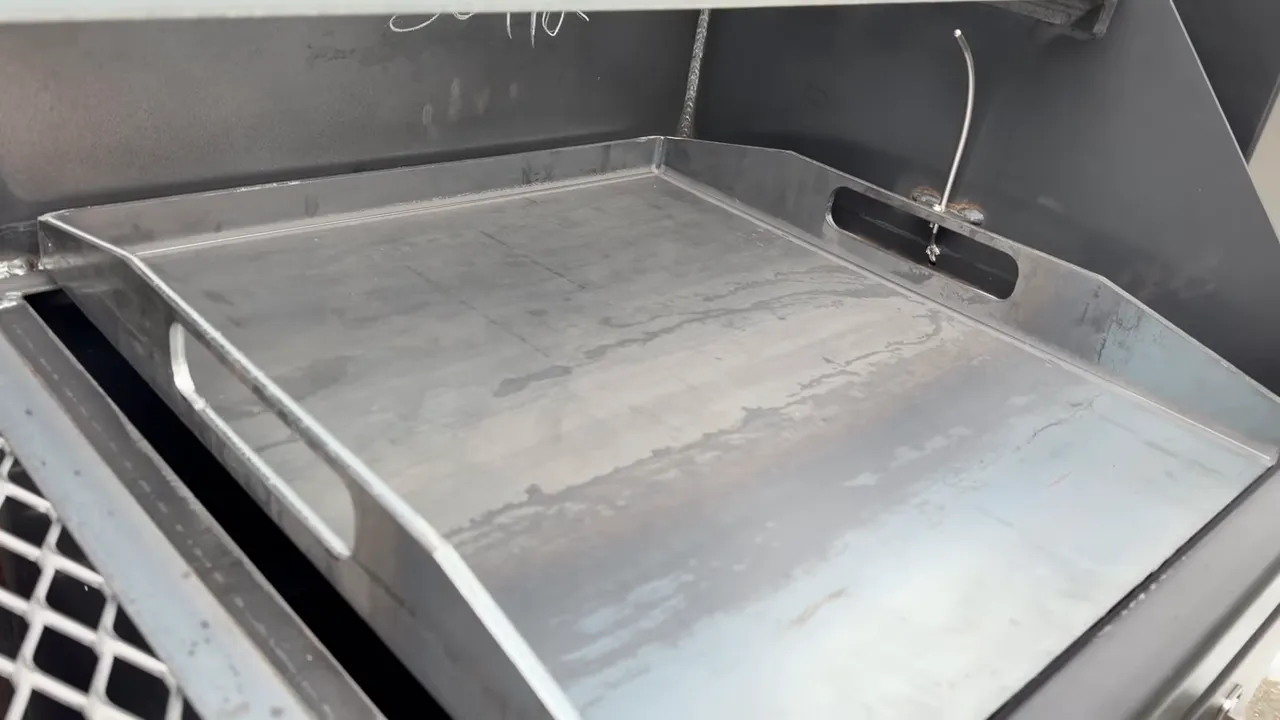
I added a ball valve for grease management as well. For the cooking grates, I stayed with the stock option because I already have upgraded stainless grates on the adjustable charcoal grill. If the Trio wins its place in the yard, I can keep the grates I prefer.
Why I Am Still Skeptical About Pellet-Grill Flavor Claims
Yes, I have been critical of pellet grills. But I do not have a problem with any grill that gets people outside making barbecue for friends and family.
My issue is with claims I cannot reproduce, especially when marketing or paid endorsements promise results that do not show up in my own testing.
The Kamado Joe Pellet Joe is one example. In my experience, combining kamado efficiency with the lighter flavor potential I have encountered from pellets did not deliver the result I wanted from either approach.
I also tested the Camp Chef Woodwind Pro and did not get the offset-like results I had seen claimed elsewhere. In my own blind taste test, an inexpensive Z Grills pellet grill with a supplemental $20 pellet smoke tube beat it.
Those experiences explain the skepticism. They do not settle the question for every pellet cooker.
The Traegers and other pellet grills I have tested have largely been big-box models. A purpose-built, handmade cooker is a different proposition, and Lone Star Grillz is a name that repeatedly comes up in discussions about higher-end pellet grills.
I want to find out whether that difference reaches the plate. I am not assuming pellets will either make or break the Trio before I have cooked with it.
Test 1: Can a Hot Charcoal Grill Hand Control Over to Pellets?
This was the first practical concern I wanted to resolve. A pellet controller uses an ambient sensor to decide how much fuel to feed. What happens if charcoal has already brought the cooker to the target temperature?
In theory, the controller might see a hot chamber and decide it does not need to add much fuel. Then, as the charcoal dies, the pellet system could be slow to take over.
That matters because one of the most attractive ways to use this grill would be to run wood and charcoal early in a cook, then switch to automated pellet control later.
How I tested the handoff
- Light a full chimney of charcoal.
- Add the lit charcoal to the live-fire side.
- Run the cooker at approximately 250°F for an hour so the grill is thoroughly heat-soaked.
- Wait for the temperature to begin falling as the charcoal loses output.
- Add pellets, set the FireBoard target to 250°F, and start pellet operation.
The result was refreshingly uneventful. The pellet system started and maintained the target without the hot chamber causing the startup problem I had worried about.
The small dip that taught me something
After roughly an hour of steady logged temperatures near 250°F, I saw a drop lasting about five minutes. My first thought was that I had not added enough pellets.
The hopper had fuel. What I could hear instead was the auger speeding up and feeding more pellets.
My explanation is that the charcoal had still been contributing some heat, so the controller had only needed a modest pellet feed rate. Once that remaining charcoal stopped contributing, the controller had to increase pellet output to carry the entire load.
It recovered, and the transition was relatively seamless. For a future cook, I may allow the charcoal temperature to fall a little farther before handing over, then see whether that makes the changeover cleaner.
First test: a thumbs-up, with one useful operating lesson. The hot grill did not prevent pellet control from taking over.
Test 2: How Even Is the Heat From Side to Side?
A multi-fuel cooker is not very useful if one half of the cooking area becomes difficult to use whenever the other heat source is running.
Once the Trio settled into pellet operation, the two hood gauges showed matching temperatures, including at a low target around 200°F. That was a good start, but I also wanted another way to look for uneven heat.
I used an infrared camera to examine the heat signatures across the cooker. To my surprise, the left-to-right distribution looked very even rather than showing the major imbalance I had feared.
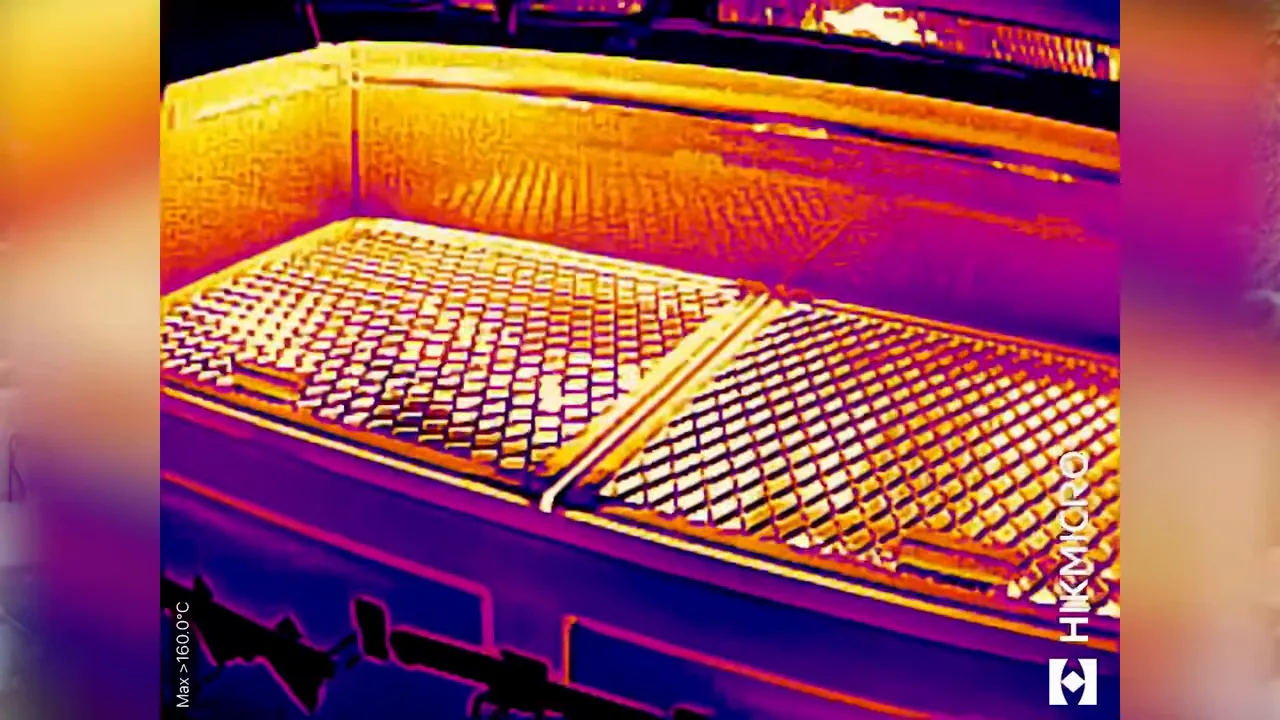
The combination of matching gauges and the thermal images gave me no immediate reason to write off either side of the cooking surface.
That is an encouraging first check, not a complete map of every grate position under every cooking load. Still, the new heat source did not create the obvious problem I wanted to rule out.
Test 3: Could It Double as a Brisket Hot-Holding Oven?
I love a long hot hold for brisket because it helps me get repeatable results. My family is somewhat less enthusiastic about the house smelling like brisket tallow overnight.
If the Trio can hold low temperatures reliably outside, that would add another genuinely useful job to its list.
For this check, I placed a separate probe connected to a FireBoard Spark at the main cooking grate, right where I would put a brisket. I wanted an independent reading at the food’s location rather than relying only on the controller display.
- Controller setting: 158°F.
- Initial grate-level reading: Approximately 155.2°F and falling.
- Desired grate-level temperature: Around 150°F.
The early behavior looked promising, but I wanted a much longer run before trusting it with an overnight brisket hold. Reaching a low temperature is one thing. Maintaining it reliably for the duration I need is another.
This was an equipment test without a brisket, not a validated overnight food-holding procedure. For an actual hold, monitor the food as well as the cooker and follow USDA food-safety guidance.
Does Combining Four Cookers Make the Cost Worth It?
There is no escaping the upfront investment. An individual charcoal grill, pellet grill, or offset smoker can cost less than the El Fuego Trio.
The more interesting comparison is against buying several separate cookers. If the Trio genuinely replaces all those roles, consolidating them could make sense financially as well as spatially.
But that value depends on performance. A grill does not become a bargain simply because its feature list includes four cooking styles. It has to deliver results that make me happy to give up the dedicated alternatives.
For my yard, the question is especially concrete: does adding pellet convenience improve the adjustable-charcoal experience enough to justify keeping the Trio instead?
First Impressions: Promising Hardware, Flavor Verdict Still Pending
The El Fuego Trio cleared two important early hurdles. It accepted a charcoal-to-pellet handoff in a heat-soaked cooker, and it showed encouraging side-to-side heat distribution. The initial low-temperature holding check also gave me a reason to keep exploring.
What it has not yet earned is a claim that it replaces a dedicated offset smoker on flavor.
That is the part I am most excited to test: adding wood splits in pellet mode, starting with live fire and finishing with pellets, and finding out how much smoke character survives that convenience-first finish.
If it delivers, this could be a very compelling way to consolidate a backyard barbecue setup. If it does not, it may reinforce why specialty cookers still deserve their space.
For now, I like what I see. The next decision belongs to the food.


