For years, I’ve had a theory that probably won’t win me any friends in kamado marketing departments: I believe I can turn out identical-tasting food on a Big Green Egg, a Kamado Joe, or a Primo.
Different shapes. Different sizes. Different accessories. But once the barbecue lands on the cutting board, can anyone actually taste which ceramic grill cooked it?
I put that theory to the test with three beef ribs from the same plate, three premium kamados, and a blind tasting. The result was about as close as it gets, with one small texture difference worth digging into.
Key Takeaways
- The blind taster found no clear smoke or flavor difference among the three kamado-cooked beef ribs.
- Consistent beef, seasoning, fuel, smoking wood, and indirect setups helped make the comparison fair.
- The Primo sample had a slightly firmer underside, but the cause remained uncertain.
- Capacity, usability, accessories, and warranties remain meaningful reasons to choose one kamado over another.
The Three Kamados: Different Designs, Same Challenge
This wasn’t a comparison of three identical cookers wearing different paint. There were meaningful differences in the grills themselves.
- Primo Oval XL: The only oval kamado in the test. Primo promotes its oval shape as an advantage over round designs, raising questions about airflow and heat distribution.
- Kamado Joe Classic II: An 18-inch round kamado in one of the most familiar sizes in the category. To be clear, this was the Classic Series II, not a Big Joe.
- Big Green Egg XL: A 24-inch round kamado, substantially larger than the Kamado Joe Classic or an 18-inch Large Big Green Egg.
The larger Egg brings more ceramic mass and a different internal volume. The Primo changes the shape of the cooking chamber. On paper, there are plenty of reasons to expect different cooking environments.
But a different cooking environment does not automatically mean a different flavor. That was the distinction I wanted to explore.
I’m not suggesting that shape, accessories, or usability don’t matter. They absolutely can give you a reason to choose one brand over another. The narrower question here was whether those differences create a recognizable advantage in the food.
Why I Stopped Taking Flavor Claims at Face Value
I love kamados. Depending on how generous you’re feeling, that makes me either an optimistic customer or a very gullible one. I’m always hoping the next innovation will move ceramic cooking forward.
That hope was part of why I originally moved from Big Green Egg to Kamado Joe. Features such as the SloRoller caught my attention. I wanted to know whether the promise translated into better barbecue.
I eventually commissioned a university-based computational fluid dynamics study and ran numerous practical comparisons, including head-to-head cooks and blind taste tests. What disappointed me was finding that I could sometimes achieve even better results without the innovation that had helped convince me to switch.
Later, I returned to Big Green Egg with hopes of getting involved in product research, development, and events under renewed management. Those opportunities didn’t materialize the way I had hoped. So consider this unrestricted free-agent James, interested in what the food tells us rather than defending a particular color of ceramic.
My earlier blind comparison between Big Green Egg and Kamado Joe wasn’t exactly a demonstration of brand-identification brilliance, either. I got one right and one wrong. And after cooking on the Primo Oval XL, I made the same claim again: I thought I could produce equivalent food on any of them.
It was time to put all three together.
How I Kept the Kamado Taste Test Fair
The goal was to remove as many competing explanations as practical. If one rib had different seasoning or a different wood load, any flavor difference would tell us very little about the grill.
I kept the following as consistent as I could:
- The beef source, using three ribs cut from one plate.
- The trimming and portioning approach.
- The seasoning blend.
- The charcoal.
- The amount and type of smoking wood.
- The standard indirect cooking method.
I considered using my more advanced setups. I’ve developed approaches for Primo, Kamado Joe, and Big Green Egg that help extract more performance from each cooker. But that would introduce another variable, and it wouldn’t reflect the standard indirect setup described by each manufacturer.
Instead, each grill was configured for a conventional indirect cook using its normal heat-deflector arrangement.
The same accessory change on all three
The one common modification was a Kick Ash Basket and Kick Ash Can in each grill.
I added wood chips to the ash can so falling hot coals and embers could ignite them and provide supplemental smoke during the cook. I also placed a couple of wood chunks in the charcoal basket, covered them with charcoal, and lit the fires with a GrillBlazer GrillGun.
One final piece of wood went directly into the fire before I installed the indirect cooking components. Then the grills came up to temperature while I prepared the beef.
The important point wasn’t that this is the only way to build a kamado fire. It was that the same smoke-building approach was used across all three cookers.
Preparing Three Comparable Beef Ribs
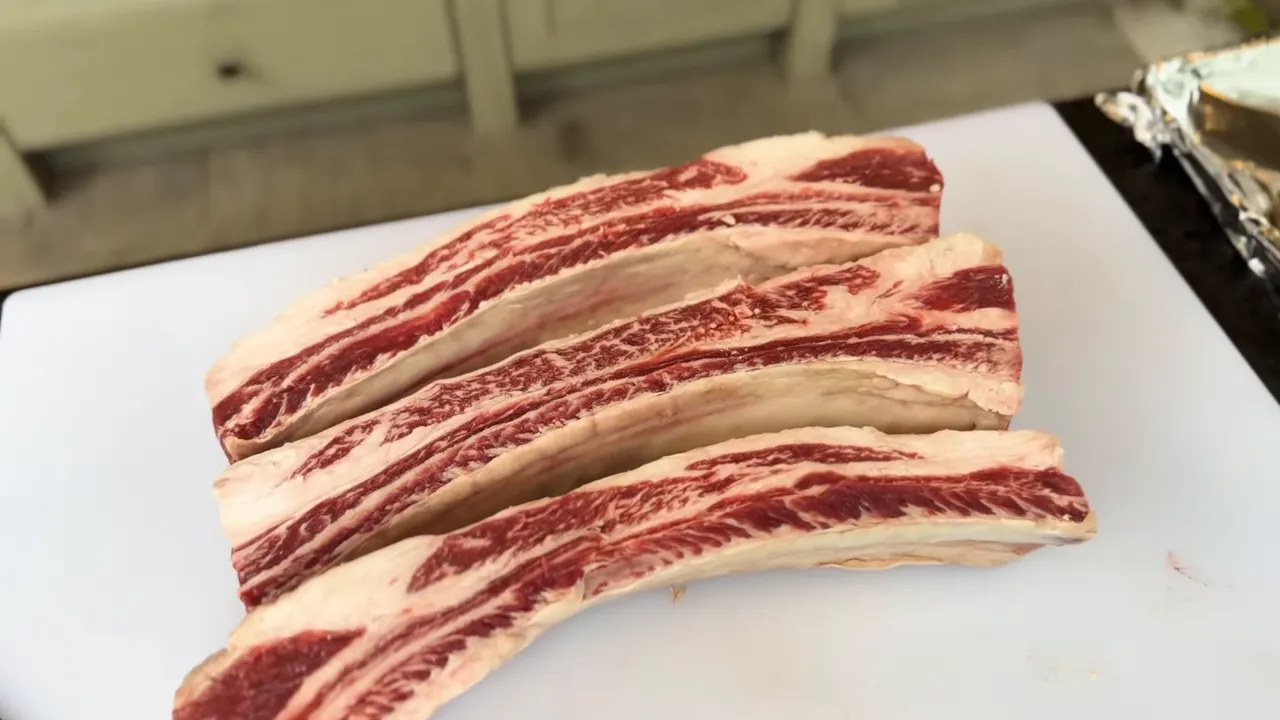
I started with a well-marbled, three-bone beef plate. Plate ribs commonly come as three bones, while chuck ribs commonly come as four, which is a useful shopping clue when you’re trying to tell them apart.
Using one plate meant the samples came from the same animal and the same section, rather than three unrelated packages of beef.
I followed the bones to divide the plate into three individual ribs, trying to leave each with a comparable portion of meat. They were as even as I could reasonably cut them, although the rib that went onto the Primo was ultimately the smallest.
The beef rib seasoning blend
For seasoning, I used three rubs I had been developing: Black Coal, Red Ash, and Gold Ember. They are very low in salt, rather than completely salt-free, which lets me manage the salt separately.
That gives me the option of dry brining meat beforehand or adding salt to the blend, as I did for this cook. If you’re unfamiliar with that distinction, this explanation of dry brining provides useful background.
The batch I mixed for this test contained:
- 3 tablespoons Diamond Crystal kosher salt.
- 2 tablespoons seasoning salt.
- 4 tablespoons Black Coal, the savory, umami-focused base.
- 2 tablespoons Red Ash.
- 1 tablespoon Gold Ember.
That 4:2:1 rub ratio was my beef-focused combination for brisket, beef ribs, and steak. These are the quantities for the mixed batch, not a per-rib application amount.
I seasoned the ribs consistently and let them brine before putting one on each kamado.
The Blind Tasting: Great Ribs, No Clear Winner
Once the ribs were cooked, I removed them, wrapped them individually in foil, and marked each package so I could keep track of the source.
On the cutting board, they were arranged in the same order as the grills behind us: Primo, Kamado Joe, and Big Green Egg from the front of the counter.
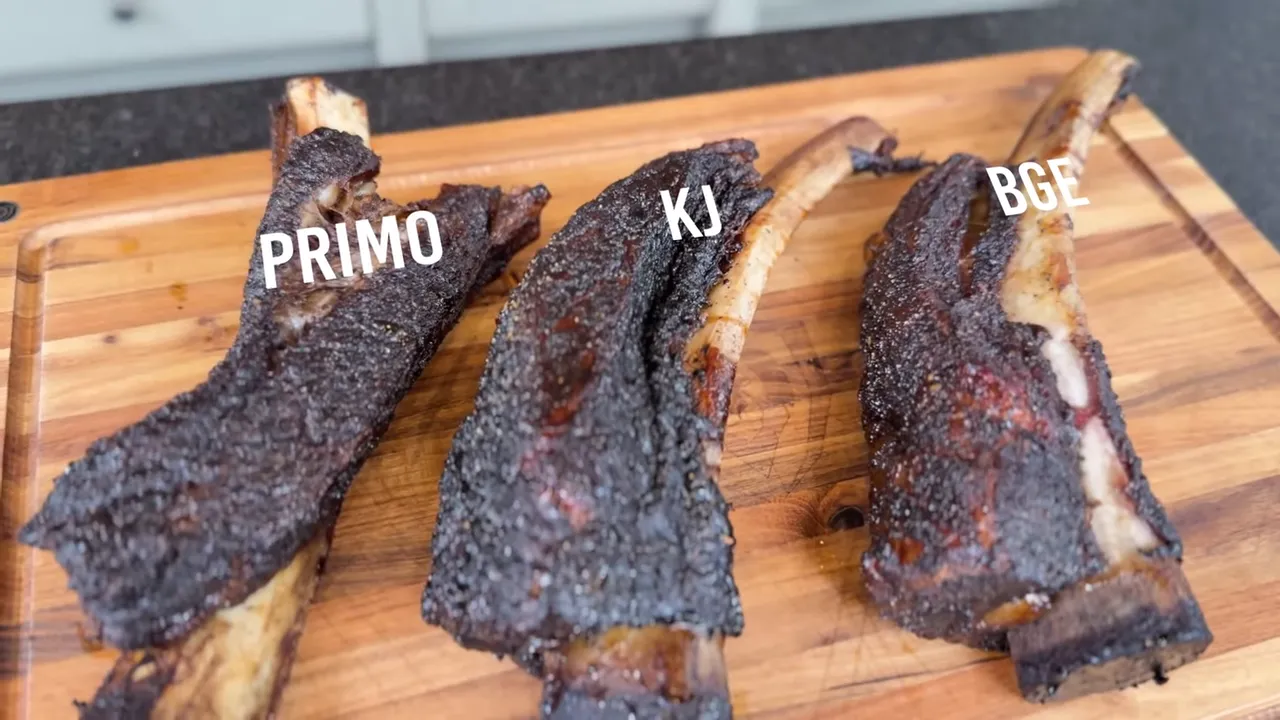
Sarah hadn’t been involved in the preparation and didn’t know which grill had cooked which rib. I also didn’t initially tell her that comparing the grills was the point. Her job was simply to taste the samples and help decide which beef rib was best.
I knew the identities, so this was a blind tasting for Sarah, not a double-blind experiment. I tried to avoid steering her responses. Seasonal allergies were also muting my own sense of taste a little, making her independent impressions particularly useful.
The first sample got an enthusiastic response. The seasoning was working, the beef was delicious, and there was plenty to like.
The second sample was excellent, too. But instead of finding an obvious difference, Sarah started wondering whether I was playing a prank on her. The ribs seemed essentially the same.
By the third sample, she was praising the bark texture and layers of flavor, but still couldn’t identify a clear best or worst.
When I asked specifically about smoke and flavor, her assessment was straightforward:
- Smoke: Effectively the same across the samples.
- Flavor: No clear difference.
- Overall preference: No obvious winner.
She felt that if I had told her all three came from the same grill, she would have believed it. That was exactly the possibility I wanted to test.
The Small Difference: A Firmer Underside on the Primo Rib
There was one detail Sarah picked up before the reveal. One rib seemed as though it had experienced slightly stronger heat, almost as if it had been closer to the fire.
Not burnt. Not unpleasant. Just a small difference that she struggled to describe because the overall flavors were so similar.
That rib came from the Primo. Looking more closely, I could see a slightly leathery area on its underside.
There are at least two plausible explanations in this cook. First, the Primo received the smallest rib. Second, the distance between the cooking grate and heat deflectors differed among the setups.
The measured clearances were approximately:
- Primo Oval XL: 3 inches.
- Big Green Egg XL: 3 inches.
- Kamado Joe Classic II: 5 inches.
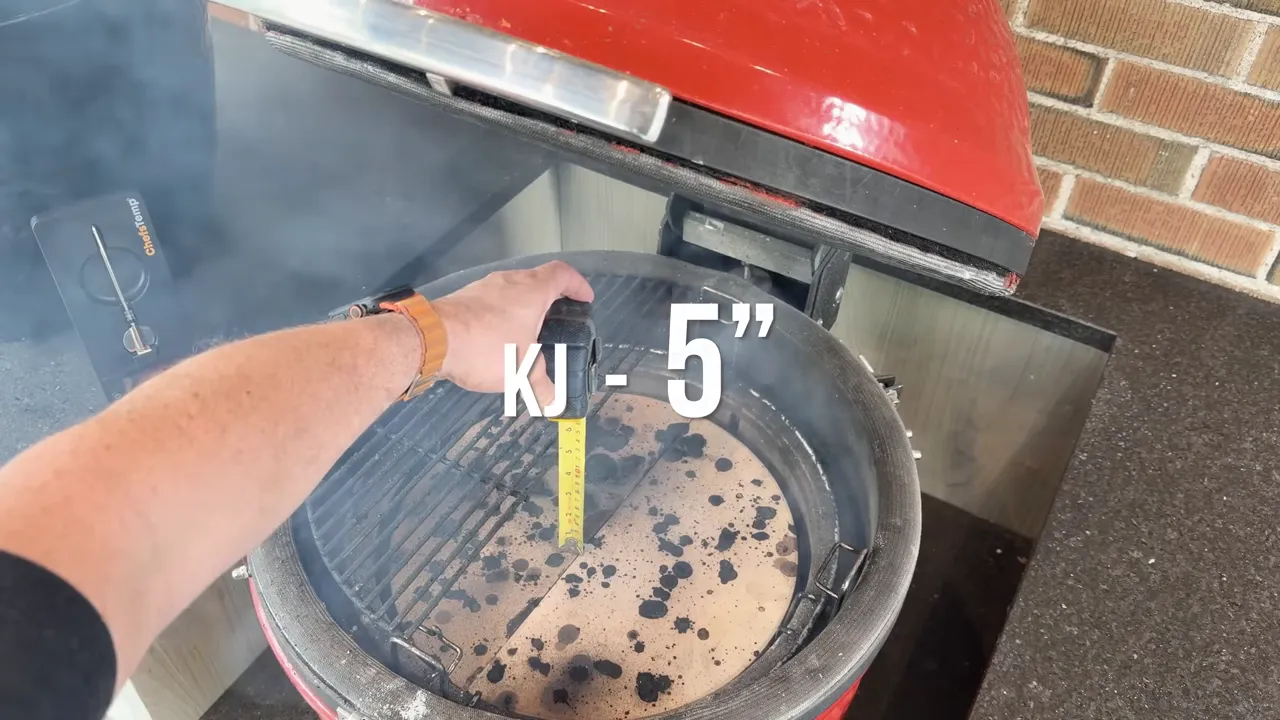
That makes clearance a useful setup detail to consider, but it doesn’t prove the cause of the texture difference. The Egg also had approximately 3 inches of clearance, and the rib sizes weren’t perfectly identical.
The observation was a slightly firmer underside on one sample, not a distinct Primo smoke flavor. Sarah remained clear that the flavor itself seemed identical and that the rib didn’t taste burnt.
What This Means for Big Green Egg vs. Kamado Joe vs. Primo
My takeaway is not that every kamado is interchangeable in every situation. This was one cook with three individual ribs and one blind taster, not proof that every food and every setup will always produce indistinguishable results.
But it did support the practical claim I started with: I could cook beef ribs on these three different kamados without producing a clear, recognizable flavor difference.
That matters if you’re choosing between a Big Green Egg, Kamado Joe, and Primo Oval XL. There are still good reasons to prefer one:
- The cooking capacity and shape that suit your meals.
- The accessories and cooking configurations you want to use.
- The overall ease of use.
- The warranty and ownership ecosystem.
Those differences are real. What I wouldn’t do, based on this test, is assume that one brand’s shape or internal design guarantees better-tasting barbecue.
I went looking for a flavor advantage and found three excellent beef ribs, remarkably similar smoke and seasoning, and one small texture difference. That’s reassuring news if you already own one of these grills. You don’t need a different color of ceramic to have the potential for fantastic food.
Don’t be afraid to fire it up.


