Pellet grills make backyard barbecue wonderfully convenient. Getting the smoke flavor I associate with a wood-burning offset? That has always been the harder part.
The Camp Chef Woodwind Pro and Lone Star Grillz El Fuego Trio tackle that problem by adding real wood to the pellet-cooking equation. Camp Chef uses a smoke box that accepts wood chunks and chips. Lone Star Grillz makes room for backyard-sized wood splits.
I put them head-to-head with ribs, matching the pellet fuel and wood species, then looked beyond my taste buds. Airflow, thermal images, bottom browning, smoke rings, and the amount of wood burned all helped explain what happened.
My conclusion: the Lone Star Grillz delivered the stronger wood-smoke experience in this test. But that does not make the Woodwind Pro a bad smoker, and there are some important limitations to this comparison.
Table of Contents
- Key Takeaways
- First, Put the Disclosures and Limitations on the Table
- How the Woodwind Pro Adds Real Wood Smoke
- How Lone Star Grillz Takes an Offset-Inspired Approach
- The Rib Test: What Stayed Consistent
- The Finished Ribs Looked Surprisingly Similar
- Airflow: The Lone Star Grillz Moved Nearly Three Times as Much Air
- Thermal Images Explained the Bottom Browning
- Wood Chunks vs. Wood Splits: The Fuel Difference Was Hard to Ignore
- What the Ribs Tasted Like
- My Verdict: Better Smoke Flavor, Not an Automatic Win for Every Backyard
Key Takeaways
- The El Fuego Trio delivered stronger wood-smoke flavor in my rib comparison.
- Airflow measurements indicated nearly three times as much airflow through the tested Lone Star Grillz.
- Thermal images helped explain the Woodwind Pro ribs’ darker undersides.
- Different cooker sizes and a single-person tasting limit how broadly these results apply.
First, Put the Disclosures and Limitations on the Table
I have a bit of a bone to pick with some of the extraordinary claims surrounding the Woodwind Pro. I respect Camp Chef for recognizing that burning wood can add something pellets alone struggle to deliver. Its smoke box was an important mainstream innovation, and I liked that approach in my original review.
Camp Chef supplied my grill and, several years ago, paid for some content production. They did not ask me to make a particular claim about a head-to-head comparison. Lone Star Grillz also provided the opportunity to try the El Fuego Trio at no cost. Separately, I purchased my Lone Star Grillz adjustable charcoal grill.
Those relationships belong out in the open. So do the differences between the cookers:
- The Camp Chef is a Woodwind Pro 24. A 36-inch model would be a closer size comparison.
- The El Fuego Trio is a multifunction cooker. It combines several cooking functions, including a Lone Star Grillz pellet smoker, rather than being only a dedicated pellet grill.
- Chamber size and configuration differ. Those differences can affect airflow, capacity, and heat distribution.
A cleaner product comparison would pair the larger Woodwind Pro with a dedicated Lone Star Grillz pellet smoker. These are the grills I had available, so the useful question is how their smoke systems and cooking layouts performed, not whether every specification lines up perfectly.
I also did not want one person’s palate deciding everything. A tasting panel of three or more people would give us more useful insight into preferences. I tasted the ribs, of course, but I did not treat that single-person tasting as a definitive verdict.
How the Woodwind Pro Adds Real Wood Smoke
The Woodwind Pro addresses light pellet-smoker flavor in two ways: an adjustable smoke setting and, more importantly for this comparison, a separate smoke box.
That box sits above the pellet fire pot and accepts supplemental fuel such as wood chips, chunks, or pellets. The pellet system handles the basic cooking operation while the wood provides another source of smoke.
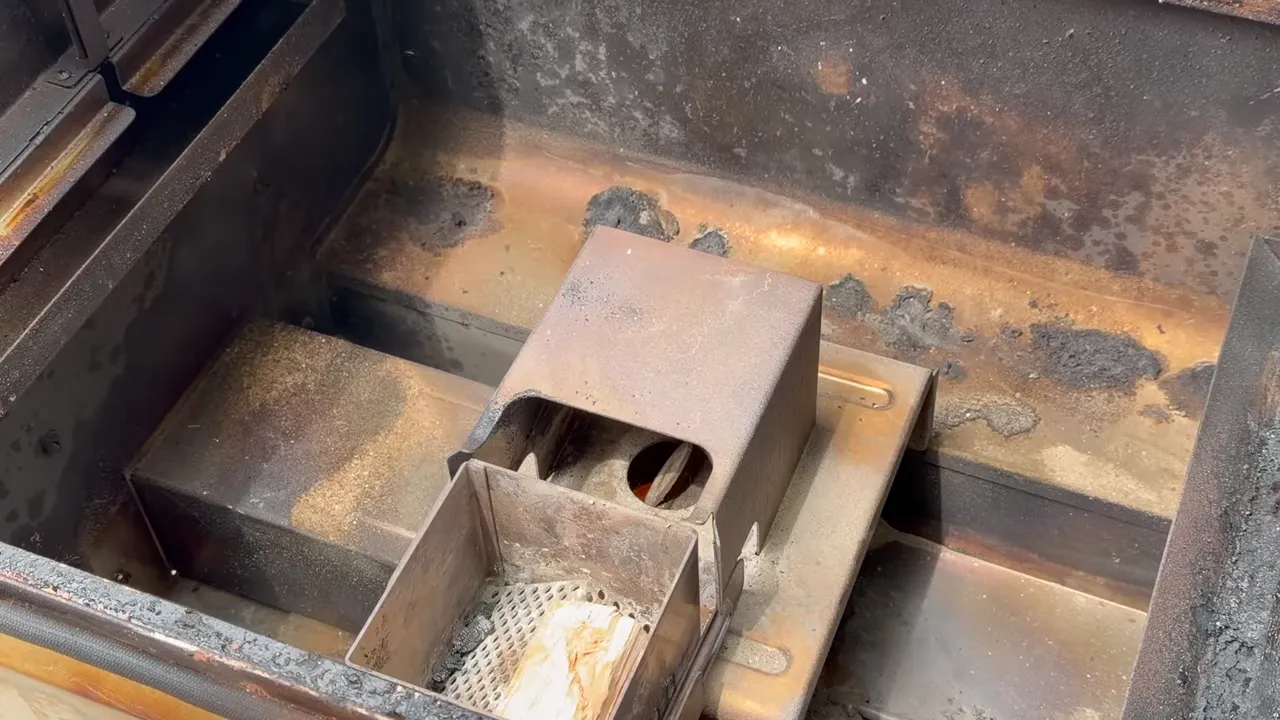
That is a useful idea. It acknowledges the same thing many backyard cooks have discovered: maintaining temperature with pellets and producing a particular wood-smoke flavor are not necessarily the same job.
The tradeoff: more separation from the fire
The smoke box also adds another barrier between the fire pot and the cooking grate. That matters when you want to switch from smoking ribs to searing a steak.
In my earlier Woodwind Pro testing, I let a cast-iron cooking surface heat soak at the grill’s maximum setting. It reached only about 316°F, which was not the kind of searing temperature I wanted.
Camp Chef’s solution is the propane-powered Sidekick accessory. You smoke in the main chamber, then move the steak to a hot cast-iron surface on the side. It solves the problem with a separate burner rather than direct access to the pellet fire.
A compact, vertically stacked cooking layout
The Woodwind Pro places its fire pot centrally beneath the food, with heat shielding between the fire and cooking surface. Rear exhaust vents help draw heat and smoke through the chamber and across multiple racks.
It is a familiar backyard-grill approach: keep the footprint manageable and build capacity upward. You get more cooking area through stacked racks rather than a much longer cooker.
That layout is practical, but it also means managing a heat source directly below the food. A shield spreads and moderates that heat; it does not make the fire’s location irrelevant.
How Lone Star Grillz Takes an Offset-Inspired Approach
Lone Star Grillz builds offsets, and that experience shows in how it approaches pellet cooking.
Instead of centering everything around a fire beneath the main cooking area, the El Fuego Trio’s pellet side places the fire toward one side and draws the exhaust toward the other. The goal is a moving stream of heat and smoke across the food, closer to the operating philosophy of an offset smoker.
This is the part I geek out on, because cooker design helps explain why two racks of ribs can look nearly identical and still deliver different eating experiences.
There are several ways heat reaches food: contact with hot grates, radiation from hot surfaces and the fire, and convection from moving hot air. The distinction here is the balance between heat arriving from below and hot air and smoke moving across the cooking zone.
An offset-style layout emphasizes that moving-air experience while keeping the main food area away from the fire itself.
Wood splits instead of small chunks
The Lone Star Grillz wood-split basket accepts the same size splits I use in small backyard offsets: roughly a couple of inches across and under 12 inches long.
That is an important practical distinction. I do not need a chainsaw or splitter to turn my existing backyard-offset fuel into something that fits. These are not huge logs intended for a commercial pit, but they are substantially larger than the chunks going into the Camp Chef.
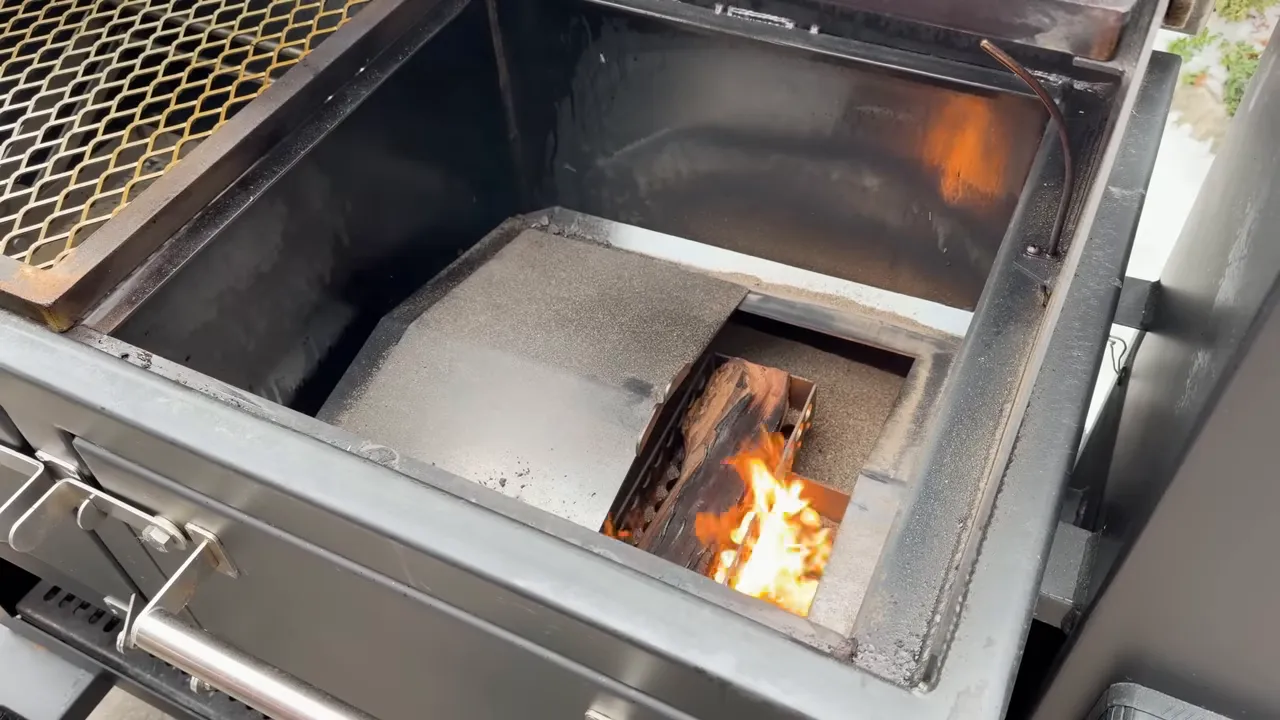
When I first encountered this system, availability was a frustration for existing owners because it was associated with newer grills. At the time of this test, Lone Star Grillz had begun listing a standalone wood-split basket accessory. My understanding was that it expanded retrofit options for its pellet and cabinet models, but compatibility is something to confirm for your particular grill.
Searing without a separate propane burner
Lone Star Grillz also approaches searing differently. A sliding heat deflector opens access to the fire area, and a steak-searing grate can be positioned above it.
Where Camp Chef adds a separate propane cooking station, Lone Star Grillz gives you direct-fire access within the pellet-cooking system. Both address the smoking-to-searing problem, but the hardware and workflow are quite different.
The Rib Test: What Stayed Consistent
I prepared and seasoned the ribs, fired up both cookers, and used the same pellet fuel and the same species of supplemental smoking wood. That removed one obvious explanation for a flavor difference: using a different tree in each grill.
I also tracked the wood used and checked the cookers with an air anemometer and an infrared camera. Those tools cannot tell us which rib every person will prefer, but they can help explain how the cooking environments differ.
This was a real backyard comparison, not a laboratory study. In particular, matching wood species does not mean matching the amount of wood burned. That difference became one of the most useful findings.
The Finished Ribs Looked Surprisingly Similar
From the top, both racks looked excellent. The color, surface finish, and overall appearance were close enough that, if someone mixed them up, I would have struggled to identify which cooker produced which rack.
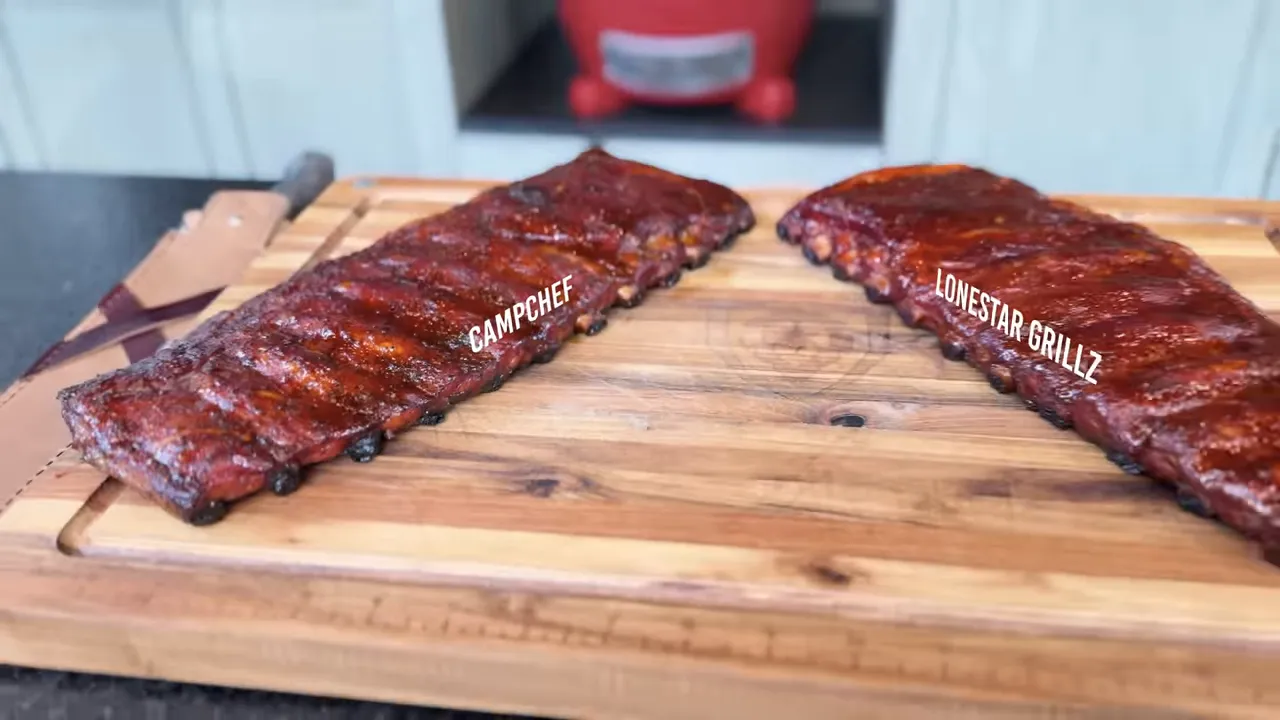
The clearer exterior difference was underneath. The Woodwind Pro ribs had a somewhat darker bottom. The Lone Star Grillz ribs showed less of that extra bottom browning.
That fits the difference in fire placement. A cooker with a centrally located fire below the food creates a different bottom-heat environment from one drawing heat across the chamber from the side.
The smoke rings were different, too
Slicing the ribs revealed a more pronounced smoke ring in the Lone Star Grillz rack. Both had a ring, but the difference was easier to see than anything on the tops.
A smoke ring is not a smoke-flavor score. Pellet grills can produce an attractive ring while still delivering relatively light smoke flavor. It is a visible result worth noting, not a substitute for tasting. For more background on that distinction, AmazingRibs explains the science behind smoke-ring formation.
The ring told me the cooking environments produced different results. It did not, by itself, tell me which rib tasted better.
Airflow: The Lone Star Grillz Moved Nearly Three Times as Much Air
Both cookers use fans, so both actively move air. That is different from a naturally drafting cooker where airflow may be much gentler.
For context, in a separate Weber Smokey Mountain test, I struggled to get the anemometer to register airflow at the top vent. That does not make the Smokey Mountain a poor smoker. It illustrates that different cookers create very different convection environments.
The surprise here was the size of the gap between these two fan-assisted grills. My measurements indicated nearly three times as much airflow through the El Fuego Trio.
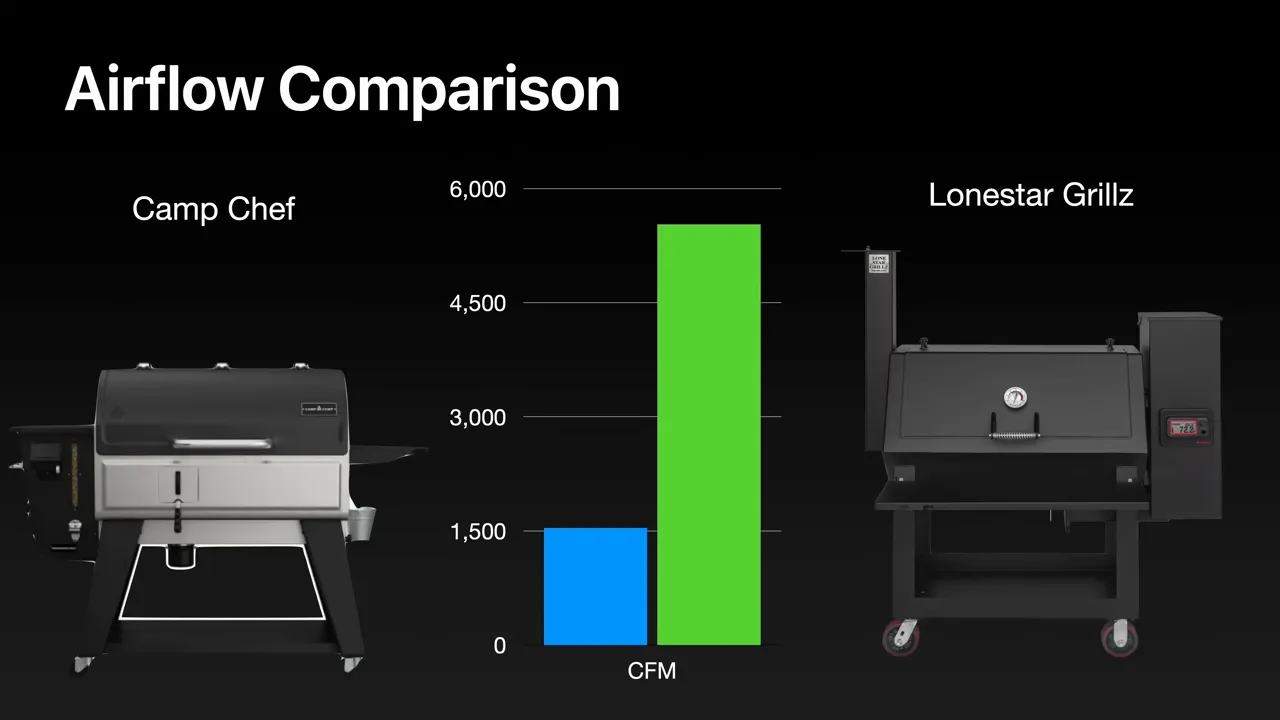
That finding supports the offset-inspired design story. A substantial stream of moving hot air and smoke is part of the cooking experience I associate with an offset.
But the size limitation still matters. The El Fuego Trio has a different chamber from the Woodwind Pro 24. This is useful evidence about the two tested cookers, not proof that every Lone Star Grillz model moves exactly three times as much air as every Woodwind Pro.
Thermal Images Explained the Bottom Browning
The infrared camera gave us another piece of the puzzle: where the hot surfaces were concentrated.
Woodwind Pro: a central hot area
Inside the Camp Chef, the thermal images showed a concentrated hot area associated with the fire pot below the cooking surface, with cooler areas farther out.
That is not especially surprising. Even with a metal shield in place, a central fire still leaves a recognizable heat pattern. It is a plausible contributor to the darker underside on the Woodwind Pro ribs.
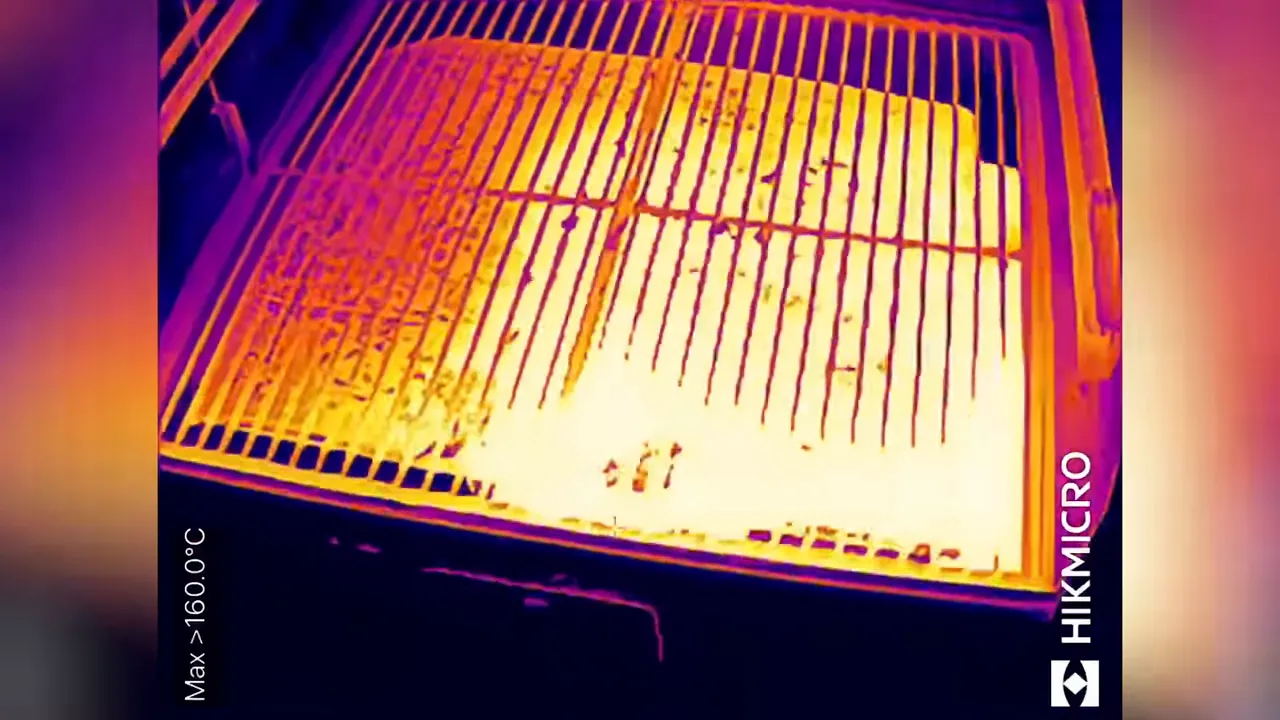
El Fuego Trio: fire-side heat and an even cooking zone
The Lone Star Grillz showed its hottest area where the pellet fire and wood splits were burning. Away from that fire area, I found a comparatively even cooking zone across the main grate.
I was not seeing a meaningful temperature gradient across that useful cooking pocket. It reminded me of the usable space in a small patio offset: you account for the fire end and exhaust end, then cook in the stable zone between them.
These images show surface heat patterns, not smoke flavor. Their value is in explaining why the two grills browned the bottoms differently and how much useful cooking area each layout created.
Wood Chunks vs. Wood Splits: The Fuel Difference Was Hard to Ignore
Over the cook, I used:
- Camp Chef Woodwind Pro: six wood chunks.
- Lone Star Grillz El Fuego Trio: four wood splits.
Counting pieces alone is misleading. Four splits represented substantially more wood than six chunks. Put those amounts next to each other and the difference becomes obvious.
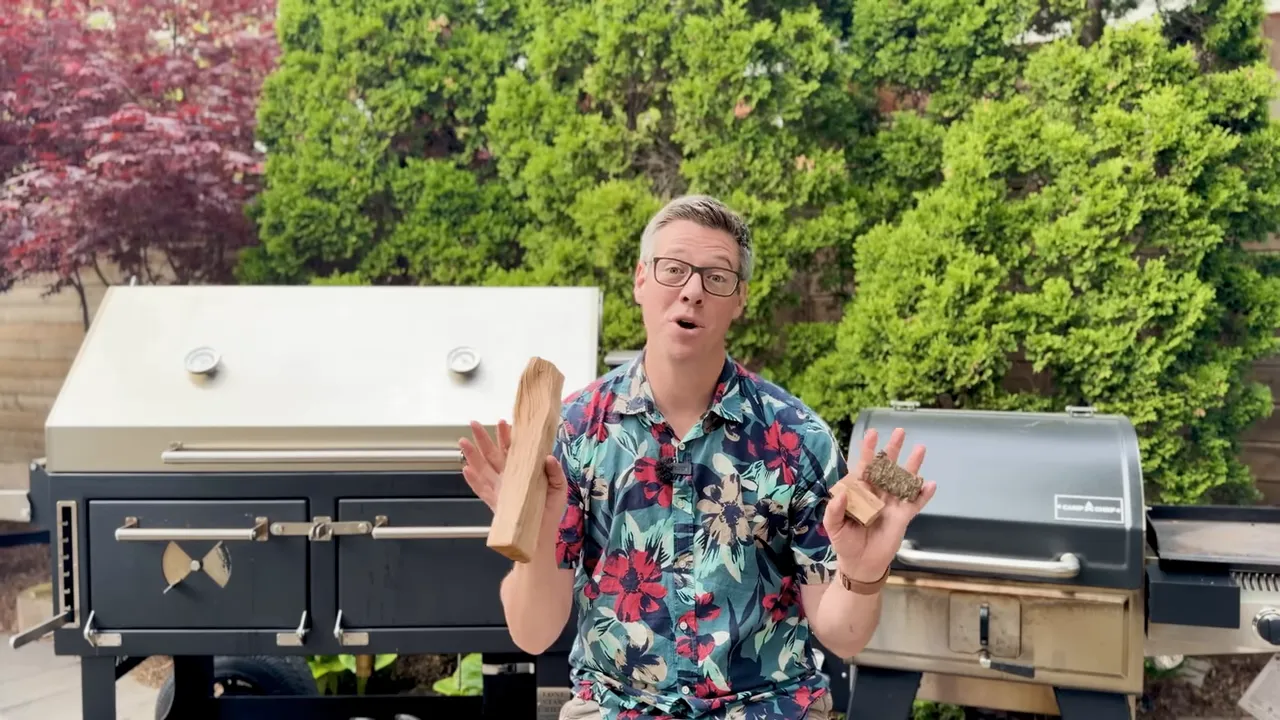
I often borrow the muscle-car idea that displacement matters. In barbecue, my version is that fuel is flavor. Here, the cooker that burned more supplemental wood also delivered the stronger wood-smoke impression.
I would not turn that into an instruction to keep adding wood indefinitely. The useful observation is narrower: in this test, with the same wood species, the larger wood-burning system produced the result I preferred.
It also matched an earlier comparison between the El Fuego Trio and my Lone Star Grillz adjustable charcoal grill. Those results were close, but I preferred the adjustable charcoal grill, which burned more wood splits than the Trio. The same pattern held, just in the other direction.
What the Ribs Tasted Like
The Woodwind Pro rib tasted good. No complaints. Hand me that rib at a backyard meal and I am a happy guy.
That matters, because a comparison can make a perfectly enjoyable result sound like a failure. The Camp Chef did not fail to make good barbecue.
Moving straight to the Lone Star Grillz rib, though, the difference in smoke character was clear enough that I could not ignore it. For my palate, the Lone Star Grillz packed more wood-smoke flavor into the finished rib.
That remains a personal tasting impression, not a blind-panel result. What gives it more context is that the airflow measurements, thermal patterns, and larger amount of wood burned all point toward a meaningfully different cooking environment.
My Verdict: Better Smoke Flavor, Not an Automatic Win for Every Backyard
For the specific question of which system delivered the stronger real-wood smoke experience, I give this comparison to the Lone Star Grillz El Fuego Trio.
Its wood-split system, offset-inspired airflow path, and the amount of wood it burned make a convincing combination. It gets closer to what I want from an offset-style cooking experience while retaining pellet-grill convenience.
That does not establish that it replaces every traditional offset. My own previous testing still gave the edge to the adjustable charcoal cooker when it burned more wood. Nor does this one cook settle every model-to-model comparison.
I remain skeptical of claims that the Woodwind Pro easily outperforms offsets, gravity smokers, or every other supplemental-smoke pellet setup. Across my testing with small backyard offsets such as the Oklahoma Joe’s Highland, gravity-fed smokers, and even an affordable Z Grills pellet grill with a smoke tube, I have not reproduced those sweeping claims.
That skepticism is not proof that another reviewer’s experience is invalid. It is why I want disclosures, test conditions, and observable results alongside enthusiastic tasting reactions.
Which approach fits your priorities?
- Camp Chef Woodwind Pro: a mainstream, compact approach to adding real wood smoke, with vertically stacked cooking space and an optional propane Sidekick for searing.
- Lone Star Grillz El Fuego Trio: a multifunction, Texas-built cooker with wood-split burning, offset-inspired airflow, and direct-fire searing access.
- For a closer purchase comparison: compare the Woodwind Pro 36 with a dedicated Lone Star Grillz pellet smoker rather than assuming these two tested configurations are equivalent.
Price, capacity, versatility, retail availability, and handcrafted construction will carry different weight in different backyards. There is room for both approaches, and both made ribs I would happily serve to friends and family.
But if maximum wood-smoke flavor is the deciding factor, my answer is clear. Camp Chef deserves credit for helping bring supplemental wood smoke into mainstream pellet cooking. In this test, Lone Star Grillz took that idea further.
Do not be afraid to fire it up.


