Nobody likes spending hard-earned money on a barbecue accessory that ends up gathering dust in the garage. I’ve tested hundreds of barbecue products over the years, and some of the most impressive-looking gadgets have delivered the least impressive results.
The accessories I keep reaching for have something in common: they solve an actual problem. They make fire management easier, improve temperature checks, simplify prep, or help me turn out better food. A few start at about $10. Others are serious investments, but earn their space in the grill cabinet.
These are my hard passes and two-thumbs-up recommendations, in no particular order. They’re based on my own testing and cooking habits, so the important question is not just whether an accessory works, but whether it does something useful for your barbecue.
Some product links are affiliate links that help support Smoking Dad BBQ. Big Green Egg provided free product or sponsorship for the original testing feature.
Table of Contents
- Key Takeaways
- Grill Accessories I Would Skip
- 10 BBQ Accessories That Earn Their Keep
- Buy the Accessory That Solves Your Problem
Key Takeaways
- Choose accessories that improve flavor, simplify repeated tasks, or add useful control to your grill.
- Compare charcoal by usable fuel and burn performance, not just the bag price.
- Digital dome gauges offer more value when integrated with wireless probes and temperature-control fans.
- Reliable thermometers, heat-protective gloves, and well-designed drip pans earn their place through regular use.
Grill Accessories I Would Skip
Specialty Grill Grates Bought Mainly for Sear Marks
I’m slightly ashamed to admit that I spent more than $100 on specialty grill grates for a four-way searing comparison. What I wanted was better steak. What I got was a reminder that attractive grill marks and great flavor are not necessarily the same thing.
My priority is an excellent Maillard reaction, the browning that builds that delicious crust across the meat’s surface. Dark stripes alone don’t tell you how well the rest of the steak has browned.
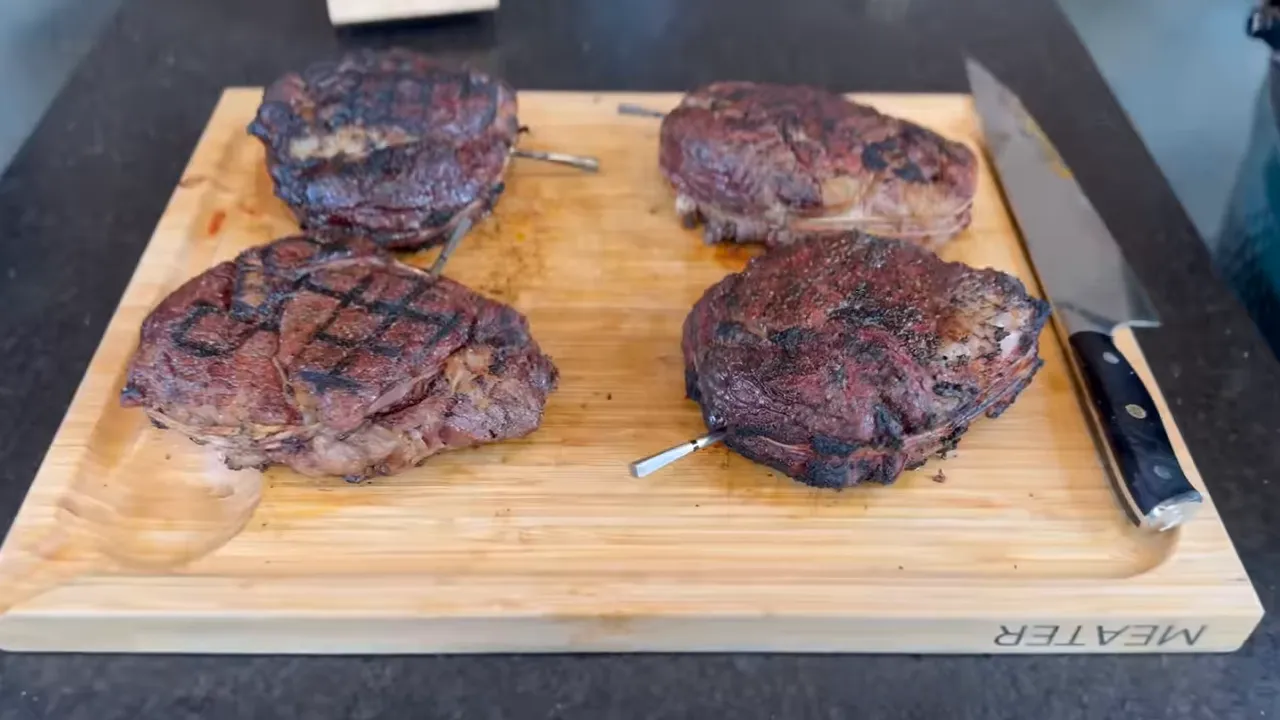
The results disappointed me both when I knew which steak was which and when Sarah and I compared them blind. For an accessory purchased specifically to improve searing, that’s a hard pass from me.
A Dedicated Cold Smoke Generator
The dedicated smoke generator I tested did its basic job. It produced smoke while keeping temperatures below 100°F. These systems can be useful on compatible kamados, kettles, and Weber Smokey Mountains, but compatibility is something you need to check.
My issue was value and versatility. For a similar upfront investment, I got more use from my FireBoard Drive, and I preferred the flavor from that cold-smoking setup. I can also use the controller for hot smoking rather than reserving it for one specialized task.
The dedicated generator has mostly taken up garage space since that comparison. Working as advertised doesn’t automatically make something the best purchase.
Rotating Rib Racks
Rotisserie-mounted rib racks look like a lot of fun. Some can carry vegetables and sausages as well as ribs, rotating trays directly over the coals.
Unfortunately, the rack I tested was bulky, wasn’t inexpensive, and didn’t produce ribs that justified the extra equipment. I can make excellent ribs with a grill in its factory configuration.
If a specialty accessory adds storage demands and setup without an appreciable improvement on the plate, I’m not reaching for it again.
A Digital Dome Gauge That Only Replaces the Dial
This one needs an important distinction. I’m not against digital temperature equipment. I’m against adding batteries and electronics when all I’m getting is a different way to display the same dome temperature.
A basic digital dome replacement can introduce several frustrations:
- A screen that is difficult to read in direct sunlight.
- Questions about accuracy and build quality.
- Another battery to monitor.
- A dead display partway through a cook, with hot components to deal with.
What I do like is a digital gauge that becomes a useful grill hub. The ChefsTemp S1 approach, integrating compatible wireless probes and an optional Breezo temperature-control fan, solves a much bigger problem.
A connected ecosystem can be an upgrade. A digital readout alone may just be another maintenance item.
Cheap Lump Charcoal With Too Many Small Pieces
The cheapest bag of charcoal is not necessarily the cheapest fuel to cook with. That was one of my biggest surprises from testing small and medium lump against extra-large lump charcoal.
Extra-large lump usually costs more upfront. But small pieces can fall through a charcoal basket, and the fuel I tested did not deliver the same burn time. Once I accounted for usable charcoal and burn performance, the apparent bargain stopped looking so good.
In that particular comparison, the extra-large lump delivered a 17% longer burn, left 63% more charcoal remaining, and worked out to 13% less total cost. Those are results from that test, not a guarantee for every bag or grill, but they changed how I think about fuel value.
Look at cost per useful cook, not just the price printed on the bag.
Premium Wagyu Beef Tallow When You Already Have Brisket Trimmings
Store-bought beef tallow is convenient. I’m not arguing with that. But I could not find an appreciable flavor difference between expensive Wagyu tallow and the tallow I rendered from my own brisket trimmings.
That included using it for injecting and resting. Spending $20 or $30 on a premium tub did not buy me a result I could taste.
When you trim a brisket, save the fat and render it in the smoker instead of throwing it away. Strain it into a clean container and refrigerate it for another cook. You’ve already paid for those trimmings as part of the brisket, so you might as well put them to work.
Meat Claws
Meat claws have survived on my skip list for years. Other than letting me feel like Wolverine for a few seconds, I don’t find much benefit.
I get better control over the texture of pulled meat with ordinary forks or suitable heat-protective gloves under food-safe nitrile gloves. I can separate the meat the way I want rather than aggressively tearing through everything.
Forks also take up less space and go straight into the dishwasher. That’s a pretty strong argument against buying another single-purpose tool.
A Spider Accessory Specifically for My Big Green Egg Double-Indirect Setup
This is a setup-specific recommendation, not a claim that the Ceramic Grill Store Spider doesn’t work. I used one when I first adapted my double-indirect method to the Big Green Egg, and it absolutely did the job.
The drawback is where it puts the deflector plates: down into space that could otherwise hold charcoal. That matters for long cooks, particularly on a Large Egg with less room than my XL models.
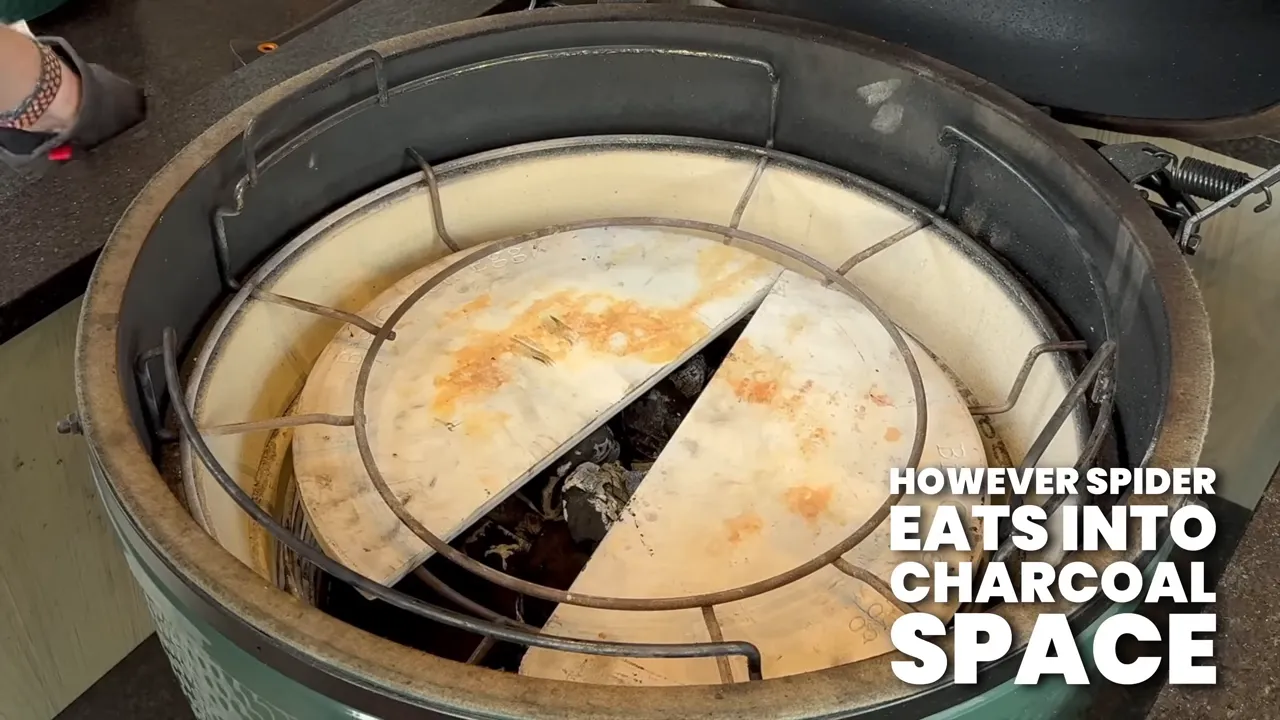
As I tested more configurations, I found alternatives using the plate setter and deflector plates that better suited my needs. Before buying a support rack for one cooking method, work out where the deflectors will sit and how much fuel space you’ll retain.
10 BBQ Accessories That Earn Their Keep
1. A Good Pair of High-Heat Gloves
Gloves are one of the least glamorous purchases here, but they’re among the most useful. Handling hot deflectors, working around an offset firebox, and adding logs all call for proper hand protection.
I’ve used JH Safety gloves for years. They work well, but mine eventually delaminate, which shows up as a hot spot around the thumb. That’s a sign to replace them, not push through another cook.
The high-heat gloves from MEATER have also worked extremely well for me, and I hadn’t managed to wear out my pair at the time of this comparison. Whichever you choose, use them within the manufacturer’s limits. Heat resistance is not unlimited contact time.
2. A Barbecue Prep Tub
The Drip EZ prep tub earns its place because I can use it through several stages of a cook: brining, seasoning, carrying food outside, and transporting it to another location.
It’s the opposite of a one-trick gadget. The more often an accessory helps with jobs I already do, the easier it is to justify owning it.
3. A Barbecue Resting Blanket
A resting blanket is especially useful when the food is ready before the guests are, or when I’m taking ribs and brisket to a friend’s house.
An oven can be a great holding solution, but not every oven adjusts low enough for the hold you want. I was impressed by how well the Drip EZ resting blanket retained heat, with my food still above safe holding temperatures hours later in my tests.
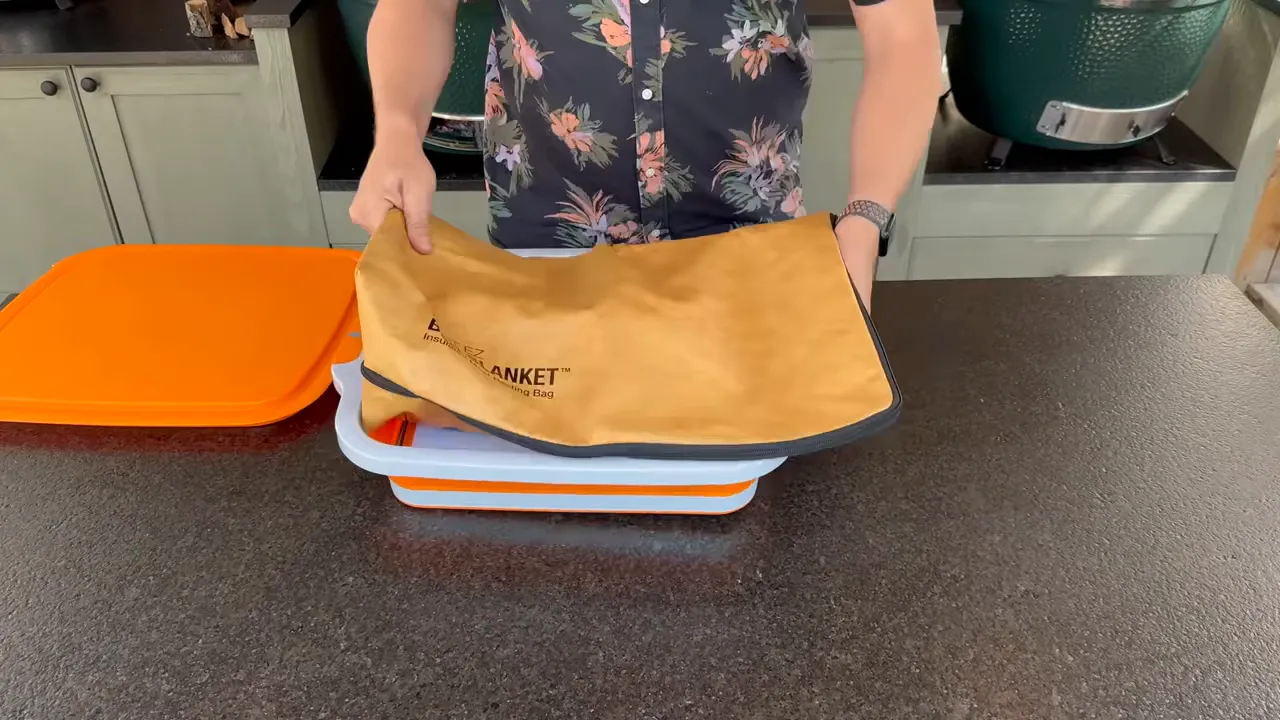
I used that combination repeatedly through the summer for holding food at home and carrying it to family gatherings. It also makes sense for the logistics of barbecue competitions.
Insulation is not a substitute for a temperature check. Check the meat during an extended hold rather than assuming a blanket guarantees safety. The USDA’s food-safety guidance recommends keeping hot food at 140°F or above.
4. A Reliable Instant-Read Thermometer, With Smart Control as an Optional Upgrade
The ChefsTemp X10 is the instant-read thermometer I reach for constantly. I’ve found it accurate and reliable, and its useful features go beyond simply giving me a number:
- A bright, easy-to-read display.
- A magnetic back for convenient placement.
- A hold function that lets me move my hand away from the heat before reading the result.
That last detail matters more than you might expect when you’re leaning over a hot grill.
If you want automated temperature management as well, the ChefsTemp S1 system takes the idea further by connecting dome monitoring, compatible ProTemp wireless probes, and a Breezo fan.
I used that combination to turn my affordable Weber Smokey Mountain into a wireless, temperature-controlled smoker. In my comparison, the smoker and controls together cost hundreds less than the pellet grill I used as a reference.
The complete ChefsTemp package was also substantially less expensive than some competing gauge, probe, and fan combinations when I checked it with my discount code. Prices and promotions move, so compare the complete system you need rather than assuming every advertised starting price includes the same equipment.
5. A GrillBlazer GrillGun or Su-V Gun
The GrillBlazer torch is fun, no question. But the reason I keep using it is that it gets me cooking instead of waiting.
I use mine to light charcoal in the Big Green Egg, start fires in an offset smoker, and get my Solo Stove going while camping. It has helped me establish a cleaner-burning fire even when the campsite wood was less than ideal.
In my heat-up comparison, the charcoal kamado lit with the GrillGun reached searing temperatures faster than the gas and pellet grills I tested. That makes charcoal much more appealing for a midweek meal when I don’t want to spend 40 minutes waiting to start dinner.
I’ve even used it on weeds growing between driveway cracks. That’s a bonus use, not a reason to ignore fire precautions: follow the torch instructions, local restrictions, and clearance requirements wherever you use it.
6. The Pepper Cannon
The Pepper Cannon is not an inexpensive pepper mill. But if you make barbecue rubs regularly, it solves a very real annoyance.
In my use, it grinds pepper roughly 10 times faster than a regular mill, with precise adjustment across a wide range of grind sizes. When you’re seasoning a brisket rather than a single plate of pasta, that output is useful.
It also gives me the flexibility to grind other suitable spices for homemade rubs. With commercial rub prices climbing, I appreciate being able to build my own blends and choose the texture.
The biggest payoff is still flavor. Freshly cracked pepper has an intensity that I don’t get from pepper that was ground long before it reached my pantry.
7. Good Knives Chosen for the Jobs You Actually Do
I’ve used Dalstrong knives from the beginning, and I continue to like their quality, feel, and value. The challenge is that the range is enormous. You don’t need to buy every blade shape to get started.
These are the three types I use most:
- A boning or trimming knife: A sharp, flexible blade makes brisket trimming much easier.
- A chef’s knife: My general-purpose prep knife. I tend to prefer a longer blade, often 9 inches or more.
- A slicing or carving knife: Useful for brisket, ribs, pork belly, and holiday turkey.
Buy around your cooking habits. A small collection of useful knives beats a crowded drawer of blades you never pick up.
8. Kick Ash Basket, Ash Can, and Raised Drip Pans
For kamado cooking, the Kick Ash Basket and Kick Ash Can are close to essential territory for me. I can shake the ash out of the remaining charcoal, collect it in the can, and get ready for the next cook quickly.
The removable basket is also useful with a portable grill such as the MiniMax when managing cleanup and cooldown before transport. Always allow the grill and fuel to cool safely before loading them into a vehicle.
My surprise favorite from the same lineup is the drip pan. The important feature is tiny: little feet underneath it.
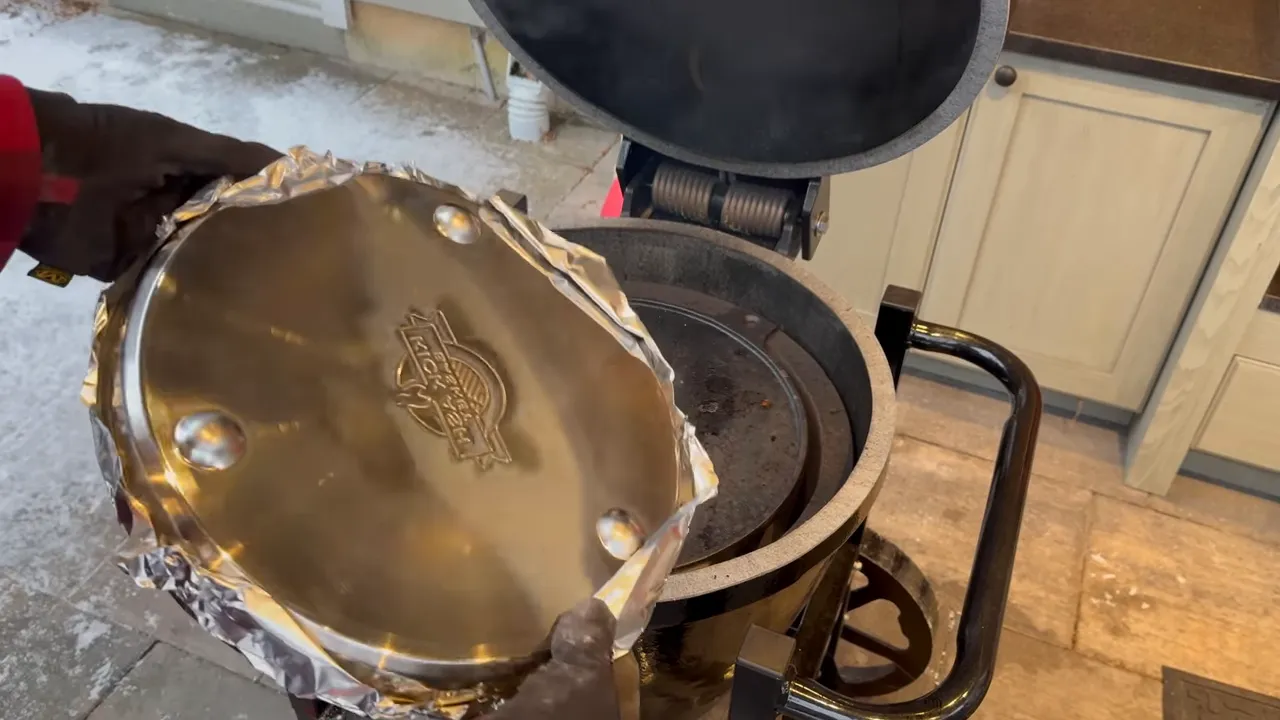
That gap helps keep collected grease from overheating against a hot deflector stone. Smoldering brisket or pork fat is not the smoke flavor I want on dinner, and grease can also become a fire problem.
A little foil in the pan simplifies cleanup. Between catching drippings and separating them from the hottest surface, this is a simple accessory that earns its keep through flavor as well as convenience. The company also makes grate holders and other storage accessories, but the basket, can, and pans are my standouts.
9. Practical Kamado Cooking Guides
Sometimes the best upgrade isn’t another piece of metal. It’s knowing how to use the grill you already own.
My digital guides start at about $10 and cover vent settings for Primo, Kamado Joe, and Big Green Egg, along with double-indirect setups and tested best practices for those grills.
They bring together lessons from roughly two decades of live-fire cooking. If you’re new to a kamado or struggling with repeatable temperatures, a clear setup reference can be more useful than buying accessories to compensate for an unfamiliar fire.
|
10. The Big Green Egg EGGspander Rack
The EGGspander is one of the Big Green Egg accessories I used most during this testing year. Its biggest benefit for my cooking is access.
I can manage a live wood fire below the food, then change the setup as the cook progresses. When I want to switch to indirect cooking, I can access the lower area and add deflectors, grates, or a drip pan without dismantling the entire cook and removing all the food.
That flexibility helped me produce ribs during a visit with Cooper at Bar-A-BBQ that he said he would have been proud to serve in his restaurant. That’s a result I’m pretty happy with.
For the way I cook on the Egg, easy fire access and straightforward setup changes are much more valuable than an accessory that only adds capacity on paper.
Buy the Accessory That Solves Your Problem
A high price doesn’t automatically make a barbecue product a waste of money, and a low price doesn’t automatically make it good value. The expensive pepper mill earns its place because I use it. The cheaper bag of charcoal can cost more once I account for what actually gets burned.
Before buying, ask yourself whether the accessory will improve flavor, make a repeated task easier, or give you control you don’t already have. Then check whether it fits your grill, your cooking style, and your available storage.
The best barbecue accessories are the ones you keep reaching for. Everything else needs a pretty convincing explanation for why it belongs in the cabinet.
Don’t be afraid to fire it up.


